
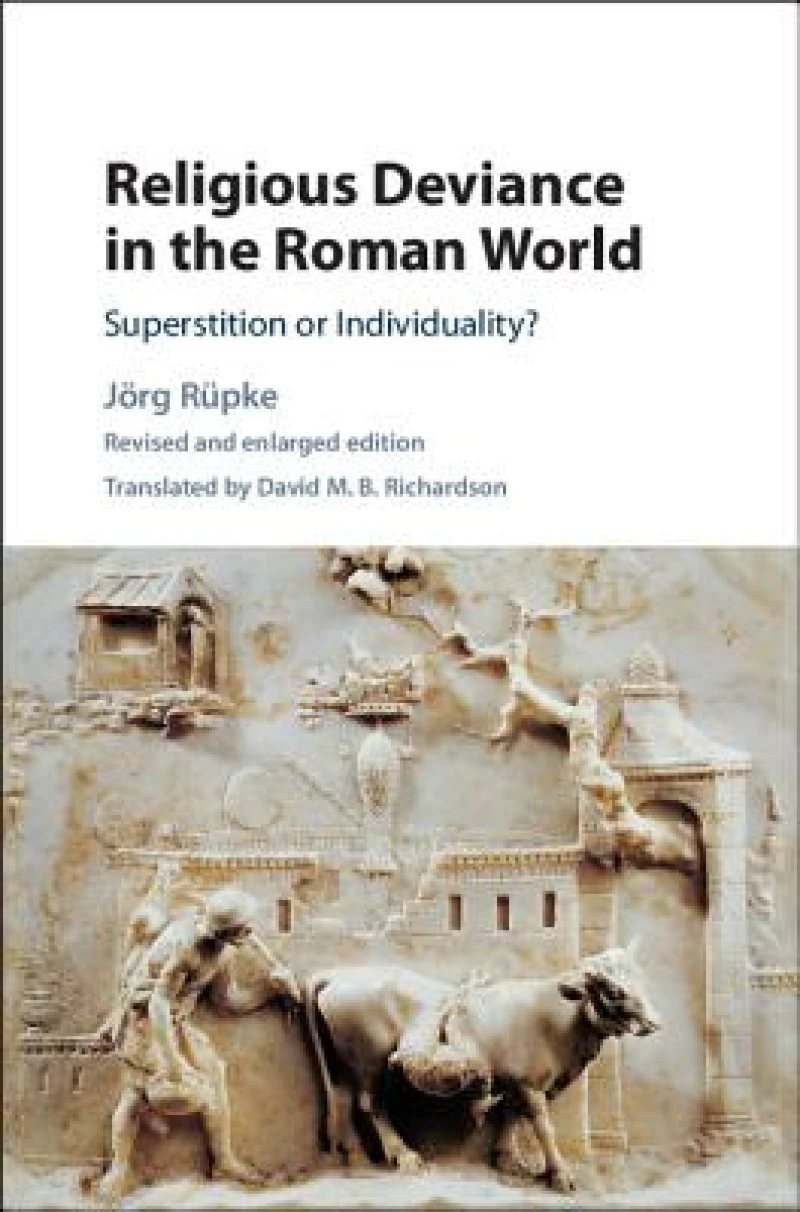
Religious Deviance in the Roman World : Superstition or Individuality?
by
Jorg Rupke
Book Details
Format
Hardback or Cased Book
ISBN-10
1107090520
ISBN-13
9781107090521
Publisher
Cambridge University Press
Imprint
Cambridge University Press
Country of Manufacture
US
Country of Publication
GB
Publication Date
May 16th, 2016
Print length
159 Pages
Weight
36 grams
Dimensions
16.30 x 23.70 x 1.60 cms
Product Classification:
Classical history / classical civilisationHistory of religionChristianity
Ksh 17,800.00
Manufactured on Demand
0 in stock
Delivery Location
Delivery fee: Select location
Secure
Quality
Fast
The importance and primacy of individual religious experience is attested in ancient cases of and discourses about religious deviance. In reviewing religious norms from Cicero to the Theodosian Code in late antiquity, Jörg Rüpke reconstructs a hitherto neglected feature of ancient Mediterranean religion and its conceptualisation by contemporaries.
Religious individuality is not restricted to modernity. This book offers a new reading of the ancient sources in order to find indications for the spectrum of religious practices and intensified forms of such practices only occasionally denounced as ''superstition''. Authors from Cicero in the first century BC to the law codes of the fourth century AD share the assumption that authentic and binding communication between individuals and gods is possible and widespread, even if problematic in the case of divination or the confrontation with images of the divine. A change in practices and assumptions throughout the imperial period becomes visible. It might be characterised as ''individualisation'' and informed the Roman law of religions. The basic constellation - to give freedom of religion and to regulate religion at the same time - resonates even into modern bodies of law and is important for juridical conflicts today.
Get Religious Deviance in the Roman World by at the best price and quality guaranteed only at Werezi Africa's largest book ecommerce store. The book was published by Cambridge University Press and it has pages.

