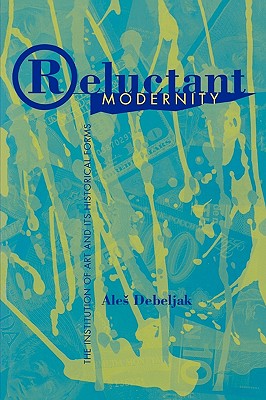
Reluctant Modernity : The Institution of Art and its Historical Forms
Book Details
Format
Paperback / softback
Book Series
Postmodern Social Futures
ISBN-10
0847685837
ISBN-13
9780847685837
Publisher
Bloomsbury Publishing Plc
Imprint
Rowman & Littlefield
Country of Manufacture
GB
Country of Publication
GB
Publication Date
Jul 2nd, 1998
Print length
240 Pages
Weight
325 grams
Dimensions
22.80 x 14.70 x 1.30 cms
Product Classification:
History of art / art & design stylesPainting & paintingsPaintings and paintingHistory of art
KSh 7,550.00
Currently unavailable
0 in stock
Delivery Location
Delivery fee: Select location
Secure
Quality
Fast
In this book, Aleš Debeljak offers a refreshing alternative to postmodernists such as Baudrillard, who declare the death of art was conceived as yet another source of rootless, circulating fictions. The deterioration of bourgeois liberal individualism into the narcissism of mass society accompanied the decomposition of art into simplified mass art and commercialized kitsch. Maintaining its formal autonomy (museums, galleries, etc.), its content became the universal object of indirect corporate exploitation. Today postmodern art, argues Debeljak, is subjected to infinite reproducibility, total integration into mass society, and political resignation-no longer representing an alternative reality. The postmodern institution of art thus cannot be simply cured of modern structures and assumptions, but is, instead, fated to a continuous and painful relationship with modernity.
Get Reluctant Modernity by Aleš Debeljak at the best price and quality guaranteed only at Werezi Africa's largest book ecommerce store. The book was published by Bloomsbury Publishing Plc and it has 240 pages.
Customers Who Bought This Also Bought

World According to Colour
KSh 2,700.00

The Metropolitan Museum of Art
KSh 13,350.00

The Story of Art
KSh 4,500.00

Artists Who Changed History
KSh 5,900.00

Fashion
KSh 7,800.00

Art
KSh 9,250.00

Story of Art without Men
KSh 2,900.00

Tao Te Ching
KSh 3,050.00

The Invention of Design
KSh 4,500.00

Letters to a Young Painter
KSh 1,950.00

The Jean–Michel Basquiat Reader – Writings, Interviews, and Critical Responses
KSh 14,400.00

Basquiat–isms
KSh 2,350.00