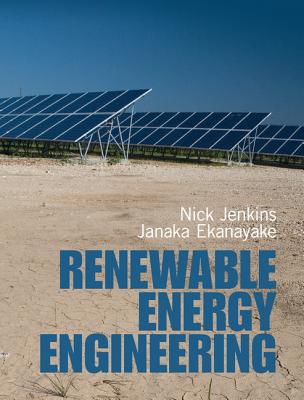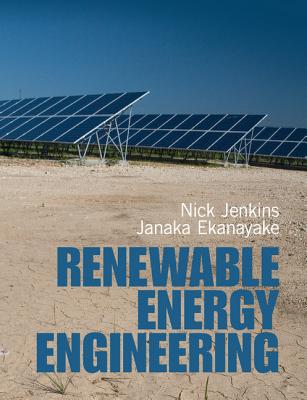
Renewable Energy Engineering
Book Details
Format
Paperback / softback
ISBN-10
1107680220
ISBN-13
9781107680227
Publisher
Cambridge University Press
Imprint
Cambridge University Press
Country of Manufacture
US
Country of Publication
GB
Publication Date
Apr 6th, 2017
Print length
460 Pages
Weight
982 grams
Dimensions
19.00 x 24.60 x 2.30 cms
KSh 9,550.00
Re-Printing
0 in stock
Delivery Location
Delivery fee: Select location
Secure
Quality
Fast
This book provides a quantitative yet accessible overview of renewable energy engineering practice including wind, hydro, solar thermal, photovoltaic, ocean and bioenergy. Suitable for engineering undergraduates as well as graduate students from other numerate degrees, the text is supported by worked examples, tutorial chapters providing background material and end-of-chapter problems.
This book provides a quantitative yet accessible overview of renewable energy engineering practice and the technologies that will transform our energy supply system over the coming years. Covering wind, hydro, solar thermal, photovoltaic, ocean and bioenergy, the text is suitable for engineering undergraduates as well as graduate students from other numerate degrees. The technologies involved, background theory and how projects are developed, constructed, and operated are described. Worked examples of the simple techniques used to calculate the output of renewable energy schemes engage students by showing how theory relates to real applications. Tutorial chapters provide background material, supporting students from a range of disciplines and ensuring they receive the broad understanding essential for a successful career in the field. Over 150 end-of-chapter problems are included with answers to the problems available in the book and full solutions at www.cambridge.org/jenkins, password-protected for instructors.
Get Renewable Energy Engineering by Janaka Ekanayake, Nicholas Jenkins at the best price and quality guaranteed only at Werezi Africa's largest book ecommerce store. The book was published by Cambridge University Press and it has 460 pages.
Customers Who Bought This Also Bought

Boy Who Harnessed Wind
KSh 1,800.00

Underland
KSh 2,350.00

Smart Sustainability
KSh 9,350.00

Artificial Intelligence and Sustainable Management
KSh 22,500.00

Smart Sustainability
KSh 30,950.00

Digitalization of Mechanical Systems
KSh 33,850.00

Artificial Intelligence and Sustainable Management
KSh 9,900.00

Aqueous Batteries for Energy Storage
KSh 35,800.00

Transition Towards a Carbon Free Future
KSh 23,400.00

Renewable-Focused Operation and Control of Contemporary Power Systems
KSh 17,100.00

Climate Change and Climate Geoengineering
KSh 26,300.00

Green Transition and AI
KSh 10,200.00