
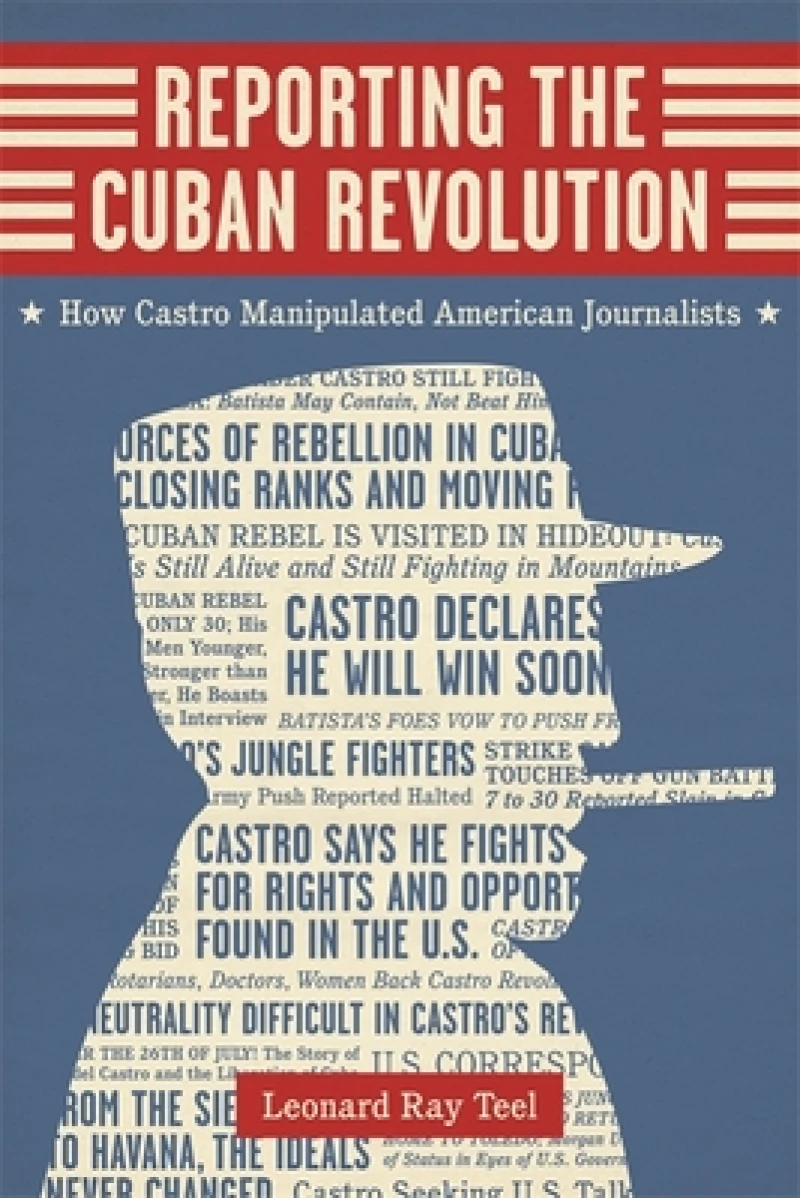
Reporting the Cuban Revolution : How Castro Manipulated American Journalists
Book Details
Format
Hardback or Cased Book
Book Series
Media and Public Affairs
ISBN-10
080716092X
ISBN-13
9780807160923
Publisher
Louisiana State University Press
Imprint
Louisiana State University Press
Country of Manufacture
US
Country of Publication
GB
Publication Date
Dec 16th, 2015
Print length
264 Pages
Weight
542 grams
Dimensions
23.60 x 16.00 x 2.50 cms
Product Classification:
History of the AmericasHistory of the Americas
Ksh 6,750.00
Temporarily out of stock, due soon
0 in stock
Delivery Location
Delivery fee: Select location
Secure
Quality
Fast
Reveals the untold story of thirteen American journalists in Cuba whose stories about Fidel Castro's revolution changed the way Americans viewed the conflict and altered US foreign policy in Castro's favour. The book is both a masterwork of narrative nonfiction and a deft analysis of the tension between propaganda and objectivity.
Reporting the Cuban Revolution reveals the untold story of thirteen American journalists in Cuba whose stories about Fidel Castro's revolution changed the way Americans viewed the conflict and altered U.S. foreign policy in Castro's favour.
Between 1956 and 1959, the thirteen correspondents worked underground in Cuba, evading the repressive censorship of Fulgencio Batista's dictatorship in order to report on the rebellion led by Fidel Castro. The journalists' stories appeared in major newspapers and magazines and on national television and radio, influencing Congress to abruptly cut off shipments of arms to Batista in 1958. Castro was so appreciative of the journalists' efforts to publicize his rebellion that on his first visit to the United States as premier of Cuba, he invited the reporters to a private reception at the Cuban Embassy in Washington, where he presented them with engraved gold medals. While the medals revealed Castro's perception of the correspondents as like-minded partisans, the journalists themselves had no such intentions. Some had journeyed to Cuba in pursuit of scoops that could rejuvenate or jump-start their careers; others sought to promote press freedom in Latin America; still others were simply carrying out assignments from their editors. Bringing to light the disparate motives and experiences of the thirteen journalists who reported on this crucial period in Cuba's history, Reporting the Cuban Revolution is both a masterwork of narrative nonfiction and a deft analysis of the tension between propaganda and objectivity in the work of American foreign correspondents.
Between 1956 and 1959, the thirteen correspondents worked underground in Cuba, evading the repressive censorship of Fulgencio Batista's dictatorship in order to report on the rebellion led by Fidel Castro. The journalists' stories appeared in major newspapers and magazines and on national television and radio, influencing Congress to abruptly cut off shipments of arms to Batista in 1958. Castro was so appreciative of the journalists' efforts to publicize his rebellion that on his first visit to the United States as premier of Cuba, he invited the reporters to a private reception at the Cuban Embassy in Washington, where he presented them with engraved gold medals. While the medals revealed Castro's perception of the correspondents as like-minded partisans, the journalists themselves had no such intentions. Some had journeyed to Cuba in pursuit of scoops that could rejuvenate or jump-start their careers; others sought to promote press freedom in Latin America; still others were simply carrying out assignments from their editors. Bringing to light the disparate motives and experiences of the thirteen journalists who reported on this crucial period in Cuba's history, Reporting the Cuban Revolution is both a masterwork of narrative nonfiction and a deft analysis of the tension between propaganda and objectivity in the work of American foreign correspondents.
Get Reporting the Cuban Revolution by at the best price and quality guaranteed only at Werezi Africa's largest book ecommerce store. The book was published by Louisiana State University Press and it has pages.

