
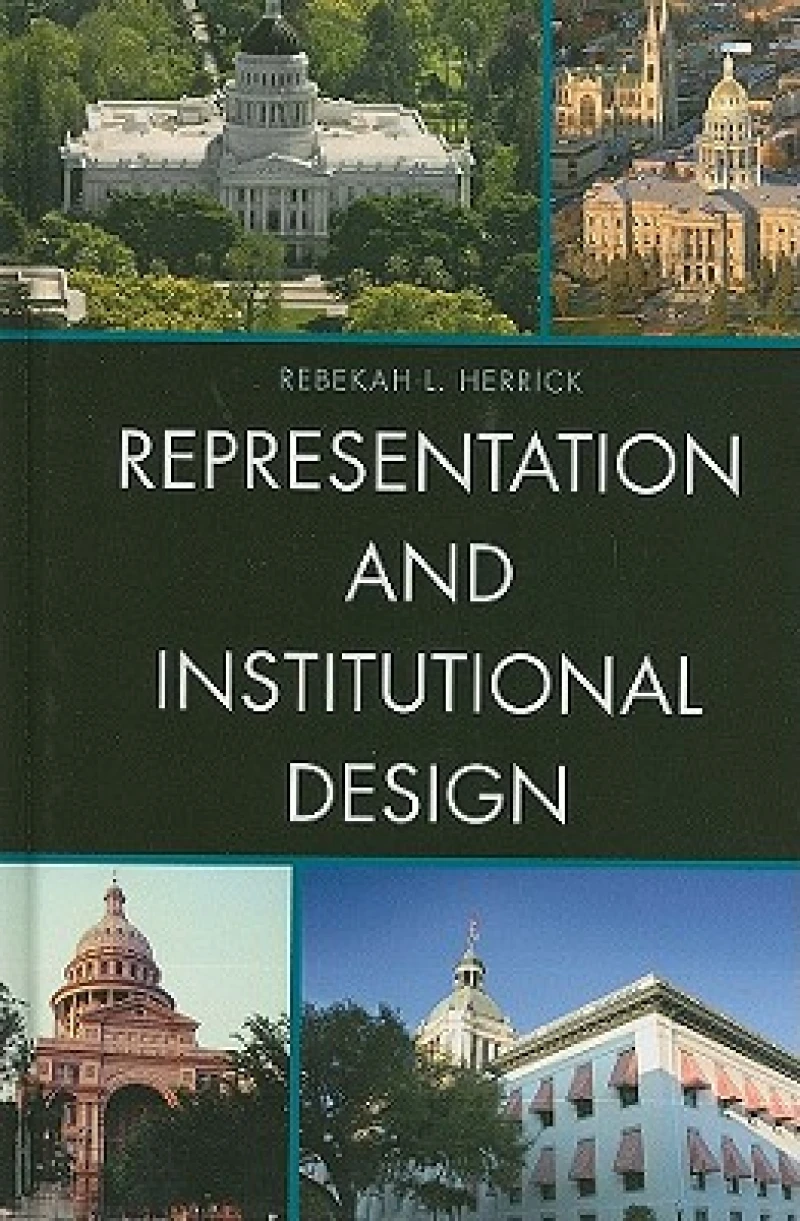
Representation and Institutional Design
Book Details
Format
Hardback or Cased Book
ISBN-10
0739150677
ISBN-13
9780739150672
Publisher
Bloomsbury Publishing Plc
Imprint
Lexington Books
Country of Manufacture
GB
Country of Publication
GB
Publication Date
Mar 31st, 2011
Print length
160 Pages
Weight
440 grams
Dimensions
24.00 x 16.30 x 1.80 cms
Product Classification:
Central government
Ksh 18,350.00
Manufactured on Demand
0 in stock
Delivery Location
Delivery fee: Select location
Secure
Quality
Fast
An enduring question for most nations has been how to best represent their citizens and their needs. This is a complex issue as there is no universally accepted definition of good representation. Representation and Institutional Design addresses the issues of institutions and representation by examining how variation in institutional design can affect many aspects of how legislators represent their constituents. It does so by examining the relationships between legislative design (electoral laws, term limits, professionalism, and district size and magnitude) and many aspects of representation (symbolic, service, and policy representation, as well as legislators' incentives to represent). A key finding is that each aspect of professionalism has a unique set of effects on representation. Legislators with staff have closer relationship with their constituents than others. Legislators with other legislative resources engage in more symbolic and service representation but not policy representation. And legislators in institutions with greater capacity were similar to others in their representative style. Findings also indicate that term limits weaken relationships between legislators and constituents and electoral laws, and district size and magnitude have some but limited effects. This is an important study not only because of the importance of representation but also because of the dearth of research on how institutional design affects representation in state legislatures.
An enduring question for most nations has been how to best represent their citizens and their needs. This is a complex issue as there is no universally accepted definition of good representation. Representation and Institutional Design addresses the issues of institutions and representation by examining how variation in institutional design can affect many aspects of how legislators represent their constituents. It does so by examining the relationships between legislative design (electoral laws, term limits, professionalism, and district size and magnitude) and many aspects of representation (symbolic, service, and policy representation, as well as legislators'' incentives to represent). A key finding is that each aspect of professionalism has a unique set of effects on representation. Legislators with staff have closer relationship with their constituents than others. Legislators with other legislative resources engage in more symbolic and service representation but not policy representation. And legislators in institutions with greater capacity were similar to others in their representative style. Findings also indicate that term limits weaken relationships between legislators and constituents and electoral laws, and district size and magnitude have some but limited effects. This is an important study not only because of the importance of representation but also because of the dearth of research on how institutional design affects representation in state legislatures.
Get Representation and Institutional Design by at the best price and quality guaranteed only at Werezi Africa's largest book ecommerce store. The book was published by Bloomsbury Publishing Plc and it has pages.

