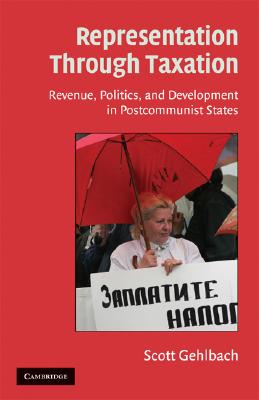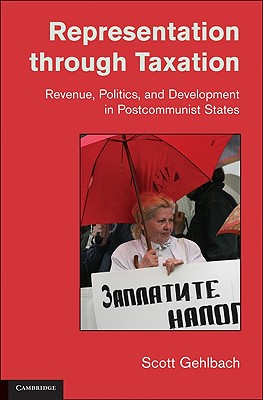
Representation Through Taxation : Revenue, Politics, and Development in Postcommunist States
Book Details
Format
Paperback / softback
Book Series
Cambridge Studies in Comparative Politics
ISBN-10
0521168805
ISBN-13
9780521168809
Publisher
Cambridge University Press
Imprint
Cambridge University Press
Country of Manufacture
GB
Country of Publication
GB
Publication Date
Sep 13th, 2010
Print length
216 Pages
Weight
32 grams
Dimensions
22.20 x 14.70 x 1.40 cms
Product Classification:
Politics & governmentPolitics and governmentComparative politicsPolitical economy
KSh 6,100.00
Currently unavailable
0 in stock
Delivery Location
Delivery fee: Select location
Secure
Quality
Fast
Social scientists teach that politicians favor groups that are organized over those that are not. Gehlbach uses the postcommunist experience to suggest an alternative model of policy choice, focusing on the incentive of politicians to promote sectors that are relatively easy to tax, regardless of their organization.
Social scientists teach that politicians favor groups that are organized over those that are not. Representation Through Taxation challenges this conventional wisdom. Emphasizing that there are limits to what organized interests can credibly promise in return for favorable treatment, Gehlbach shows that politicians may instead give preference to groups - organized or not. Gehlbach develops this argument in the context of the postcommunist experience, focusing on the incentive of politicians to promote sectors that are naturally more tax compliant, regardless of their organization. In the former Soviet Union, tax systems were structured around familiar revenue sources, magnifying this incentive and helping to prejudice policy against new private enterprise. In Eastern Europe, in contrast, tax systems were created to cast the revenue net more widely, encouraging politicians to provide the collective goods necessary for new firms to flourish.
Get Representation Through Taxation by Scott Gehlbach at the best price and quality guaranteed only at Werezi Africa's largest book ecommerce store. The book was published by Cambridge University Press and it has 216 pages.
Customers Who Bought This Also Bought
Regime Change
KSh 5,050.00

Art of War / The Book of Lord Shang
KSh 1,100.00
Wretched of the Earth
KSh 2,000.00

White Saviorism In International Development
KSh 3,800.00
How To Do Nothing
KSh 2,700.00

How Civil Wars Start
KSh 2,000.00

Tomorrow Is Yesterday
KSh 4,700.00

The Thinking Machine
KSh 2,350.00

Second Treatise of Government – Norton Library
KSh 1,600.00

Becoming
KSh 2,350.00

A River in Darkness
KSh 1,250.00
Warning to the West
KSh 1,600.00