
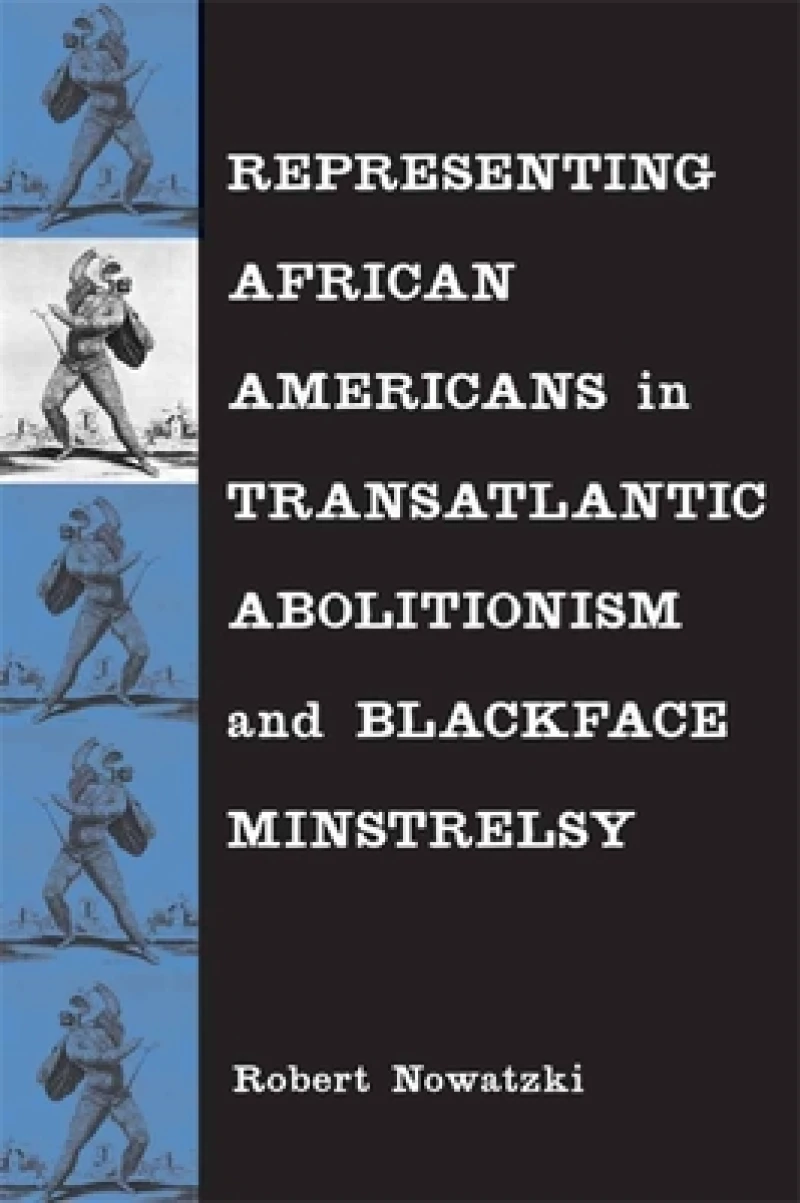
Representing African Americans in Transatlantic Abolitionism and Blackface Minstrelsy
Book Details
Format
Hardback or Cased Book
ISBN-10
0807136409
ISBN-13
9780807136409
Publisher
Louisiana State University Press
Imprint
Louisiana State University Press
Country of Manufacture
US
Country of Publication
GB
Publication Date
Jun 1st, 2010
Print length
232 Pages
Weight
476 grams
Dimensions
23.10 x 14.90 x 2.50 cms
Product Classification:
History of the AmericasHistory of the Americas
Ksh 6,000.00
Temporarily out of stock, due soon
0 in stock
Delivery Location
Delivery fee: Select location
Secure
Quality
Fast
In this intriguing study, Robert Nowatzki reveals the unexpected relationships between blackface entertainment and antislavery sentiment in the United States and Britain. He contends that the ideological ambiguity of both phenomena enabled the similarities between early minstrelsy and abolitionism in their depictions of African Americans.
In this intriguing study, Robert Nowatzki reveals the unexpected relationships between blackface entertainment and antislavery sentiment in the United States and Britain. He contends that the ideological ambiguity of both phenomena enabled the similarities between early minstrelsy and abolitionism in their depictions of African Americans, as well as their appropriations of each other's rhetoric, imagery, sentiment, and characterization. Because the antislavery movement had stronger support in Britain and an association with the middle classes, Nowatzki argues, its conflicts with blackface entertainment largely stemmed from British and American nationalism, class ideologies, and notions of ""highbrow"" and ""lowbrow"" culture.
Nowatzki examines the ideological clashes between representations of African Americans in the antislavery movement and in blackface entertainment, revealing their common ground. For instance, white abolitionists encouraged former slaves to relate their experiences in an exaggerated slave dialect that maintained the appearance of intellectual inferiority popularized by minstrel shows. Minstrelsy conflated African American culture with theatrical appropriations of it by white performers, but, as Nowatzki contends, the assumption that white actors could perform ""authentic"" blackness also undercut beliefs in racial essentialism -- the notion that racial groups possess distinctive essence.
Combining cultural studies with literary analysis, Nowatzki considers this staging of African American identity through a variety of texts, including slave narratives, travelogues, minstrel song lyrics, stump speeches, and antislavery pamphlets, as well as the literary works of Dickens, Thackeray, and Carlyle on one side of the Atlantic, and Melville, Emerson, Sarah Margaret Fuller, and William Wells Brown on the other. A thorough and engaging analysis, Representing African Americans in Transatlantic Abolitionism and Blackface Minstrelsy reveals how the most popular form of theatrical entertainment and the most significant reform movement of nineteenth-century Britain and America helped define cultural representations of African Americans.
Nowatzki examines the ideological clashes between representations of African Americans in the antislavery movement and in blackface entertainment, revealing their common ground. For instance, white abolitionists encouraged former slaves to relate their experiences in an exaggerated slave dialect that maintained the appearance of intellectual inferiority popularized by minstrel shows. Minstrelsy conflated African American culture with theatrical appropriations of it by white performers, but, as Nowatzki contends, the assumption that white actors could perform ""authentic"" blackness also undercut beliefs in racial essentialism -- the notion that racial groups possess distinctive essence.
Combining cultural studies with literary analysis, Nowatzki considers this staging of African American identity through a variety of texts, including slave narratives, travelogues, minstrel song lyrics, stump speeches, and antislavery pamphlets, as well as the literary works of Dickens, Thackeray, and Carlyle on one side of the Atlantic, and Melville, Emerson, Sarah Margaret Fuller, and William Wells Brown on the other. A thorough and engaging analysis, Representing African Americans in Transatlantic Abolitionism and Blackface Minstrelsy reveals how the most popular form of theatrical entertainment and the most significant reform movement of nineteenth-century Britain and America helped define cultural representations of African Americans.
Get Representing African Americans in Transatlantic Abolitionism and Blackface Minstrelsy by at the best price and quality guaranteed only at Werezi Africa's largest book ecommerce store. The book was published by Louisiana State University Press and it has pages.

