
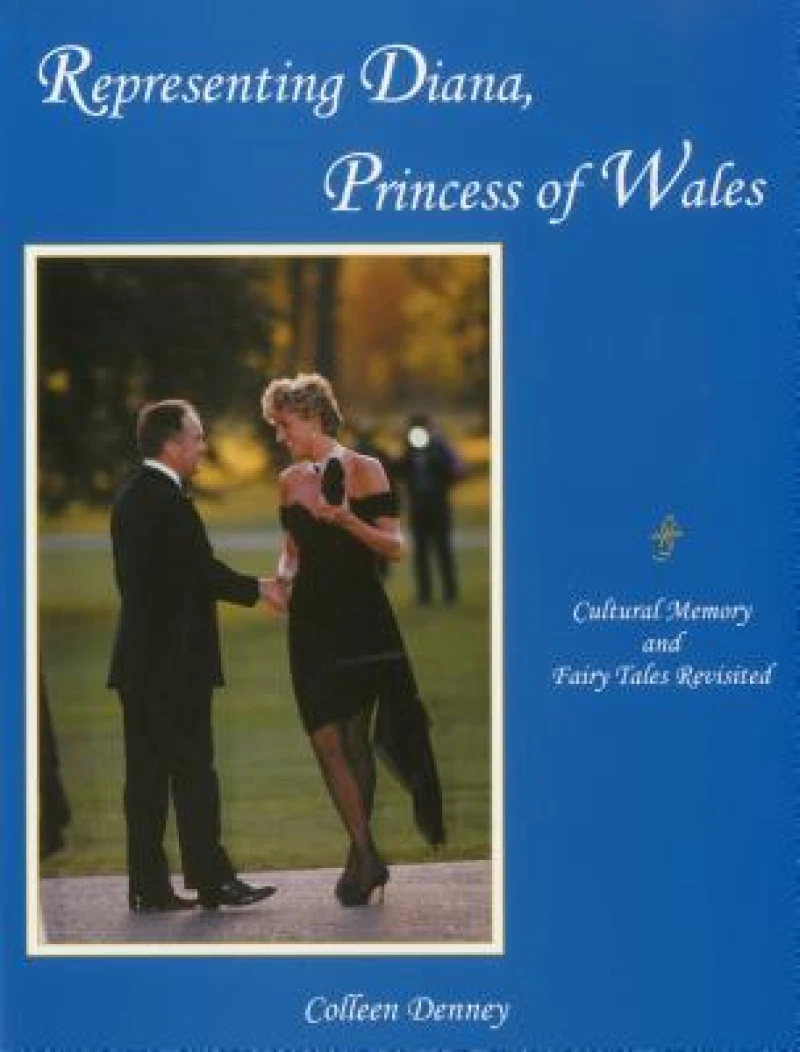
Representing Diana, Princess of Wales : Cultural Memory and Fairy Tales Revisited
Book Details
Format
Hardback or Cased Book
ISBN-10
1611472806
ISBN-13
9781611472806
Publisher
Fairleigh Dickinson University Press
Imprint
Fairleigh Dickinson University Press
Country of Manufacture
US
Country of Publication
GB
Publication Date
Apr 1st, 2005
Print length
188 Pages
Weight
898 grams
Dimensions
29.00 x 22.50 x 1.50 cms
Product Classification:
Literary reference works
Ksh 13,300.00
Werezi Extended Catalogue
0 in stock
Delivery Location
Delivery fee: Select location
Secure
Quality
Fast
In this well-illustrated text, Dr. Denney asserts that the artists who image Diana, Princess of Wales, have framed her according to a cultural memory based on traditions of royal portraiture and according to twentieth-century reassertions (that is, reframings) of the debate over feminism and femininity in visual culture. Art historians and literary critics have examined the visual culture of Queen Victoria, Queen Elizabeth I, Queen Elizabeth II, and more recently, images of women in the court of Charles II, but no one has addressed, as the author does here, the impact of imaging Diana, Princess of Wales, at a time in British culture when feminism and femininity collide. Dr. Denney critiques art historical traditions of portraiture in order to argue that a princess must perform a constructed role of femininity, one that corresponds to Victorian codes of royal protocol, visual practice, and behavior. The book encompasses themes of marriage, motherhood, philanthropy, royal dress, and autobiography. Through an examination of nineteenth- and twentieth-century paintings, photographs, engravings, and popular illustrations, the study engages a comparative visual dialogue on the imaging of royal women. Looking particularly at the nineteenth-century Princess of Wales, Alexandra (born Princess Alexandra of Denmark), the author reveals the persistence of a cultural memory in terms of the proper roles and behaviors of a princess from the nineteenth century to the twentieth century. By looking at portraits of Diana, Princess of Wales, in conjunction with past royal portraits, the study determines that she, like Princess Alexandra before her, is conscious of tradition and employs it as a matter of survival. The book's methods in this regard include an exploration of royal portrait traditions, gender studies, popular journalism, theories on feminist biography and autobiography, as well as costume theory and history to contextualize the representation of Diana, Princess of Wales. How does one address the insistence on
In this well-illustrated text, Dr. Denney asserts that the artists who image Diana, Princess of Wales, have framed her according to a cultural memory based on traditions of royal portraiture and according to twentieth-century reassertions (that is, reframings) of the debate over feminism and femininity in visual culture. Art historians and literary critics have examined the visual culture of Queen Victoria, Queen Elizabeth I, Queen Elizabeth II, and more recently, images of women in the court of Charles II, but no one has addressed, as the author does here, the impact of imaging Diana, Princess of Wales, at a time in British culture when feminism and femininity collide. Dr. Denney critiques art historical traditions of portraiture in order to argue that a princess must perform a constructed role of femininity, one that corresponds to Victorian codes of royal protocol, visual practice, and behavior. The book encompasses themes of marriage, motherhood, philanthropy, royal dress, and autobiography. Through an examination of nineteenth- and twentieth-century paintings, photographs, engravings, and popular illustrations, the study engages a comparative visual dialogue on the imaging of royal women. Looking particularly at the nineteenth-century Princess of Wales, Alexandra (born Princess Alexandra of Denmark), the author reveals the persistence of a cultural memory in terms of the proper roles and behaviors of a princess from the nineteenth century to the twentieth century. By looking at portraits of Diana, Princess of Wales, in conjunction with past royal portraits, the study determines that she, like Princess Alexandra before her, is conscious of tradition and employs it as a matter of survival. The book''s methods in this regard include an exploration of royal portrait traditions, gender studies, popular journalism, theories on feminist biography and autobiography, as well as costume theory and history to contextualize the representation of Diana, Princess of Wales. How does one address the insistence on
Get Representing Diana, Princess of Wales by at the best price and quality guaranteed only at Werezi Africa's largest book ecommerce store. The book was published by Fairleigh Dickinson University Press and it has pages.

