
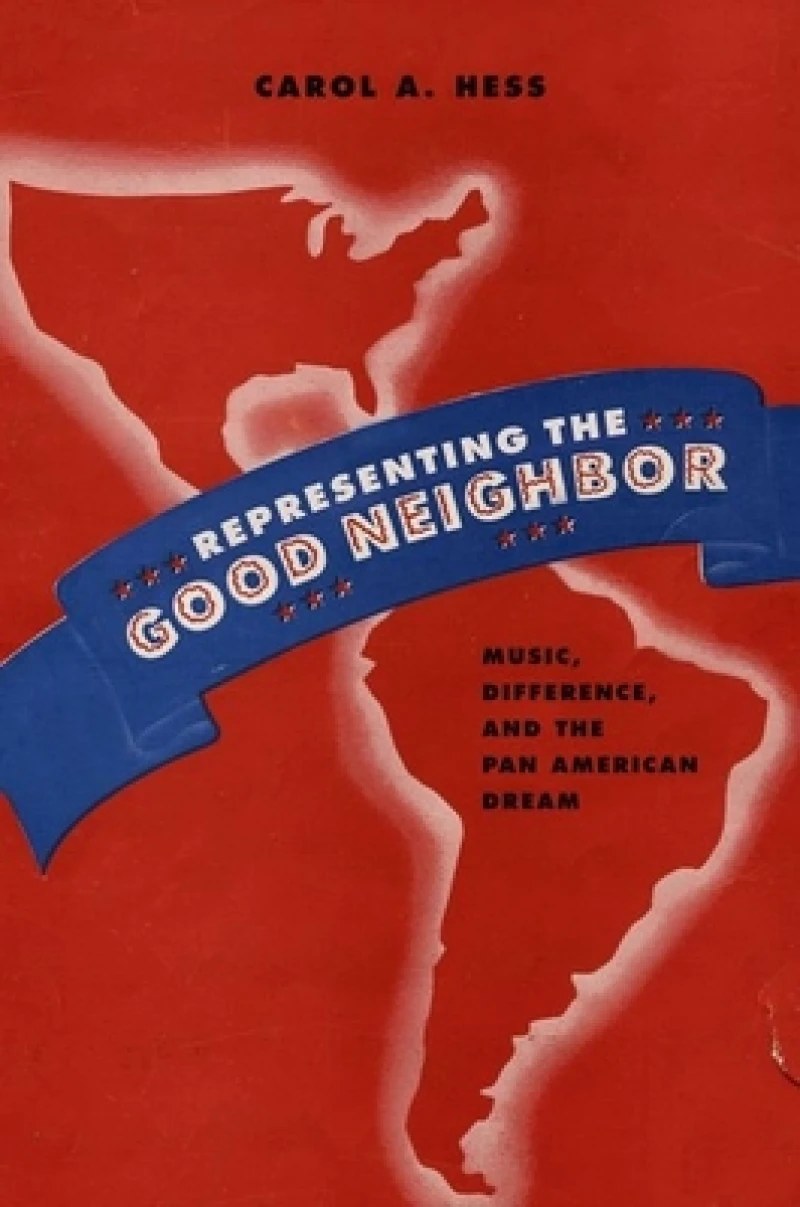
Representing the Good Neighbor : Music, Difference, and the Pan American Dream
Book Details
Format
Hardback or Cased Book
Book Series
Currents in Latin American and Iberian Music
ISBN-10
0199919992
ISBN-13
9780199919994
Publisher
Oxford University Press Inc
Imprint
Oxford University Press Inc
Country of Manufacture
GB
Country of Publication
GB
Publication Date
Nov 28th, 2013
Print length
336 Pages
Weight
618 grams
Dimensions
24.00 x 16.80 x 2.60 cms
Ksh 11,050.00
Manufactured on Demand
0 in stock
Delivery Location
Delivery fee: Select location
Secure
Quality
Fast
In this book, Carol A. Hess investigates the reception of Latin American art music in the US during the Pan American movement of the 1930s and 40s. Hess uncovers how and why attitudes towards Latin American music shifted so dramatically during the middle of the twentieth century, and what this tells us about the ways in which the history of American music has been written.
In Representing the Good Neighbor, Carol A. Hess investigates the reception of Latin American art music in the US during the Pan American movement of the 1930s and 40s. An amalgamation of economic, political and cultural objectives, Pan Americanism was premised on the idea that the Americas were bound by geography, common interests, and a shared history, and stressed the psychological and spiritual bonds between the North and South. Threatened by European Fascism, the US government wholeheartedly embraced this movement as a way of recruiting Latin American countries as political partners. In a concerted effort to promote a sameness-embracing attitude between the US and Latin America, it established, in collaboration with entities such as the Pan American Union, exchange programs for US and Latin American composers as well as a series of contests, music education projects, and concerts dedicated to Latin American music. Through comparisons of the work of three of the most prominent Latin American composers of the period - Carlos Chávez, Heitor Villa-Lobos and Alberto Ginastera - Hess shows that the resulting explosion of Latin American music in the US during the 30s and 40s was accompanied by a widespread - though by no means universal - embracement by critics as an exemplar of cosmopolitan universalism. Aspects shared between the music of US composers and that of their neighbors to the south were often touted and applauded. Yet, by the end of the Cold War period, critics had reverted to viewing Latin American music through the lens of difference and exoticism. In comparing these radically different modes of reception, Hess uncovers how and why attitudes towards Latin American music shifted so dramatically during the middle of the twentieth century, and what this tells us about the ways in which the history of American music has been written. As the first book to examine in detail the critical reception of Latin American music in the United States, Representing the Good Neighbor promises to be a landmark in the field of American music studies, and will be essential reading for students and scholars of music in the US and Latin America during the twentieth-century. It will also appeal to historians studying US-Latin America relations, as well as general readers interested in the history of American music.
Get Representing the Good Neighbor by at the best price and quality guaranteed only at Werezi Africa's largest book ecommerce store. The book was published by Oxford University Press Inc and it has pages.

