
Reproducing Racism : How Everyday Choices Lock in White Advantage
Book Details
Delivery Location
Delivery fee: Select location
Argues that racial inequality reproduces itself automatically over time because early unfair advantage for whites has paved the way for continuing advantage
This book is designed to change the way we think about racial inequality. Long after the passage of civil rights laws, blacks and Latinos possess barely a nickel of wealth for every dollar that whites have. Why have we made so little progress?
Legal scholar Daria Roithmayr provocatively argues that racial inequality lives on because white advantage functions as a powerful self-reinforcing monopoly, reproducing itself automatically from generation to generation even in the absence of intentional discrimination. Drawing on work in antitrust law and a range of other disciplines, Roithmayr brilliantly compares the dynamics of white advantage to the unfair tactics of giants like AT&T and Microsoft.
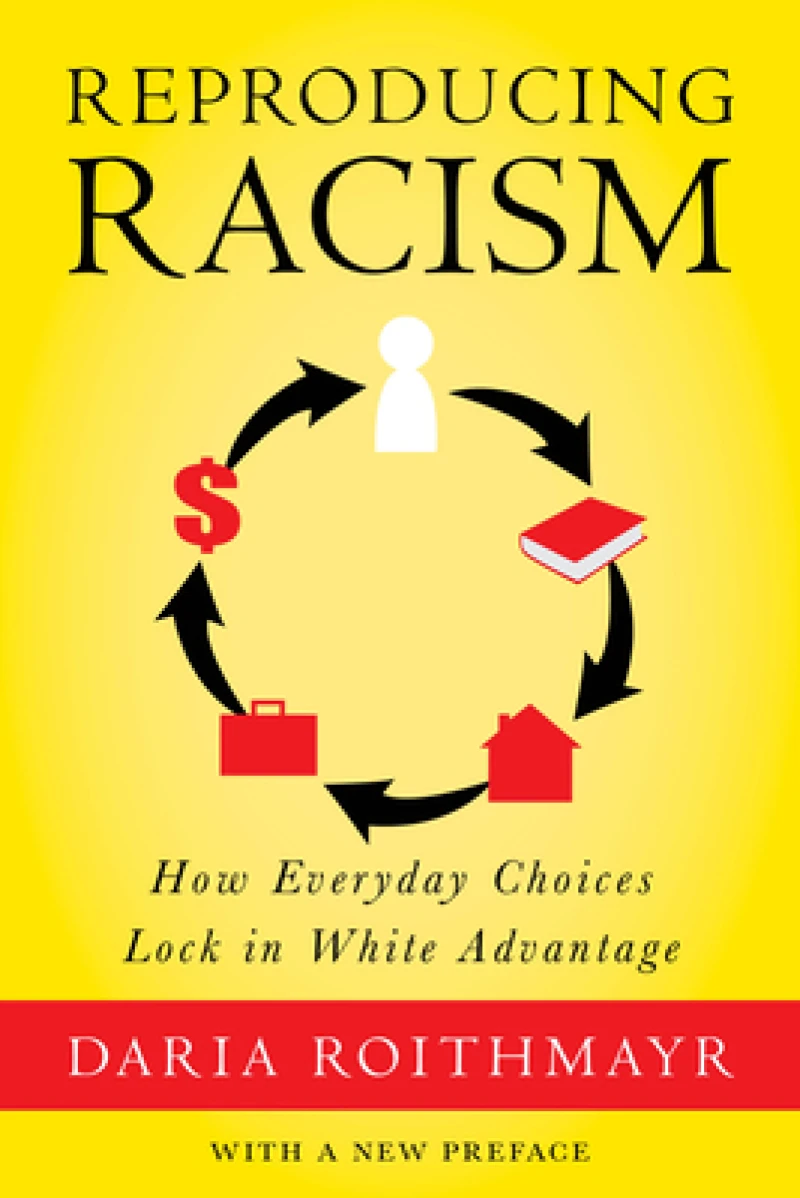
With penetrating insight, Roithmayr locates the engine of white monopoly in positive feedback loops that connect the dramatic disparity of Jim Crow to modern racial gaps in jobs, housing and education. Wealthy white neighborhoods fund public schools that then turn out wealthy white neighbors. Whites with lucrative jobs informally refer their friends, who refer their friends, and so on. Roithmayr concludes that racial inequality might now be locked in place, unless policymakers immediately take drastic steps to dismantle this oppressive system.
Get Reproducing Racism by at the best price and quality guaranteed only at Werezi Africa's largest book ecommerce store. The book was published by New York University Press and it has pages.

