
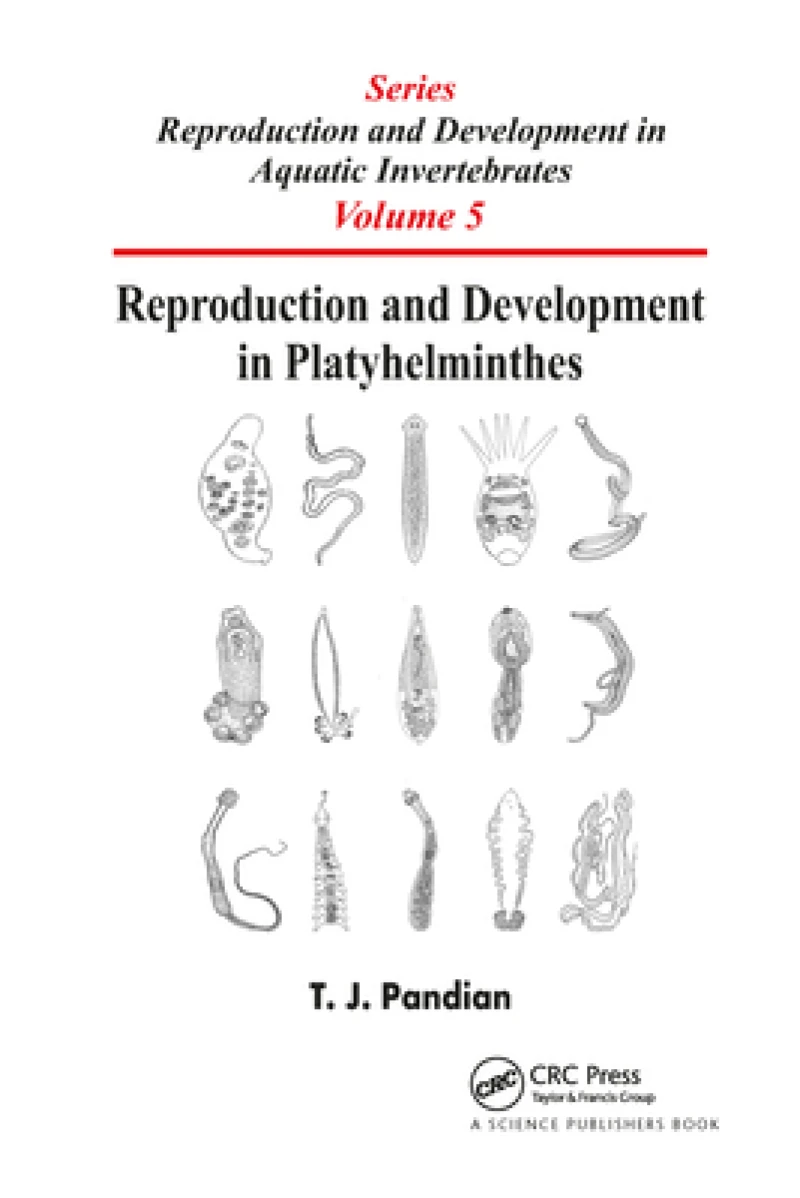
Reproduction and Development in Platyhelminthes
Book Details
Delivery Location
Delivery fee: Select location
This book is a comprehensive elucidation on aspects of reproduction and development in platyhelminthes covering from acoelids to taeniids. With the unique presence of neoblasts, turbellarians serve as a model for studies on cancer and senescence. Of ~ 27,000 species, ~ 77% are parasites; they are harmful to man and his food basket from livestock and fish. The stress hormone, cortisol level is responsible for susceptibility and resistance of the host. In digeneans, the propagatory multiplication potency is retained by all the larval forms and in either direction in sporocyst. The higher clonal diversity, mixing and selection in Second Intermediate Host (SIH) may purge inbreeding depression suffered by the fluke on propagatory multiplication in First Intermediate Host (FIH). Of 12,012 digeneans, 88% may engage 33,014 potential SIH species. They have the choice to select one among the available/awaiting 3.5 host species. The motility of vertebrate host and euryxenic flexibility/scope for selection of SIH species has increased lineage diversification in digeneans. The life cycle of cestodes is divided into aquatic and terrestrial patterns. The former includes (i) oncosphere and (ii) coracidium types and the latter (iii) hexacanth-cysticercoid, (iv) hexacanth-tetrathyridium and (v) hexacanth-cysticercus types. The share for the oncosphere, coracidium and hexacanth types is 17.0, 29.5 and 46.5%, respectively. The staggering fecundity and adoption of the intermediate host in the herbivorous/insectivorous food chain have enriched Taenioidea as the most (2,264) speciose order. Sex specific genes Smed-dmd 1 and macbol have been identified, and neuropeptides and dipeptides are involved in sexualization. Trematodes are unable to parasitize elasmobranchs, as they cannot suck body fluid/blood containing a high level of urea. Relatively higher fecundity supplemented with propagatory multiplication, incorporation of SIH in 88% species, clonal selection in SIH, and euryxenic flexibility and the widest choice for selection of SIH have led to the highest lineage diversification to render digeneans as the most speciose order in Platyhelminthes.
Get Reproduction and Development in Platyhelminthes by at the best price and quality guaranteed only at Werezi Africa's largest book ecommerce store. The book was published by Taylor & Francis Ltd and it has pages.

