
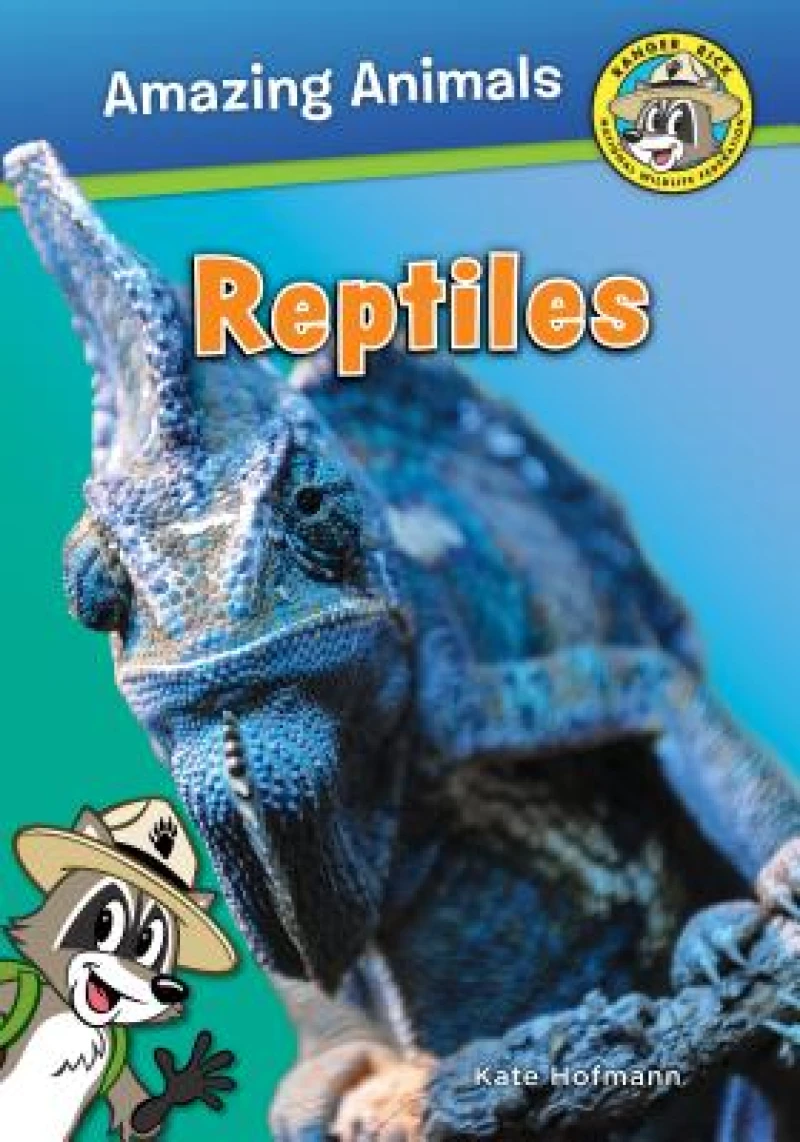
Reptiles
by
Kate Hofmann
Book Details
Format
Paperback / Softback
Book Series
Ranger Rick: Amazing Animals
ISBN-10
1630762024
ISBN-13
9781630762025
Publisher
Muddy Boots Press
Imprint
Muddy Boots Press
Country of Manufacture
US
Country of Publication
GB
Publication Date
Sep 15th, 2016
Print length
40 Pages
Weight
158 grams
Dimensions
18.00 x 25.40 x 0.20 cms
Product Classification:
Wildlife (Children's / Teenage)
Ksh 1,200.00
Re-Printing
0 in stock
Delivery Location
Delivery fee: Select location
Secure
Quality
Fast
This book brings the world of reptiles to life with eye-catching photos and captivating information about turtles, snakes, lizards, crocodiles, and their scaly-skinned kin. Readers will learn how reptiles survive in many habitats, from hot deserts to tropical forests and even under the sea. They’ll get an up-close look at reptiles’ amazing senses, tricky defenses, and wide variety of strategies for moving around, catching and eating food, and bearing young. ·What makes a reptile a reptile? (scaly skin, cold-blooded, vertebrates, young look like small adults)·Taxonomy (four living groups: turtles and tortoises; lizards and snakes; crocodilians; tuatara)·The world through reptile senses (examples of special senses such as snakes’ ability to taste air with the tongue and detect infrared heat, chameleons’ ability to move eyes independently)·Strategies for getting and eating food – some reptiles eat plants (turtles, iguanas), others eat meat. Hunters use many different strategies, including constriction (boas) and venom (many other snakes, gila monster, komodo dragon). Chameleon shoots its long tongue out to catch prey . The egg-eating snake unhinges its jaw to swallow eggs.·Defenses – camouflage (chameleons) and mimicry, shells (turtles), venom, warnings (rattlesnake), and specific “wow” examples such as losing a tail (skinks), squirting blood from eyes (horned lizard), and unfurling a giant skin flap around its head (frilled lizard)·Adaptations for different habitats – dealing with extreme heat and lack of water (scaly skin keeps water in, thorny devil collects water from dew with grooves on its spikes). Others are adapted for freshwater or marine life, or for life in the trees.·Amazing moves – geckos’ ability to grip with their feet, “flying” geckos and snakes, basilisk lizard that runs on water.·Reproduction – most reptiles lay eggs, a few bear live young; most don’t take care of offspring but some do guard eggs or young. Temperature of eggs, rather than genetics, determines whether offspring are male or female.·Conservation – threats, endangered species, and a few examples of how people are helping to protect reptiles.·Invitations to explore – sidebars throughout give readers tips for investigating reptiles where they live.·Fast facts – eye-catching boxes provide information for fact-collectors: the smallest and largest reptiles, the fastest and slowest, the number of species today vs. in ancient times when reptiles “ruled.”
This book brings the world of reptiles to life with eye-catching photos and captivating information about turtles, snakes, lizards, crocodiles, and their scaly-skinned kin. Readers will learn how reptiles survive in many habitats, from hot deserts to tropical forests and even under the sea. They’ll get an up-close look at reptiles’ amazing senses, tricky defenses, and wide variety of strategies for moving around, catching and eating food, and bearing young. ·What makes a reptile a reptile? (scaly skin, cold-blooded, vertebrates, young look like small adults)·Taxonomy (four living groups: turtles and tortoises; lizards and snakes; crocodilians; tuatara)·The world through reptile senses (examples of special senses such as snakes’ ability to taste air with the tongue and detect infrared heat, chameleons’ ability to move eyes independently)·Strategies for getting and eating food – some reptiles eat plants (turtles, iguanas), others eat meat. Hunters use many different strategies, including constriction (boas) and venom (many other snakes, gila monster, komodo dragon). Chameleon shoots its long tongue out to catch prey . The egg-eating snake unhinges its jaw to swallow eggs. ·Defenses – camouflage (chameleons) and mimicry, shells (turtles), venom, warnings (rattlesnake), and specific “wow” examples such as losing a tail (skinks), squirting blood from eyes (horned lizard), and unfurling a giant skin flap around its head (frilled lizard)·Adaptations for different habitats – dealing with extreme heat and lack of water (scaly skin keeps water in, thorny devil collects water from dew with grooves on its spikes). Others are adapted for freshwater or marine life, or for life in the trees. ·Amazing moves – geckos’ ability to grip with their feet, “flying” geckos and snakes, basilisk lizard that runs on water. ·Reproduction – most reptiles lay eggs, a few bear live young; most don’t take care of offspring but some do guard eggs or young. Temperature of eggs, rather than genetics, determines whether offspring are male or female. ·Conservation – threats, endangered species, and a few examples of how people are helping to protect reptiles. ·Invitations to explore – sidebars throughout give readers tips for investigating reptiles where they live. ·Fast facts – eye-catching boxes provide information for fact-collectors: the smallest and largest reptiles, the fastest and slowest, the number of species today vs. in ancient times when reptiles “ruled.”
Get Reptiles by at the best price and quality guaranteed only at Werezi Africa's largest book ecommerce store. The book was published by Muddy Boots Press and it has pages.

