

Requirements Engineering : Fundamentals, Principles, and Techniques
Second Edition 2025
Book Details
Delivery Location
Delivery fee: Select location
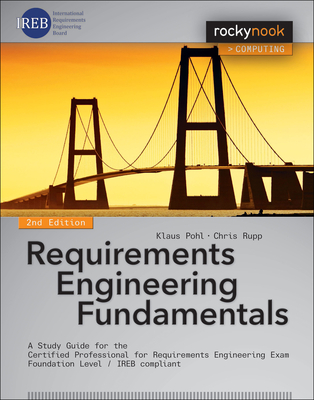
This textbook provides a comprehensive and well-structured introduction to the fundamentals, principles, and techniques of requirements engineering (RE). It presents approved techniques for eliciting, negotiating, and documenting as well as validating, and managing requirements for software-intensive systems. The various aspects of the process and the techniques are illustrated using numerous examples based on extensive teaching experience and industrial collaborations.
The book is structured in five parts. Part I Fundamentals and Framework provides a comprehensive introduction to the fundamentals of RE, illustrates why it is a critical success factor for any software development project, and describes different ways of implementing it in an organization and its role in different software engineering process models. Part II Requirements Engineering Context explains the essential role and influence of the RE context on system requirements, defines basic terms,and introduces the concept of context perspectives to support context consideration. Part III Core Activities describes requirements elicitation, documentation, and negotiation and conflict resolution strategies. Part IV Requirements Artefacts explains the management of goals, scenarios, and solution-oriented requirements, including methodologies like i* and KAOS. Eventually, Part V Cross-Sectional Activities details four validation and three management activities. This second edition of Pohls widely used and trusted textbook provides a considerable number of updates, places a stronger focus on the consideration of the context, puts a stronger emphasis on conflict resolution, and includes new, expanded and revised techniques.
The presentation aims at professionals, students, and lecturers in systems and software engineering or business applications development. Professionals such as project managers, software architects, systems analysts, and software engineers will benefit in their daily work from the didactically well-presented combination of validated procedures and industrial experience. Students and lecturers will appreciate the comprehensive description of sound fundamentals, principles, and techniques, which is completed by a huge, commented list of references for further reading. Lecturers will find additional teaching material on the books website, www.requirements-book.com.
Get Requirements Engineering by Klaus Pohl at the best price and quality guaranteed only at Werezi Africa's largest book ecommerce store. The book was published by Springer-Verlag Berlin and Heidelberg GmbH & Co. KG and it has 889 pages.
Customers Who Bought This Also Bought

Computational Finance
KSh 16,400.00

Algebra and Discrete Mathematics for Economics
KSh 13,150.00

Strategic Enterprise Architecture Management
KSh 19,000.00

Artificial Intelligence Applications for Smart Societies
KSh 25,200.00

Data Mining for Social Network Data
KSh 16,200.00
Business Intelligence and Modelling
KSh 32,400.00

Emerging Frontiers in Operations and Supply Chain Management
KSh 27,000.00
Business Analytics
KSh 21,600.00

Encryption for Organizations and Individuals
KSh 9,900.00

Sampling Techniques for Supervised or Unsupervised Tasks
KSh 18,000.00

Technology Adoption in the Caribbean Tourism Industry
KSh 19,800.00
Hybrid Virtual Teams in Shared Services Organizations
KSh 16,200.00



More in This Genre
Computational Finance
KSh 16,400.00
Algebra and Discrete Mathematics for Economics
KSh 13,150.00
Strategic Enterprise Architecture Management
KSh 19,000.00
Artificial Intelligence Applications for Smart Societies
KSh 25,200.00
Data Mining for Social Network Data
KSh 16,200.00
Business Intelligence and Modelling
KSh 32,400.00
