
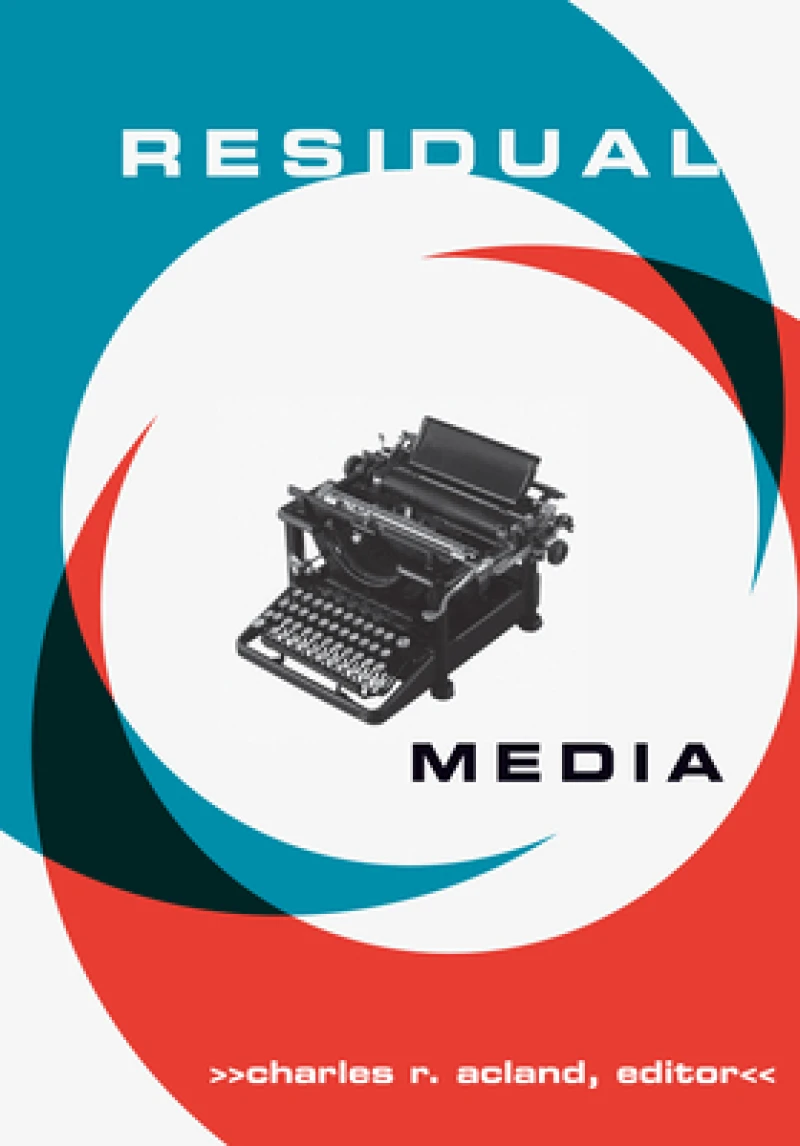
Residual Media
Book Details
Format
Paperback / Softback
ISBN-10
0816644721
ISBN-13
9780816644728
Publisher
University of Minnesota Press
Imprint
University of Minnesota Press
Country of Manufacture
GB
Country of Publication
GB
Publication Date
Feb 13th, 2007
Print length
432 Pages
Weight
796 grams
Dimensions
17.80 x 25.20 x 2.20 cms
Product Classification:
Media studies
Ksh 4,450.00
Werezi Extended Catalogue
0 in stock
Delivery Location
Delivery fee: Select location
Secure
Quality
Fast
In a society that breathlessly awaits “the new” in every medium, what happens to last year’s new? Ample critical energy has gone into the study of new media, genres, and communities. But what becomes of discarded media? In what manner do the products of technological change reappear as environmental problems, as “the new” in another part of the world, as collectibles, as memories, and as art? Residual Media grapples with these questions and more in a wide-ranging and eclectic collection of essays. Beginning with how cultural change bumps along unevenly, dragging the familiar into novel contexts, the contributors examine how leftover artifacts can be rediscovered occupying space in storage sheds, traveling the globe, converting to alternative uses, and accumulating in landfills. By exploring reconfigured, renewed, recycled, neglected, abandoned, and trashed media, the essays here combine theoretical challenges to media history with ideas, technology, and uses that have been left behind. From player pianos to vinyl records, and from the typewriter to the telephone, Residual Media is an innovative approach to the aging of culture and reveals that, ultimately, new cultural phenomena rely on encounters with the old. Contributors: Jennifer Adams, DePauw U; Jody Berland, York U; Sue Currell, U of Sussex; Maria DiCenzo, Wilfrid Laurier U; Kate Egan, U of Wales; Lisa Gitelman, Catholic U; Alison Griffiths, CUNY; James Hamilton, U of Georgia; James Hay, U of Illinois-Champaign-Urbana; Michelle Henning, U of the West of England; Lisa Parks, UC Santa Barbara; Hillegonda C. Rietveld, South Bank U; Leila Ryan, McMaster U; John Davis, Alfred U; Collette Snowden, U of South Australia; Jonathan Sterne, McGill U; JoAnne Stober, National Archives, Canada; Will Straw, McGill U; Haidee Wasson, Concordia U. Charles R. Acland is Professor and holds the Concordia University Research Chair in communications studies at Concordia University, Montreal.
In a society that breathlessly awaits “the new” in every medium, what happens to last year’s new? Ample critical energy has gone into the study of new media, genres, and communities. But what becomes of discarded media? In what manner do the products of technological change reappear as environmental problems, as “the new” in another part of the world, as collectibles, as memories, and as art?
Residual Media grapples with these questions and more in a wide-ranging and eclectic collection of essays. Beginning with how cultural change bumps along unevenly, dragging the familiar into novel contexts, the contributors examine how leftover artifacts can be rediscovered occupying space in storage sheds, traveling the globe, converting to alternative uses, and accumulating in landfills. By exploring reconfigured, renewed, recycled, neglected, abandoned, and trashed media, the essays here combine theoretical challenges to media history with ideas, technology, and uses that have been left behind.
From player pianos to vinyl records, and from the typewriter to the telephone, Residual Media is an innovative approach to the aging of culture and reveals that, ultimately, new cultural phenomena rely on encounters with the old.
Contributors: Jennifer Adams, DePauw U; Jody Berland, York U; Sue Currell, U of Sussex; Maria DiCenzo, Wilfrid Laurier U; Kate Egan, U of Wales; Lisa Gitelman, Catholic U; Alison Griffiths, CUNY; James Hamilton, U of Georgia; James Hay, U of Illinois—Champaign-Urbana; Michelle Henning, U of the West of England; Lisa Parks, UC Santa Barbara; Hillegonda C. Rietveld, South Bank U; Leila Ryan, McMaster U; John Davis, Alfred U; Collette Snowden, U of South Australia; Jonathan Sterne, McGill U; JoAnne Stober, National Archives, Canada; Will Straw, McGill U; Haidee Wasson, Concordia U.
Charles R. Acland is Professor and holds the Concordia University Research Chair in communications studies at Concordia University, Montreal.
Residual Media grapples with these questions and more in a wide-ranging and eclectic collection of essays. Beginning with how cultural change bumps along unevenly, dragging the familiar into novel contexts, the contributors examine how leftover artifacts can be rediscovered occupying space in storage sheds, traveling the globe, converting to alternative uses, and accumulating in landfills. By exploring reconfigured, renewed, recycled, neglected, abandoned, and trashed media, the essays here combine theoretical challenges to media history with ideas, technology, and uses that have been left behind.
From player pianos to vinyl records, and from the typewriter to the telephone, Residual Media is an innovative approach to the aging of culture and reveals that, ultimately, new cultural phenomena rely on encounters with the old.
Contributors: Jennifer Adams, DePauw U; Jody Berland, York U; Sue Currell, U of Sussex; Maria DiCenzo, Wilfrid Laurier U; Kate Egan, U of Wales; Lisa Gitelman, Catholic U; Alison Griffiths, CUNY; James Hamilton, U of Georgia; James Hay, U of Illinois—Champaign-Urbana; Michelle Henning, U of the West of England; Lisa Parks, UC Santa Barbara; Hillegonda C. Rietveld, South Bank U; Leila Ryan, McMaster U; John Davis, Alfred U; Collette Snowden, U of South Australia; Jonathan Sterne, McGill U; JoAnne Stober, National Archives, Canada; Will Straw, McGill U; Haidee Wasson, Concordia U.
Charles R. Acland is Professor and holds the Concordia University Research Chair in communications studies at Concordia University, Montreal.
Get Residual Media by at the best price and quality guaranteed only at Werezi Africa's largest book ecommerce store. The book was published by University of Minnesota Press and it has pages.

