

Resource Curse and Post-Soviet Eurasia : Oil, Gas, and Modernization
Book Details
Format
Paperback / softback
ISBN-10
0739143743
ISBN-13
9780739143742
Publisher
Bloomsbury Publishing Plc
Imprint
Lexington Books
Country of Manufacture
GB
Country of Publication
GB
Publication Date
Dec 8th, 2011
Print length
226 Pages
Weight
332 grams
Dimensions
22.70 x 15.40 x 1.70 cms
Product Classification:
Encyclopaedias & reference worksEncyclopaedias and reference worksSociety and culture: generalSociety & culture: generalSociologyPolitics & governmentPolitics and governmentCentral / national / federal government policiesCentral government policiesEconomicsMacroeconomicsPolitical economyBusiness & managementBusiness and ManagementEconomic geography
KSh 9,800.00
Currently unavailable
0 in stock
Delivery Location
Delivery fee: Select location
Secure
Quality
Fast
Resource Curse and Post-Soviet Eurasia: Oil, Gas, and Modernization is an in-depth analysis on the impact of oil and gas abundance on political, economic, and social developments of Russia and other post-Soviet states and nations (such as Kazakhstan and Azerbaijan). The chapters of the book systematically examine various effects of 'resource curse' in different arenas such as state building, regime changes, rule of law, property rights, policy-making, interest representation, and international relations in theoretical, historical, and comparative perspectives.
Get Resource Curse and Post-Soviet Eurasia by Otar Marganiya, Vladimir Gel'man at the best price and quality guaranteed only at Werezi Africa's largest book ecommerce store. The book was published by Bloomsbury Publishing Plc and it has 226 pages.
Customers Who Bought This Also Bought
Aquatic and Wetland Plants of Southeastern Unite – Monocotyledons
KSh 17,150.00
Encyclopedia of the Antarctic
KSh 98,000.00

Research Methods in the Dance Sciences
KSh 13,000.00

Star Trek Timelines
KSh 7,200.00

APA Handbook of Behavior Analysis
KSh 60,650.00

My First 18 Years - Born in 1956
KSh 2,700.00

World Guide to Libraries 2024
KSh 194,600.00

Kürschners Deutscher Gelehrten-Kalender. 3. Ausgabe 1928/29
KSh 152,750.00

Ramsay’s British Diecast Model Toys Catalogue
KSh 6,300.00

Robin Hood Handbook
KSh 3,950.00
Untersuchung und Konstruktion schwieriger Raumgebilde
KSh 19,000.00
Schachmatt
KSh 19,000.00
More by Otar Marganiya, Vladimir Gel'man
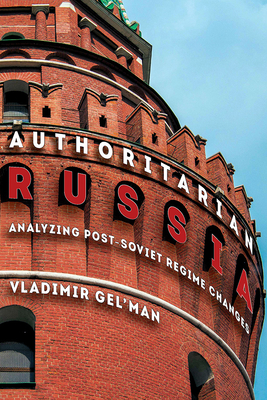
Authoritarian Russia
KSh 8,400.00
The Politics of Bad Governance in Contemporary Russia
KSh 5,150.00
The Politics of Bad Governance in Contemporary Russia
KSh 11,500.00
Russian Path
KSh 4,850.00
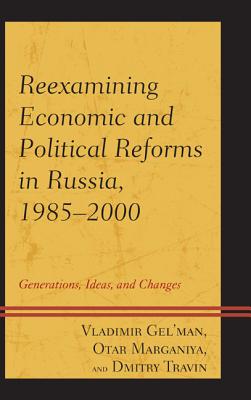
Reexamining Economic and Political Reforms in Russia, 1985–2000
KSh 8,650.00
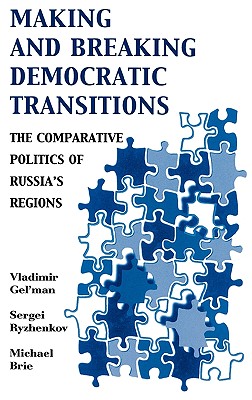
Making and Breaking Democratic Transitions
KSh 9,000.00
More in This Genre
Aquatic and Wetland Plants of Southeastern Unite – Monocotyledons
KSh 17,150.00
Encyclopedia of the Antarctic
KSh 98,000.00
Research Methods in the Dance Sciences
KSh 13,000.00
Star Trek Timelines
KSh 7,200.00
APA Handbook of Behavior Analysis
KSh 60,650.00
My First 18 Years - Born in 1956
KSh 2,700.00
