

Responsive Judicial Review : Democracy and Dysfunction in the Modern Age
Book Details
Format
Hardback
Book Series
Oxford Comparative Constitutionalism
ISBN-10
0192865773
ISBN-13
9780192865779
Publisher
Oxford University Press
Imprint
Oxford University Press
Country of Manufacture
GB
Country of Publication
GB
Publication Date
Feb 16th, 2023
Print length
320 Pages
Weight
626 grams
Dimensions
24.00 x 16.40 x 2.60 cms
KSh 20,500.00
Manufactured on Demand
Delivery in 49 days
1 copies in stock
Delivery Location
Delivery fee: Select location
Delivery in 49 days
Secure
Quality
Fast
Democratic dysfunction can arise in both 'at risk' and well-functioning constitutional systems. It can threaten a system's responsiveness to both minority rights claims and majoritarian constitutional understandings. Responsive Judicial Review aims to counter this dysfunction.
Democratic dysfunction can arise in both ''at risk'' and well-functioning constitutional systems. It can threaten a system''s responsiveness to both minority rights claims and majoritarian constitutional understandings. Responsive Judicial Review aims to counter this dysfunction using examples from both the global north and global south, including leading constitutional courts in the US, UK, Canada, India, South Africa, and Colombia, as well as select aspects of the constitutional jurisprudence of courts in Australia, Fiji, Hong Kong, and Korea.In this book, Dixon argues that courts should adopt a sufficiently ''dialogic'' approach to countering relevant democratic blockages and look for ways to increase the actual and perceived legitimacy of their decisions—through careful choices about their framing, and the timing and selection of cases. By orienting judicial choices about constitutional construction toward promoting democratic responsiveness, or toward countering forms of democratic monopoly, blind spots, and burdens of inertia, judicial review helps safeguard a constitutional system''s responsiveness to democratic majority understandings. The idea of ''responsive'' judicial review encourages courts to engage with their own distinct institutional position, and potential limits on their own capacity and legitimacy. Dixon further explores the ways that this translates into the embracing of a ''weakened'' approach to judicial finality, compared to the traditional US-model of judicial supremacy, as well as a nuanced approach to the making of judicial implications, a ''calibrated'' approach to judicial scrutiny or judgments about proportionality, and an embrace of ''weak – strong'' rather than wholly weak or strong judicial remedies. Not all courts will be equally well-placed to engage in review of this kind, or successful at doing so. For responsive judicial review to succeed, it must be sensitive to context-specific limitations of this kind. Nevertheless, the idea of responsive judicial review is explicitly normative and aspirational: it aims to provide a blueprint for how courts should think about the practice of judicial review as they strive to promote and protect democratic constitutional values.
Get Responsive Judicial Review by Rosalind Dixon at the best price and quality guaranteed only at Werezi Africa's largest book ecommerce store. The book was published by Oxford University Press and it has 320 pages.
Customers Who Bought This Also Bought

One Day, Everyone Will Have Always Been Against This
KSh 3,050.00

Abundance
KSh 2,150.00

How Civil Wars Start
KSh 2,000.00

What Happened to Liberal Democracy?
KSh 3,050.00

Abundance
KSh 3,050.00

Winners Take All
KSh 2,350.00

One Day, Everyone Will Have Always Been Against This
KSh 2,000.00

A New World Begins
KSh 3,950.00

Confidence Man
KSh 2,350.00
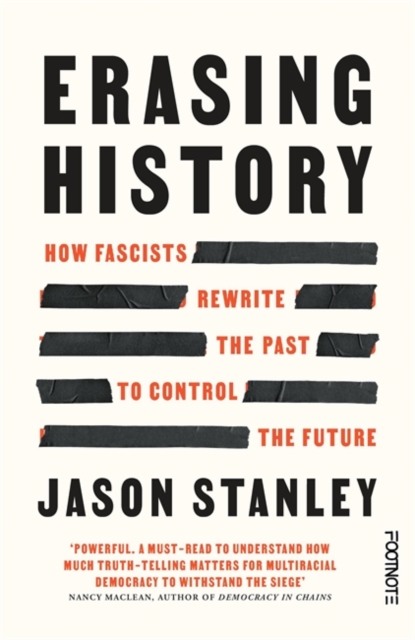
Erasing History
KSh 3,050.00

In His Own Words
KSh 2,700.00
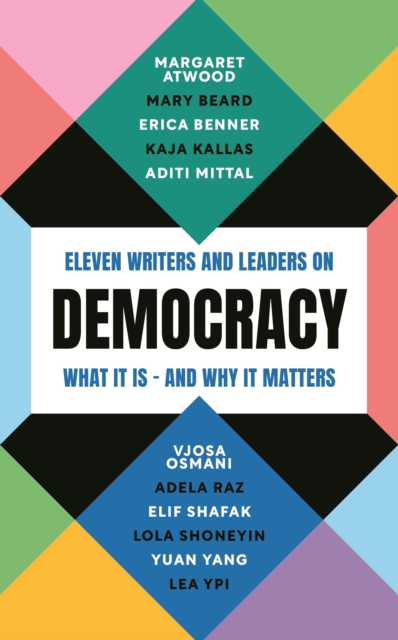
Democracy
KSh 1,450.00
More by Rosalind Dixon

The People''s Guide to the Australian Constitution
KSh 2,150.00

Comparative Constitutional Law
KSh 40,750.00

Abusive Constitutional Borrowing
KSh 5,850.00
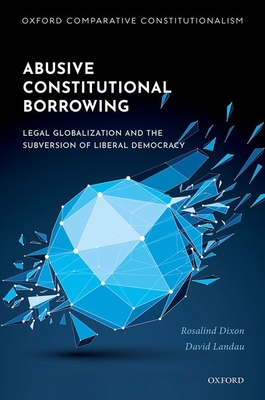
Abusive Constitutional Borrowing
KSh 21,250.00

From Free to Fair Markets
KSh 18,000.00

Responsive Judicial Review
KSh 6,000.00

From Free to Fair Markets
KSh 5,200.00
