
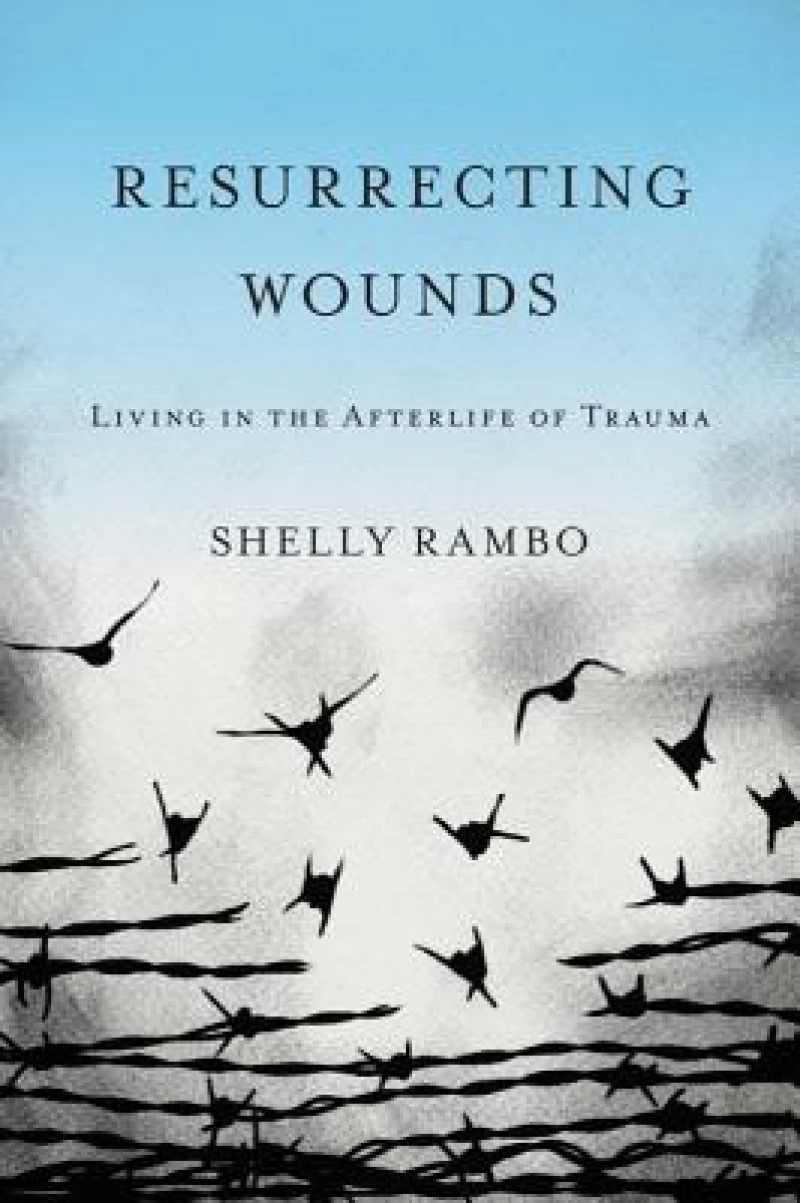
Resurrecting Wounds : Living in the Afterlife of Trauma
by
Shelly Rambo
Book Details
Format
Paperback / Softback
ISBN-10
1481306790
ISBN-13
9781481306799
Publisher
Baylor University Press
Imprint
Baylor University Press
Country of Manufacture
US
Country of Publication
GB
Publication Date
Sep 24th, 2018
Print length
196 Pages
Weight
308 grams
Dimensions
22.80 x 15.30 x 2.90 cms
Product Classification:
Christian life & practiceChristian life and practice
Ksh 5,150.00
Manufactured on Demand
Delivery in 14 days
1 copies in stock
Delivery Location
Delivery fee: Select location
Delivery in 14 days
Secure
Quality
Fast
Shelly Rambo rereads the Thomas story and the history of its interpretation through the lens of trauma studies to reflect on the ways that the wounds of race, gender, and war persist.
The Gospel of John''s account of doubting Thomas is often told as a lesson about the veracity and triumph of Christian faith. And yet it is a story about wounds. Interpretations of this Gospel narrative, by focusing on Christ''s victory in the resurrection, reflect Christianity''s unease with the wounds that remain on the body of the risen Jesus. By returning readers to this familiar passage, Resurrecting Wounds expands the scope of the Upper Room to the present world where wounds mark all of humanity.
Shelly Rambo rereads the Thomas story and the history of its interpretation through the lens of trauma studies to reflect on the ways that the wounds of race, gender, and war persist. Wounds do not simply go away, even though a close reading of John Calvin reveals his theological investments in removing wounds. This erasure reflects a dominant mode of Christian thinking, but it is not the only Christian reading. By contrast, Macrina''s scar, in Gregory of Nyssa''s account of her life and death, displays how resurrection can be inscribed in wounds, particularly in the illumination of her body after her death. The scar, produced in and through a mother''s touch, recalls a healing, linking resurrection to the work of tending wounds. Much like Christ''s wounds and Macrina''s scar, racial wounds can be found on the skin of America''s collective life. The wounds of racial histories, unhealed, resurface again and again. The wounds of war persist as well, despite a cultural calculus that links the suffering of a soldier with that of Christ. Again, the visceral display of Jesus'' wounds, when placed at the center of Thomas'' encounter in the Upper Room, enacts a vision of resurrecting that addresses the real harm of the real wounds of war.
The powerful Upper Room images of resurrection - encounters with wounds, the invitation to touch, and the formation of a community - present visions of truth-telling and of healing that grapple with the pressing questions of wounds surfacing in the midst of human encounters with violence, suffering, and trauma. While traditional accounts of resurrection in Christian theology have focused on the afterlife, this book forges a theology of resurrection wounds in the afterliving. By returning again and again to Christ''s woundedness, we discover ways to live with our own.
Shelly Rambo rereads the Thomas story and the history of its interpretation through the lens of trauma studies to reflect on the ways that the wounds of race, gender, and war persist. Wounds do not simply go away, even though a close reading of John Calvin reveals his theological investments in removing wounds. This erasure reflects a dominant mode of Christian thinking, but it is not the only Christian reading. By contrast, Macrina''s scar, in Gregory of Nyssa''s account of her life and death, displays how resurrection can be inscribed in wounds, particularly in the illumination of her body after her death. The scar, produced in and through a mother''s touch, recalls a healing, linking resurrection to the work of tending wounds. Much like Christ''s wounds and Macrina''s scar, racial wounds can be found on the skin of America''s collective life. The wounds of racial histories, unhealed, resurface again and again. The wounds of war persist as well, despite a cultural calculus that links the suffering of a soldier with that of Christ. Again, the visceral display of Jesus'' wounds, when placed at the center of Thomas'' encounter in the Upper Room, enacts a vision of resurrecting that addresses the real harm of the real wounds of war.
The powerful Upper Room images of resurrection - encounters with wounds, the invitation to touch, and the formation of a community - present visions of truth-telling and of healing that grapple with the pressing questions of wounds surfacing in the midst of human encounters with violence, suffering, and trauma. While traditional accounts of resurrection in Christian theology have focused on the afterlife, this book forges a theology of resurrection wounds in the afterliving. By returning again and again to Christ''s woundedness, we discover ways to live with our own.
Get Resurrecting Wounds by at the best price and quality guaranteed only at Werezi Africa's largest book ecommerce store. The book was published by Baylor University Press and it has pages.

