Rethinking Merger Analysis
by
Louis Kaplow
Book Details
Format
Hardback
ISBN-10
0262049244
ISBN-13
9780262049245
Publisher
MIT Press Ltd
Imprint
MIT Press
Country of Manufacture
GB
Country of Publication
GB
Publication Date
Nov 5th, 2024
Print length
260 Pages
Weight
454 grams
Dimensions
15.90 x 23.70 x 2.60 cms
Product Classification:
Economics
KSh 12,050.00
Werezi Extended Catalogue
Delivery in 12 days
2 copies in stock
Delivery Location
Delivery fee: Select location
Delivery in 12 days
Secure
Quality
Fast
A fundamental economic reconstruction of merger analysis to strengthen our ability to determine mergers’ likely effects and improve merger regulation.
Why rethink merger analysis? Because methods employed throughout the world violate basic precepts of decision analysis and economics. Fundamental principles are underdeveloped, inhibiting research, policy formulation, and merger review. In Rethinking Merger Analysis, Louis Kaplow undertakes a foundational analysis of the questions central to understanding and regulating horizontal mergers and shows why many conventional practices need to be altered or replaced. On the empirical front, Kaplow offers insights, identifies shortcomings, and proposes extensions of existing research. Altogether, merger review can be greatly improved to better identify harmful mergers and avoid thwarting beneficial ones.
The correct economic analysis of anticompetitive effects conflicts sharply with the reigning market definition paradigm. This protocol is more deeply flawed than appreciated, readily produces large errors, and can result in uncertainty bounds on challenge thresholds of two orders of magnitude. Merger efficiencies are underanalyzed because of the failure to draw on relevant disciplines and pertinent industry expertise. Postmerger entry’s role is mischaracterized in merger guidelines, and its direct welfare effects are ignored. Entry induced by the prospect of a subsequent buyout has until recently been disregarded. Proper assessment requires a dynamic framing that accounts for a merger regime’s influence on the creation and capabilities of new generations of startups that are central to economic dynamism.
This book eschews advocacy and instead focuses on clear thinking—indeed, rethinking—about how to improve merger policy and assessment.
Why rethink merger analysis? Because methods employed throughout the world violate basic precepts of decision analysis and economics. Fundamental principles are underdeveloped, inhibiting research, policy formulation, and merger review. In Rethinking Merger Analysis, Louis Kaplow undertakes a foundational analysis of the questions central to understanding and regulating horizontal mergers and shows why many conventional practices need to be altered or replaced. On the empirical front, Kaplow offers insights, identifies shortcomings, and proposes extensions of existing research. Altogether, merger review can be greatly improved to better identify harmful mergers and avoid thwarting beneficial ones.
The correct economic analysis of anticompetitive effects conflicts sharply with the reigning market definition paradigm. This protocol is more deeply flawed than appreciated, readily produces large errors, and can result in uncertainty bounds on challenge thresholds of two orders of magnitude. Merger efficiencies are underanalyzed because of the failure to draw on relevant disciplines and pertinent industry expertise. Postmerger entry’s role is mischaracterized in merger guidelines, and its direct welfare effects are ignored. Entry induced by the prospect of a subsequent buyout has until recently been disregarded. Proper assessment requires a dynamic framing that accounts for a merger regime’s influence on the creation and capabilities of new generations of startups that are central to economic dynamism.
This book eschews advocacy and instead focuses on clear thinking—indeed, rethinking—about how to improve merger policy and assessment.
Get Rethinking Merger Analysis by Louis Kaplow at the best price and quality guaranteed only at Werezi Africa's largest book ecommerce store. The book was published by MIT Press Ltd and it has 260 pages.
Customers Who Bought This Also Bought

Development as Freedom
KSh 2,900.00

Breakneck
KSh 4,500.00
Why Nations Fail
KSh 2,350.00

Anti-Politics Machine
KSh 3,750.00

End of Poverty
KSh 2,350.00

The Thinking Machine
KSh 2,350.00
Economics: The Economist Guide
KSh 2,150.00

Apostles of Development
KSh 5,600.00
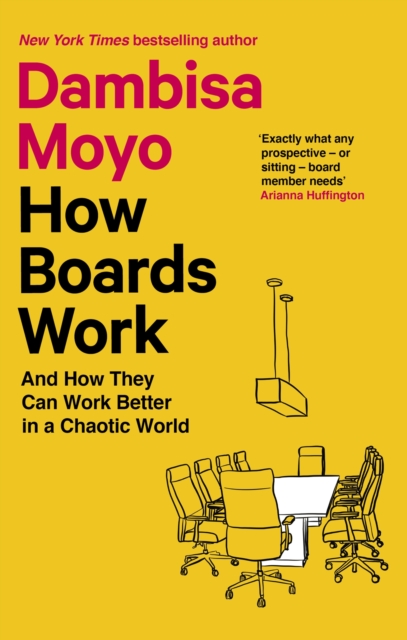
How Boards Work
KSh 2,350.00

Economic Facts and Fallacies
KSh 3,050.00

Eat That Frog!, Fourth Edition
KSh 3,250.00
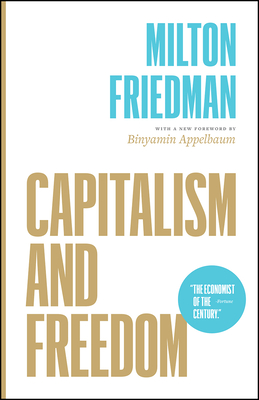
Capitalism and Freedom
KSh 3,350.00