
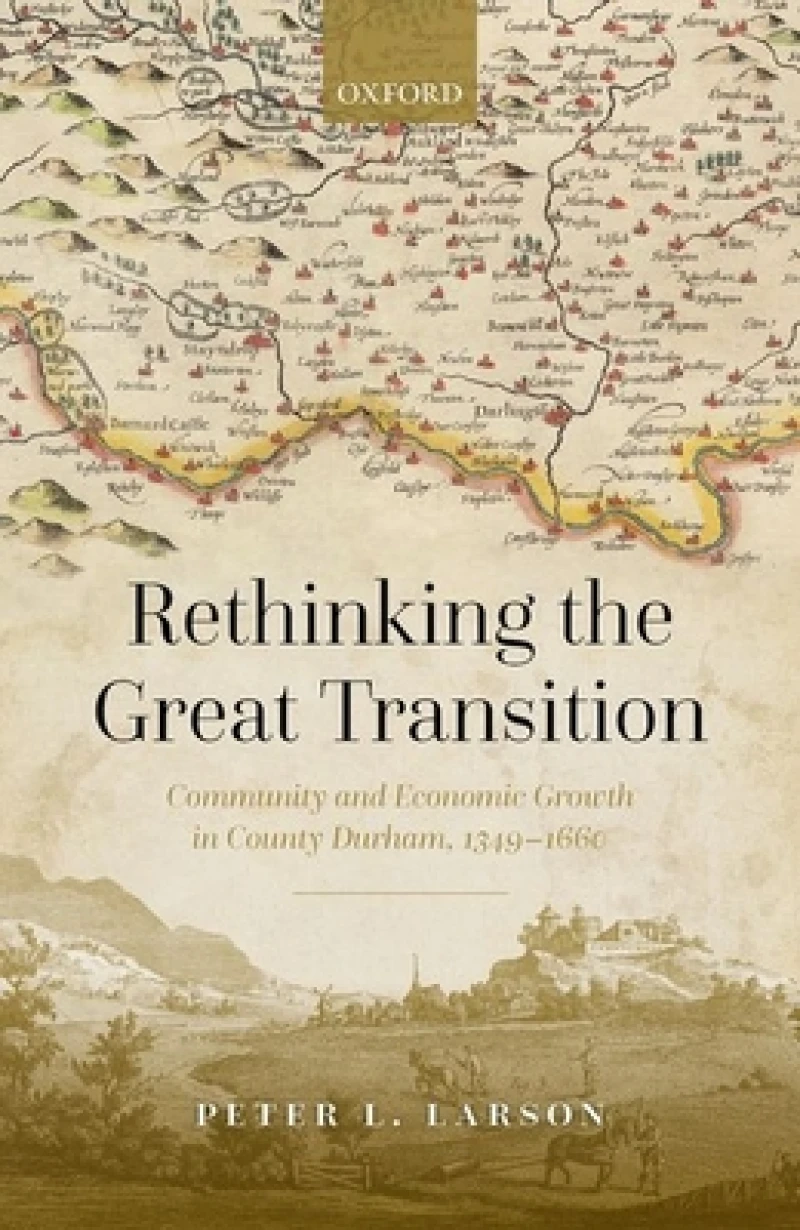
Rethinking the Great Transition : Community and Economic Growth in County Durham, 1349-1660
Book Details
Format
Hardback or Cased Book
ISBN-10
0192849875
ISBN-13
9780192849878
Publisher
Oxford University Press
Imprint
Oxford University Press
Country of Manufacture
GB
Country of Publication
GB
Publication Date
Feb 3rd, 2022
Print length
240 Pages
Weight
484 grams
Dimensions
24.10 x 16.00 x 1.90 cms
Ksh 18,750.00
Werezi Extended Catalogue
0 in stock
Delivery Location
Delivery fee: Select location
Secure
Quality
Fast
This case study of two rural parishes in County Durham, England, provides an alternate view on the economic development involved in the transition from medieval to modern, partly explaining England's rise to global economic dominance in the seventeenth century.
This case study of two rural parishes in County Durham, England, provides an alternate view on the economic development involved in the transition from medieval to modern, partly explaining England''s rise to global economic dominance in the seventeenth century. Coal mining did not come to these parishes until the nineteenth century; these are an example of agrarian expansion. Low population, favourable seigniorial administration, and a commercialised society saw the emergence of large farms on the bishopric of Durham soon after the Black Death; these secure copyhold and leasehold tenures were among the earliest known in England. Individualism developed within a strong parish and village community that encouraged growth while enforcing conformity: tenants had freedom to farm as they wished, within limits. Along with low rents, this allowed for a swift expansion of agricultural production in the sixteenth century as population rose and then as the coal trade expanded rapidly. The prosperity of these men is reflected in their lands, livestock, and consumer goods. Yet not all shared in this prosperity, as the poor and landless increased in number simply by population growth. Through reformation and rebellion, these and other parishes prospered without experiencing severe disruption or destruction. In north-eastern England, agrarian development was an evolution and not a revolution. This study shows England''s economic development as a single narrative, woven together from a collection of regional experiences at different times and at different speeds.
Get Rethinking the Great Transition by at the best price and quality guaranteed only at Werezi Africa's largest book ecommerce store. The book was published by Oxford University Press and it has pages.

