
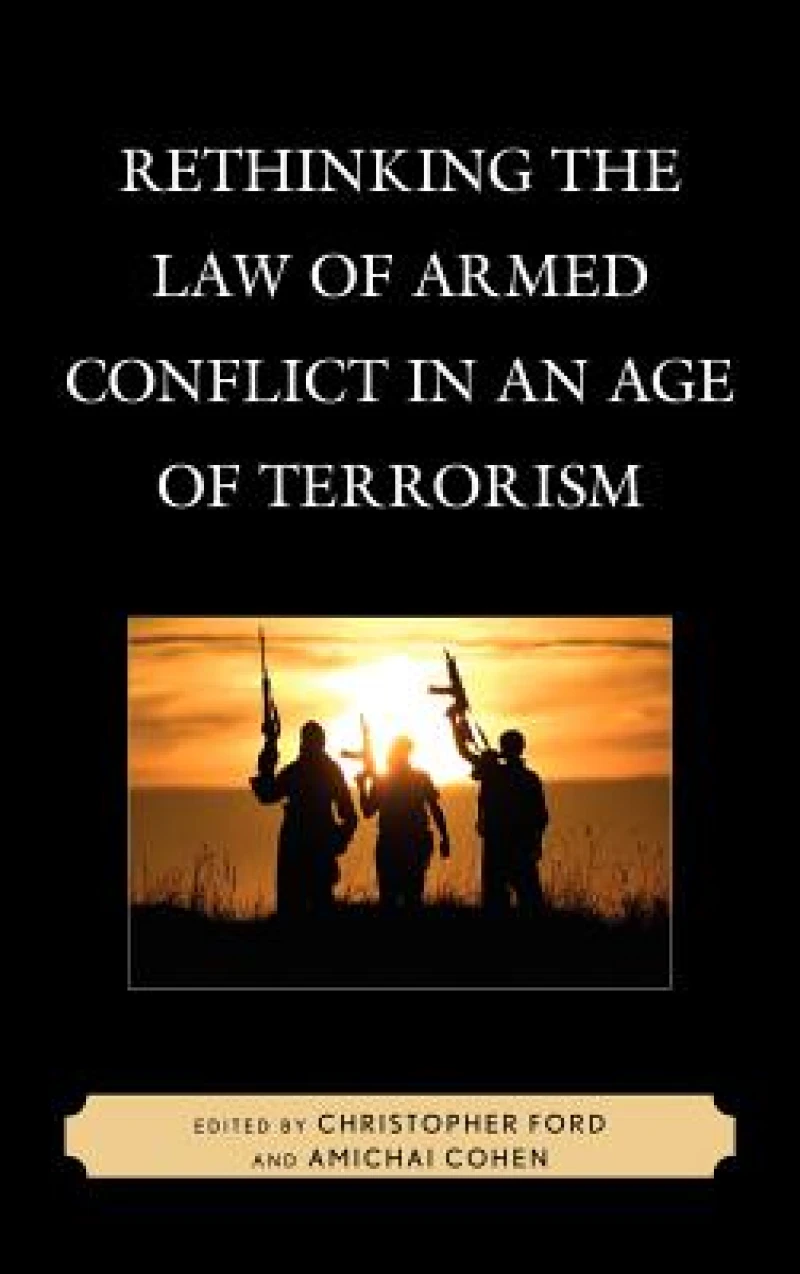
Rethinking the Law of Armed Conflict in an Age of Terrorism
Book Details
Format
Hardback or Cased Book
ISBN-10
0739166530
ISBN-13
9780739166536
Publisher
Bloomsbury Publishing Plc
Imprint
Lexington Books
Country of Manufacture
GB
Country of Publication
GB
Publication Date
Dec 23rd, 2011
Print length
332 Pages
Weight
684 grams
Dimensions
16.20 x 23.50 x 2.80 cms
Product Classification:
International relationsTerrorism, armed struggleInternational humanitarian law
Ksh 23,350.00
Manufactured on Demand
0 in stock
Delivery Location
Delivery fee: Select location
Secure
Quality
Fast
Ten years after the terrorist attacks of September 11, 2011, Rethinking the Law of Armed Conflict in an Age of Terrorism, edited by Christopher Ford and Amichai Cohen, brings together a range of interdisciplinary experts to examine the problematic encounter between international law and challenges presented by conflicts between developed states and non-state actors, such as international terrorist groups. Through examinations of the counter-terrorist experiences of the United States, Israel, and Colombia—coupled with legal and historical analyses of trends in international humanitarian law—the authors place post-9/11 practice in the context of the international legal community’s broader struggle over the substantive content of international rules constraining state behavior in irregular wars and explore trends in the development of these rules. From the beginning of international efforts to rewrite the laws of armed conflict in the 1970s, the legal rules to govern irregular conflicts of the “state-on-nonstate” variety have been contested terrain. Particularly in the wake of the 9/11 attacks, policymakers, lawyers, and scholars have debated the merits, relevance, and applicability of what are said to be competing “war” and “law enforcement” paradigms of legal constraint—and even the degree to which international law can be said to apply to counter-terrorist conflicts at all. Ford & Cohen’s volume puts such debates in historical and analytical context, and offers readers an insight into where the law has been headed in the fraught years since September 2001. The contributors provide the reader with differing perspectives upon these questions, but together their analyses make clear that law-governed restraint remains a cardinal value in counter-terrorist war, even as the law stands revealed as being much more contested and indeterminate than many accounts would have it. Rethinking the Law of Armed Conflict in an Age of Terrorism provides an important conceptual framework through which to view the development of the law as the policy and legal communities move into the second decade of the “global war on terrorism.”
Ten years after the terrorist attacks of September 11, 2011, Rethinking the Law of Armed Conflict in an Age of Terrorism, edited by Christopher Ford and Amichai Cohen, brings together a range of interdisciplinary experts to examine the problematic encounter between international law and challenges presented by conflicts between developed states and non-state actors, such as international terrorist groups. Through examinations of the counter-terrorist experiences of the United States, Israel, and Colombia—coupled with legal and historical analyses of trends in international humanitarian law—the authors place post-9/11 practice in the context of the international legal community’s broader struggle over the substantive content of international rules constraining state behavior in irregular wars and explore trends in the development of these rules. From the beginning of international efforts to rewrite the laws of armed conflict in the 1970s, the legal rules to govern irregular conflicts of the “state-on-nonstate” variety have been contested terrain. Particularly in the wake of the 9/11 attacks, policymakers, lawyers, and scholars have debated the merits, relevance, and applicability of what are said to be competing “war” and “law enforcement” paradigms of legal constraint—and even the degree to which international law can be said to apply to counter-terrorist conflicts at all. Ford & Cohen’s volume puts such debates in historical and analytical context, and offers readers an insight into where the law has been headed in the fraught years since September 2001. The contributors provide the reader with differing perspectives upon these questions, but together their analyses make clear that law-governed restraint remains a cardinal value in counter-terrorist war, even as the law stands revealed as being much more contested and indeterminate than many accounts would have it. Rethinking the Law of Armed Conflict in an Age of Terrorism provides an important conceptual framework through which to view the development of the law as the policy and legal communities move into the second decade of the “global war on terrorism.”
Get Rethinking the Law of Armed Conflict in an Age of Terrorism by at the best price and quality guaranteed only at Werezi Africa's largest book ecommerce store. The book was published by Bloomsbury Publishing Plc and it has pages.

