
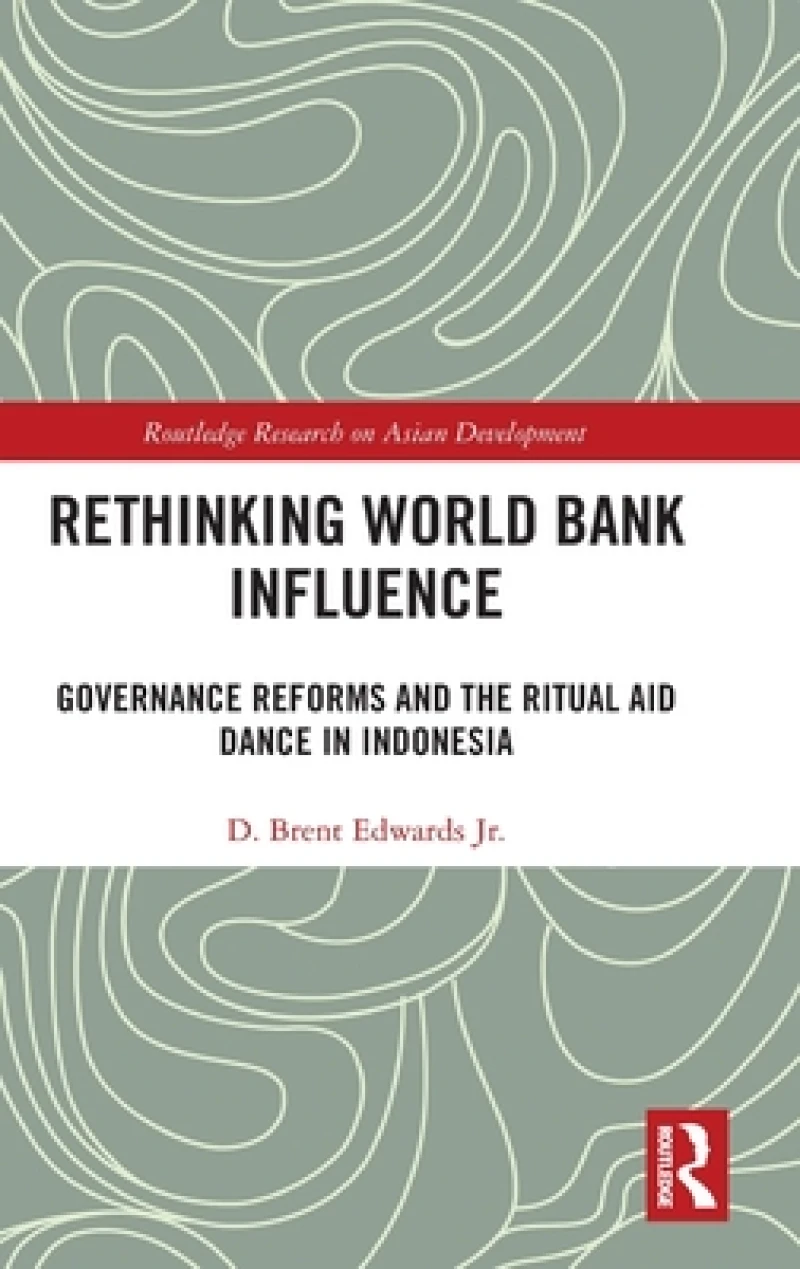
Rethinking World Bank Influence : Governance Reforms and the Ritual Aid Dance in Indonesia
Book Details
Delivery Location
Delivery fee: Select location
Why is it so hard for international development organizations?even ones as well-resourced and influential as the World Bank?to generate and sustain change in the way things are done in those countries where they work? Despite what, in many cases, is decades of investment and effort, why do partner governments continue to engage in those traditional patterns and styles of public service management that international development organizations have sought to supplant with methods that are supposedly more accountable, efficient, and effective? This book provides an answer to these questions. However, rather than pathologizing partner governments as the source of the problem?that is, rather than maintaining the distinction between doctor (international development organizations) and patient (partner governments), wherein the patient is seen as unwilling to take their medicine (enacting "good governance" practices)?this book instead reframes the relationship.
The central argument is, first, that the programs and projects of international organizations are introduced into and are constrained by multiple layers of ritual governance, that is, performative acts and cultural logics that intersect with and reinforce the political, economic, and social structures in and through which they operate. As is shown, the contextual factors that guide governance practices are largely beyond the reach of the international development organizations; the relevant logics have their roots in state ideology but also extend back to the colonial logics that continue to operate at the heart of the state apparatus.
The second the central argument is that international aid organizations and the governments with which they work are engaged in a "ritual aid dance" where each actor plays a part but does not (and cannot) acknowledge the ways that it depends on the other for its own gain. This relationship can be considered a dance because each participant responds to and needs the other, and because both sides do so in ways that are carefully choreographed, with the overall trajectory or contours of the dance being more or less known to the participants.
These arguments are based on research on the World Bank?s efforts over the course of several decades to encourage, through its financing, projects, and technical assistance, the implementation of social sector reform in Indonesia related to decentralization, community participation, and school-based management.
Get Rethinking World Bank Influence by at the best price and quality guaranteed only at Werezi Africa's largest book ecommerce store. The book was published by Taylor & Francis Ltd and it has pages.

