
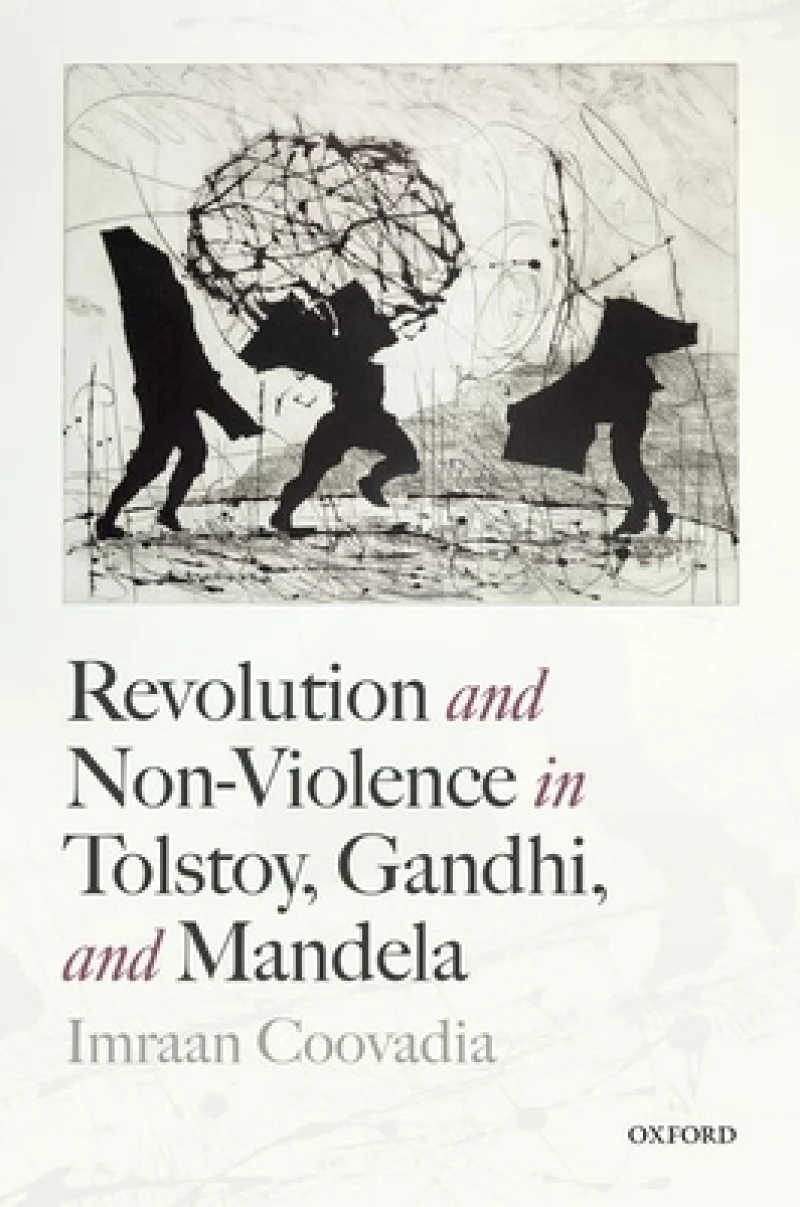
Revolution and Non-Violence in Tolstoy, Gandhi, and Mandela
Book Details
Format
Hardback or Cased Book
ISBN-10
0198863691
ISBN-13
9780198863694
Publisher
Oxford University Press
Imprint
Oxford University Press
Country of Manufacture
GB
Country of Publication
GB
Publication Date
Jul 21st, 2020
Print length
256 Pages
Weight
544 grams
Dimensions
23.80 x 16.20 x 2.20 cms
Product Classification:
Literary studies: post-colonial literatureViolence in societyPolitical activism
Ksh 16,300.00
Werezi Extended Catalogue
0 in stock
Delivery Location
Delivery fee: Select location
Secure
Quality
Fast
Explores the writings and revolutionary thought of three connected figures--Leo Tolstoy, Mohandas Gandhi, and Nelson Mandela--on the subject of violence and non-violence and the way they resisted revolutionary thinking in favour of an alternative model of civic transformation.
The dangers of political violence and the possibilities of non-violence were the central themes of three lives which changed the twentieth century--Leo Tolstoy, writer and aristocrat who turned against his class, Mohandas Gandhi who corresponded with Tolstoy and considered him the most important person of the time, and Nelson Mandela, prisoner and statesman, who read War and Peace on Robben Island and who, despite having led a campaign of sabotage, saw himself as a successor to Gandhi.Tolstoy, Gandhi, and Mandela tried to create transformed societies to replace the dying forms of colony and empire. They found the inequalities of Russia, India, and South Africa intolerable yet they questioned the wisdom of seizing the power of the state, creating new kinds of political organisation and imagination to replace the old promises of revolution. Their views, along with their ways of leading others, are closely connected, from their insistence on working with their own hands and reforming their individual selves to their acceptance of death. On three continents, in a century of mass mobilization and conflict, they promoted strains of nationalism devoid of antagonism, prepared to take part in a general peace. Looking at Tolstoy, Gandhi, and Mandela in sequence, taking into account their letters and conversations as well as the institutions they created or subverted, placing at the centre their treatment of the primal fantasy of political violence, this volume reveals a vital radical tradition which stands outside the conventional categories of twentieth-century history and politics.
Get Revolution and Non-Violence in Tolstoy, Gandhi, and Mandela by at the best price and quality guaranteed only at Werezi Africa's largest book ecommerce store. The book was published by Oxford University Press and it has pages.

