
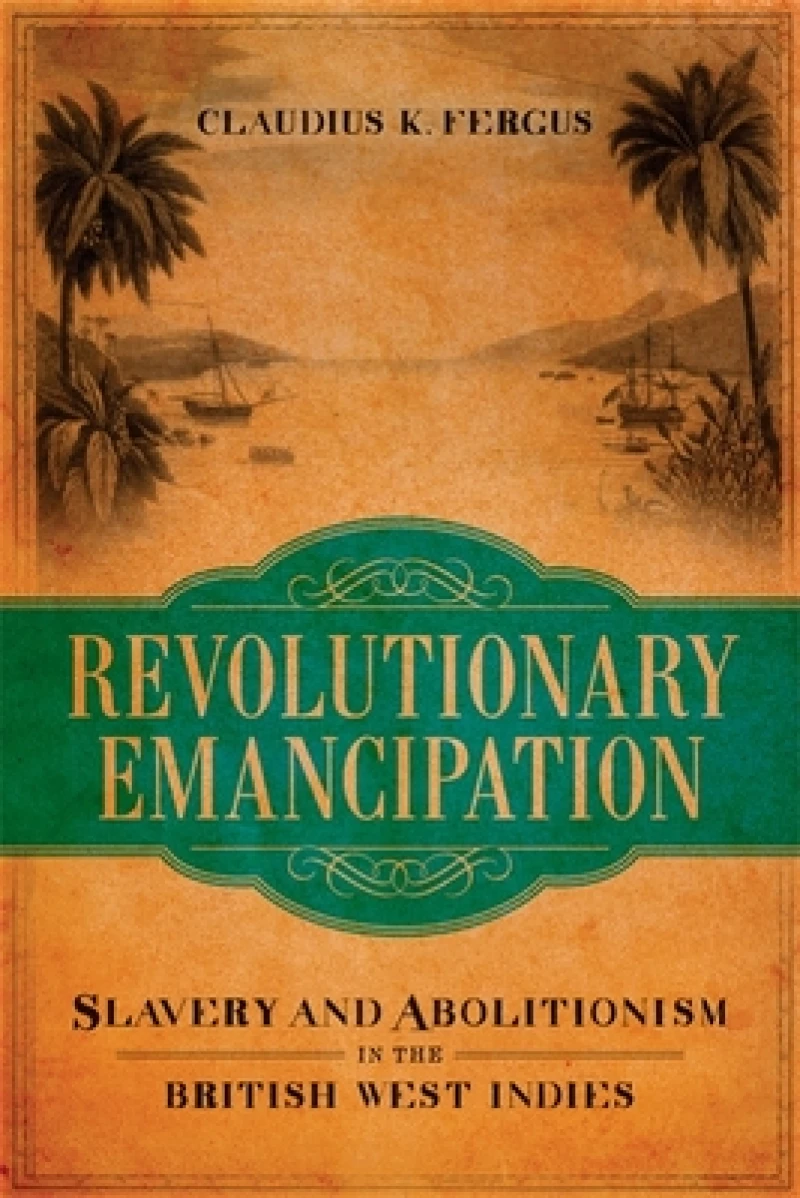
Revolutionary Emancipation : Slavery and Abolitionism in the British West Indies
Book Details
Format
Hardback or Cased Book
Book Series
Antislavery, Abolition, and the Atlantic World
ISBN-10
0807149888
ISBN-13
9780807149881
Publisher
Louisiana State University Press
Imprint
Louisiana State University Press
Country of Manufacture
US
Country of Publication
GB
Publication Date
Jun 10th, 2013
Print length
296 Pages
Weight
578 grams
Dimensions
23.60 x 16.80 x 2.80 cms
Ksh 6,800.00
Temporarily out of stock, due soon
0 in stock
Delivery Location
Delivery fee: Select location
Secure
Quality
Fast
Skillfully weaving an African worldview into the conventional historiography of British abolitionism, Claudius Fergus presents new insights into one of the most intriguing and momentous episodes of Atlantic history.
Skillfully weaving an African worldview into the conventional historiography of British abolitionism, Claudius K. Fergus presents new insights into one of the most intriguing and momentous episodes of Atlantic history. In Revolutionary Emancipation, Fergus argues that the 1760 rebellion in Jamaica, Tacky's War, the largest and most destructive rebellion of enslaved peoples in the Americas prior to the Haitian Revolution, provided the rationale for abolition and reform of the colonial system.
Fergus shows that following Tacky's War, British colonies in the West Indies sought political preservation under state-regulated amelioration of slavery. He further contends that abolitionists' successes, from partial to general prohibition of the slave trade, hinged more on the economic benefits of creolizing slave labor and the costs of preserving the colonies from destructive emancipation rebellions than on a conviction of justice and humanity for Africans.
In the end, Fergus maintains, slaves' commitment to revolutionary emancipation kept colonial focus on reforming the slave system. His study carefully dissects new evidence and reinterprets previously held beliefs, offering historians the most compelling arguments for African agency in abolitionism.
Fergus shows that following Tacky's War, British colonies in the West Indies sought political preservation under state-regulated amelioration of slavery. He further contends that abolitionists' successes, from partial to general prohibition of the slave trade, hinged more on the economic benefits of creolizing slave labor and the costs of preserving the colonies from destructive emancipation rebellions than on a conviction of justice and humanity for Africans.
In the end, Fergus maintains, slaves' commitment to revolutionary emancipation kept colonial focus on reforming the slave system. His study carefully dissects new evidence and reinterprets previously held beliefs, offering historians the most compelling arguments for African agency in abolitionism.
Get Revolutionary Emancipation by at the best price and quality guaranteed only at Werezi Africa's largest book ecommerce store. The book was published by Louisiana State University Press and it has pages.

