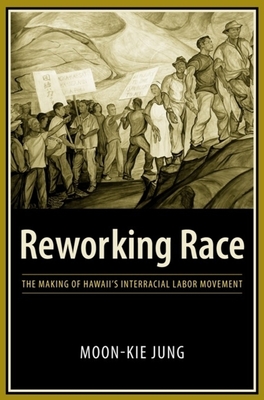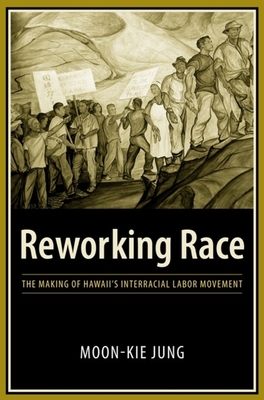
Reworking Race : The Making of Hawaii's Interracial Labor Movement
Book Details
Format
Paperback / softback
ISBN-10
0231135351
ISBN-13
9780231135351
Publisher
Columbia University Press
Imprint
Columbia University Press
Country of Manufacture
US
Country of Publication
GB
Publication Date
Mar 12th, 2010
Print length
320 Pages
Weight
458 grams
Product Classification:
Sociology: work & labour
KSh 5,400.00
Currently unavailable
0 in stock
Delivery Location
Delivery fee: Select location
Secure
Quality
Fast
In the middle decades of the twentieth century, Hawai'i changed rapidly from a conservative oligarchy firmly controlled by a Euro-American elite to arguably the most progressive part of the United States. Spearheading the shift, tens of thousands of sugar, pineapple, and longshore workers eagerly joined the left-led International Longshoremen's and Warehousemen's Union (ILWU) and challenged their powerful employers. In this theoretically innovative study, Moon-Kie Jung explains how Filipinos, Japanese, Portuguese, and others overcame entrenched racial divisions and successfully mobilized a mass working-class movement. He overturns the unquestioned assumption that this interracial effort traded racial politics for class politics. Instead, he shows how the movement "reworked race" by developing an ideology of class that incorporated and rearticulated racial meanings and practices. Examining a wide range of sources, Jung delves into the chronically misunderstood prewar racisms and their imperial context, the "Big Five" corporations' concerted attempts to thwart unionization, the emergence of the ILWU, the role of the state, and the impact of World War II. Through its historical analysis, Reworking Race calls for a radical rethinking of interracial politics in theory and practice.
Get Reworking Race by Moon-Kie Jung at the best price and quality guaranteed only at Werezi Africa's largest book ecommerce store. The book was published by Columbia University Press and it has 320 pages.
Customers Who Bought This Also Bought

What Should I Do With My Life?
KSh 3,400.00

The Reverse Centaur's Guide to Life After AI
KSh 3,050.00

The Unfair Advantage
KSh 2,000.00

Chokepoint Capitalism
KSh 2,000.00
Making Africa Work
KSh 4,500.00
Faces of Precarity – Critical Perspectives on Work , Subjectivities and Struggles
KSh 13,150.00

Uncommon People
KSh 2,700.00
Hope and Danger in the New South City
KSh 7,500.00
Planet Work – Rethinking Labor and Leisure in the Anthropocene
KSh 22,300.00
Making Freedom Pay
KSh 5,750.00

Victory at Home
KSh 6,000.00

Glass Ceilings and 100-Hour Couples
KSh 5,050.00