
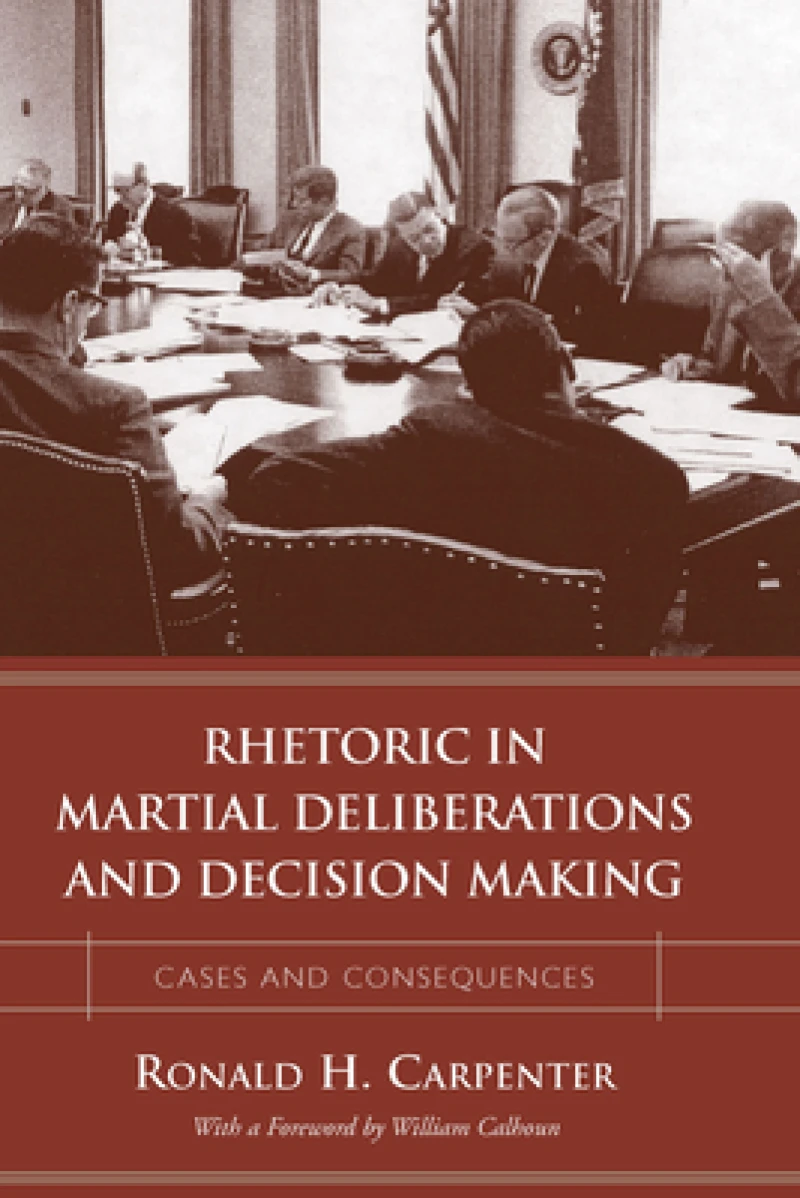
Rhetoric in Martial Deliberations and Decision Making : Cases and Consequences
Book Details
Format
Hardback or Cased Book
Book Series
Studies in Rhetoric/Communication
ISBN-10
1570035555
ISBN-13
9781570035555
Publisher
University of South Carolina Press
Imprint
University of South Carolina Press
Country of Manufacture
US
Country of Publication
GB
Publication Date
Jan 31st, 2005
Print length
272 Pages
Weight
500 grams
Dimensions
23.20 x 16.30 x 2.40 cms
Product Classification:
Defence strategy, planning & researchMilitary and defence strategy
Ksh 6,100.00
Werezi Extended Catalogue
0 in stock
Delivery Location
Delivery fee: Select location
Secure
Quality
Fast
In this study of the discourse involved in martial deliberations, Ronald H. Carpenter examines the rhetoric employed by naval and military commanders as they recommend specific tactics and strategies. Drawing on ideas of rhetorical thinking from Aristotle to Burke, he identifies concepts in military decision-making.
In this study of the discourse involved in martial deliberations, Ronald H. Carpenter examines the rhetoric employed by naval and military commanders as they recommend specific tactics and strategies to peers as well as presidents. Drawing on ideas of rhetorical thinking from Aristotle to Kenneth Burke, Carpenter identifies two concepts of particular importance to the military decision-making process: prudence and the representative anecdote. Carpenter suggests that attention to these two concepts enables an understanding of how military commanders settle on a course of action and persuade others to support them. Carpenter turns for illustration and insight to key case studies in which military commanders centered their rhetoric on representative anecdotes involving earlier campaigns. He shows Douglas MacArthur persuading the Joint Chiefs of Staff to act on his plan for the Inchon attack; Maxwell Taylor reacting to Robert Kennedy''s invocation of Pearl Harbor in deliberations during the Cuban Missile Crisis; Japanese and American commanders deliberating during the battles of Pearl Harbor and Midway; and Orde Wingate, Bull Halsey, and MacArthur debating strategy in the Pacific. In all such deliberations the primary focus is the prudent course. Carpenter suggests that the trend in contemporary society from authoritarianism toward management by persuasion, explanation, and expertise similarly permeates the military. He contends that rhetorical proficiency in martial deliberations can be as important for a military leader as tactical and strategic expertise.
Get Rhetoric in Martial Deliberations and Decision Making by at the best price and quality guaranteed only at Werezi Africa's largest book ecommerce store. The book was published by University of South Carolina Press and it has pages.

