
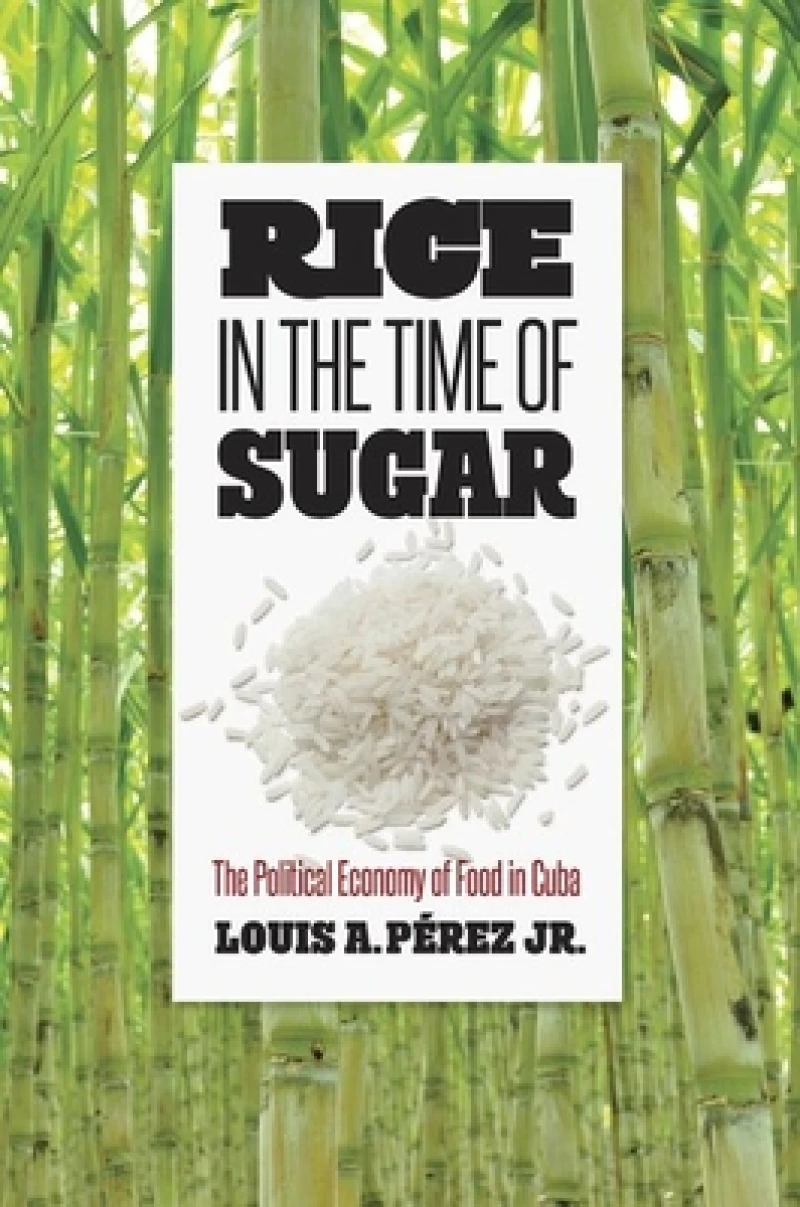
Rice in the Time of Sugar : The Political Economy of Food in Cuba
Book Details
Format
Paperback / Softback
ISBN-10
1469651424
ISBN-13
9781469651422
Publisher
The University of North Carolina Press
Imprint
The University of North Carolina Press
Country of Manufacture
US
Country of Publication
GB
Publication Date
May 27th, 2019
Print length
264 Pages
Weight
398 grams
Dimensions
23.30 x 15.50 x 1.50 cms
Ksh 4,850.00
Werezi Extended Catalogue
0 in stock
Delivery Location
Delivery fee: Select location
Secure
Quality
Fast
In this history of Cuba, Louis Perez proposes a new Cuban counterpoint: rice, a staple central to the island's cuisine, and sugar, which dominated an export economy 150 years in the making. Perez shows how the logic of the sugar trade resulted in the development of an agriculture for consumers abroad at the expense of consumers at home.
In this history of Cuba, Louis A. Perez proposes a new Cuban counterpoint: rice, a staple central to the island's cuisine, and sugar, which dominated an export economy 150 years in the making. Perez shows how the logic of the sugar trade resulted in the development of an agriculture for consumers abroad at the expense of consumers at home. In the process, dependency on food imports, a signal feature of the Cuban economy, was set in place.
Efforts to diversify the economy through expanded rice production were met with keen resistance by U.S. rice producers, who were as reliant on the Cuban market as Cubans were on the U.S. market. U.S. growers prepared to retaliate by cutting the sugar quota in a struggle to control Cuban rice markets. Perez's chronicle culminates in the 1950s, a period of deepening revolutionary tensions on the island, as U.S. rice producers and their allies in Congress clashed with Cuban producers supported by the government of Fulgencio Batista. U.S. interests prevailed—a success, Perez argues, that contributed to undermining Batista's capacity to govern. Cuba's inability to develop self-sufficiency in rice production persists long after the triumph of the Cuban revolution. Cuba continues to import rice, but, in the face of the U.S. embargo, mainly from Asia. U.S. rice growers wait impatiently to recover the Cuban market.
Efforts to diversify the economy through expanded rice production were met with keen resistance by U.S. rice producers, who were as reliant on the Cuban market as Cubans were on the U.S. market. U.S. growers prepared to retaliate by cutting the sugar quota in a struggle to control Cuban rice markets. Perez's chronicle culminates in the 1950s, a period of deepening revolutionary tensions on the island, as U.S. rice producers and their allies in Congress clashed with Cuban producers supported by the government of Fulgencio Batista. U.S. interests prevailed—a success, Perez argues, that contributed to undermining Batista's capacity to govern. Cuba's inability to develop self-sufficiency in rice production persists long after the triumph of the Cuban revolution. Cuba continues to import rice, but, in the face of the U.S. embargo, mainly from Asia. U.S. rice growers wait impatiently to recover the Cuban market.
Get Rice in the Time of Sugar by at the best price and quality guaranteed only at Werezi Africa's largest book ecommerce store. The book was published by The University of North Carolina Press and it has pages.

