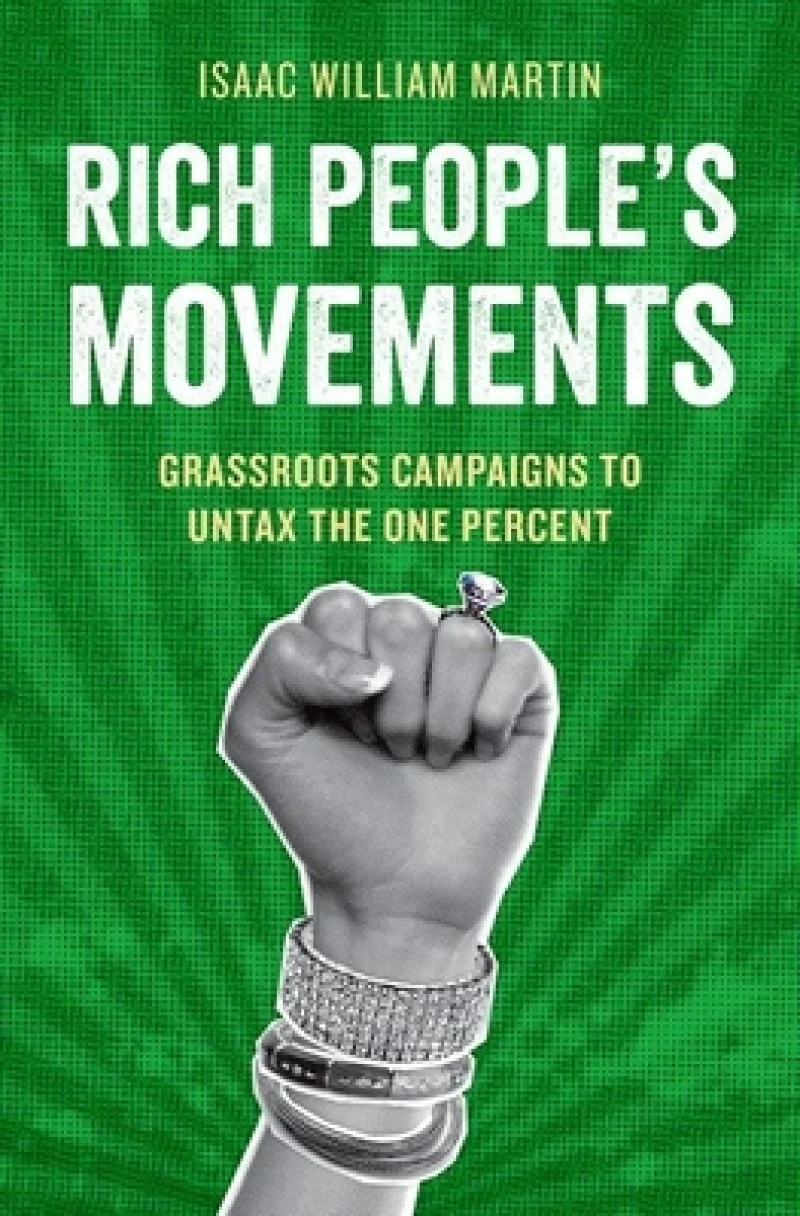
Rich People's Movements : Grassroots Campaigns to Untax the One Percent
by
Isaac Martin
Book Details
Format
Hardback or Cased Book
ISBN-10
0199928991
ISBN-13
9780199928996
Publisher
Oxford University Press Inc
Imprint
Oxford University Press Inc
Country of Manufacture
GB
Country of Publication
GB
Publication Date
Oct 3rd, 2013
Print length
304 Pages
Weight
548 grams
Dimensions
24.30 x 15.60 x 2.50 cms
Product Classification:
Central government policiesDemonstrations & protest movementsPolitical economy
Ksh 9,550.00
Temporarily out of stock, due soon
0 in stock
Delivery Location
Delivery fee: Select location
Secure
Quality
Fast
Why do protesters sometimes take to the streets to demand lower taxes on the rich? In this urgently relevant study, sociologist Isaac William Martin examines how these protesters used tactics that they learned in movements of the poor and powerless-and sometimes won big.
On tax day, April 15, 2010, hundreds of thousands of Americans demonstrated with signs demanding lower taxes on the richest one percent. Where do protest movements like this come from? Rich people are an unpopular minority with plenty of political influence. Why would rich people need to demonstrate in the streets to demand lower taxes-and why would anyone who wasn''t rich join in the protest on their behalf? Such rich people''s movements are hardy perennials of American politics. Ever since the ratification of the Sixteenth Amendment in 1913, they have emerged whenever public policies are perceived to threaten the property rights of rich people. The protesters on behalf of the rich have picked up the protest tactics of the poor and powerless because they have been organized and led by activists who have acquired their skills and protest techniques from other social movements, from the Populists and Progressives of the early twentieth century to the feminists and anti-war activists of the mid-twentieth century. At times when conservative Republicans are in power, rich people''s movements have helped to bring about some of the biggest tax cuts for the rich in American history. This is the untold story of the tax clubs and Tea Parties that have shaped American politics and policy for the last hundred years.
Get Rich People's Movements by at the best price and quality guaranteed only at Werezi Africa's largest book ecommerce store. The book was published by Oxford University Press Inc and it has pages.