
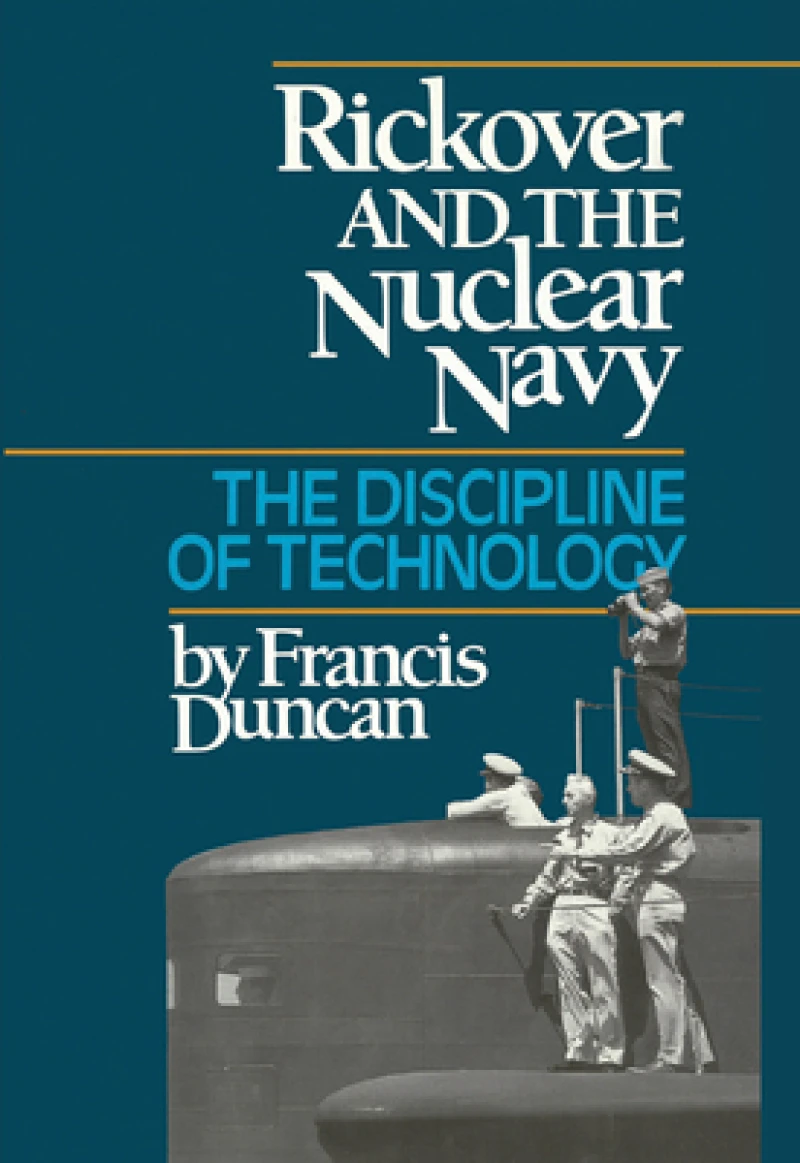
Rickover and the Nuclear Navy : The Discipline of Technology
Book Details
Format
Hardback or Cased Book
ISBN-10
0870212362
ISBN-13
9780870212369
Publisher
Naval Institute Press
Imprint
Naval Institute Press
Country of Manufacture
GB
Country of Publication
GB
Publication Date
Jan 25th, 1990
Print length
424 Pages
Weight
707 grams
Product Classification:
Naval forces & warfareNuclear power & engineeringShip design & naval architecture
Ksh 4,500.00
Re-Printing
0 in stock
Delivery Location
Delivery fee: Select location
Secure
Quality
Fast
An overview of Admiral Hyman Rickover's nuclear propulsion program. The author, an Atomic Energy Commission historian spent years observing the program and its controversial leader in action. His insights reflect both his familiarity with the subject and his ability to remain objective.
No book will ever come closer than this to providing an inside overview of Admiral Hyman G. Rickover’s nuclear propulsion program. The author, an Atomic Energy Commission (AEC) historian assigned to the admiral’s office, spent years observing the project and its controversial leader in action, and the insights he provides here reflect both his familiarity with the subject and his ability to remain an objective observer.
From 1974 to the day Rickover retired in 1982, Francis Duncan had free access to files, documents, and personnel at every level of involvement—a rare, never-to-be-repeated opportunity that most historians dream of but few get. And, as this book clearly shows, he took full advantage of the situation to gain a unique understanding of exactly how the program operated. The result is a thorough, balanced record of what may well be the U.S. Navy’s and the nation’s most important and far-reaching project of the twentieth century.
Knowing that facts and figures alone don’t tell the entire story, Duncan talked to scores of people who dealt with day-to-day operations, watched men in prototype training and then accompanied them to sea, visited civilian and naval installations, and had close contact with Rickover himself. He also interviewed former U.S. presidents, secretaries of the navy, chiefs of naval operations, AEC chairmen, and legislative leaders who kept tabs on the projects but were removed from daily activities. Never once, the author says, did the admiral attempt to interfere with his research, nor did Rickover read the manuscript.
While the focus here is on the nuclear program, not the man, this book does provide fascinating insights into Rickover’s personality and his efforts to maintain standards of excellence that would assure the program’s safety and its ultimate success. Using one of the admiral’s favorite terms, “the discipline of technology,” to demonstrate the method of technological application advocated by Rickover, Duncan effectively balances technical detail with astute analysis and even drama. Filled with information not found elsewhere, his study is a valuable chronicle of the development of submarine propulsion reactors, the loss of the Thresher, the struggle over the application of nuclear propulsion to surface fleet, and the use of the Shippingport Atomic Power Plant to illustrate the feasibility of a light-water breeder reactor.
From 1974 to the day Rickover retired in 1982, Francis Duncan had free access to files, documents, and personnel at every level of involvement—a rare, never-to-be-repeated opportunity that most historians dream of but few get. And, as this book clearly shows, he took full advantage of the situation to gain a unique understanding of exactly how the program operated. The result is a thorough, balanced record of what may well be the U.S. Navy’s and the nation’s most important and far-reaching project of the twentieth century.
Knowing that facts and figures alone don’t tell the entire story, Duncan talked to scores of people who dealt with day-to-day operations, watched men in prototype training and then accompanied them to sea, visited civilian and naval installations, and had close contact with Rickover himself. He also interviewed former U.S. presidents, secretaries of the navy, chiefs of naval operations, AEC chairmen, and legislative leaders who kept tabs on the projects but were removed from daily activities. Never once, the author says, did the admiral attempt to interfere with his research, nor did Rickover read the manuscript.
While the focus here is on the nuclear program, not the man, this book does provide fascinating insights into Rickover’s personality and his efforts to maintain standards of excellence that would assure the program’s safety and its ultimate success. Using one of the admiral’s favorite terms, “the discipline of technology,” to demonstrate the method of technological application advocated by Rickover, Duncan effectively balances technical detail with astute analysis and even drama. Filled with information not found elsewhere, his study is a valuable chronicle of the development of submarine propulsion reactors, the loss of the Thresher, the struggle over the application of nuclear propulsion to surface fleet, and the use of the Shippingport Atomic Power Plant to illustrate the feasibility of a light-water breeder reactor.
Get Rickover and the Nuclear Navy by at the best price and quality guaranteed only at Werezi Africa's largest book ecommerce store. The book was published by Naval Institute Press and it has pages.

