
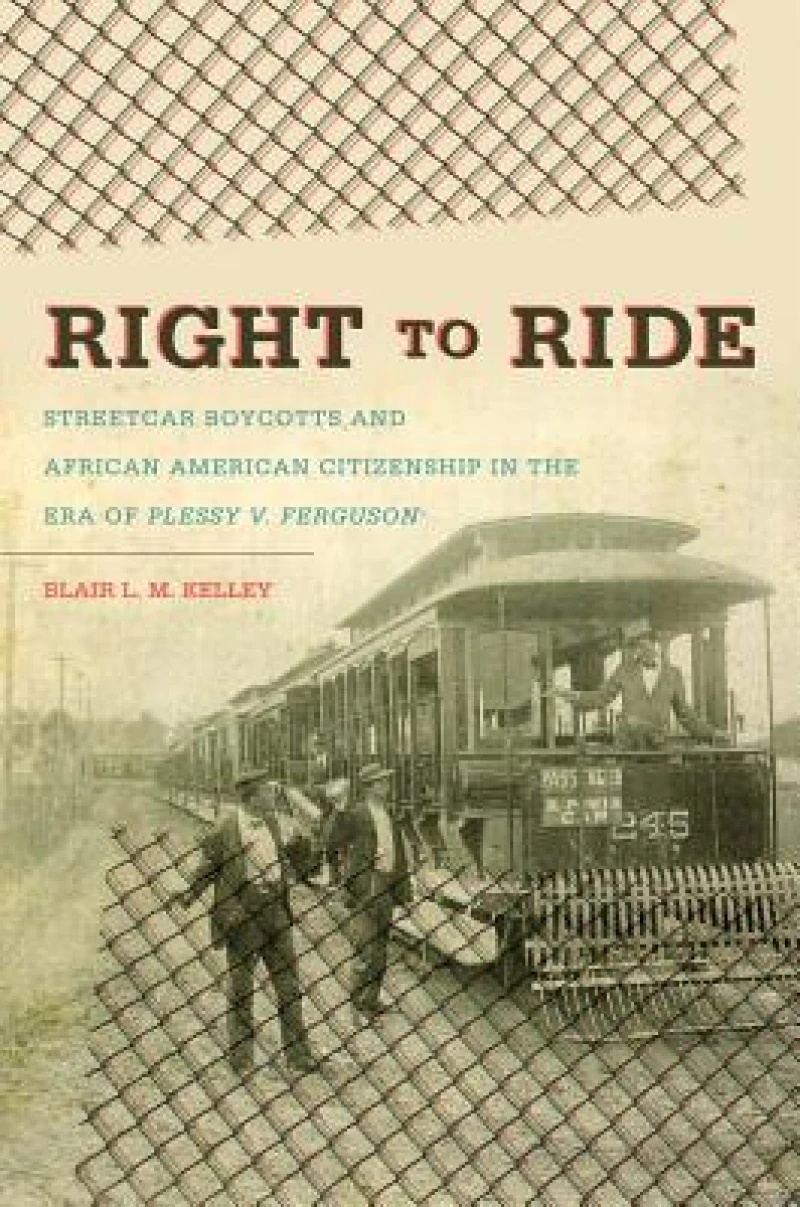
Right to Ride : Streetcar Boycotts and African American Citizenship in the Era of Plessy V. Ferguson
New
Book Details
Format
Paperback / Softback
ISBN-10
080787101X
ISBN-13
9780807871010
Edition
New
Publisher
The University of North Carolina Press
Imprint
The University of North Carolina Press
Country of Manufacture
US
Country of Publication
GB
Publication Date
May 3rd, 2010
Print length
280 Pages
Weight
428 grams
Dimensions
15.80 x 23.70 x 2.50 cms
Ksh 4,850.00
Werezi Extended Catalogue
0 in stock
Delivery Location
Delivery fee: Select location
Secure
Quality
Fast
Through a reexamination of the earliest struggles against Jim Crow, the author exposes the fullness of African American efforts to resist the passage of segregation laws dividing trains and streetcars by race in the early Jim Crow era.
A civil rights movement in an earlier generation. Through a reexamination of the earliest struggles against Jim Crow, Blair Kelley exposes the fullness of African American efforts to resist the passage of segregation laws dividing trains and streetcars by race in the early Jim Crow era. ""Right to Ride"" chronicles the litigation and local organizing against segregated rails that led to the Plessy v. Ferguson decision in 1896 and the streetcar boycott movement waged in twenty-five southern cities from 1900 to 1907. Kelley tells the stories of the brave but little-known men and women who faced down the violence of lynching and urban race riots to contest segregation. Focusing on three key cities - New Orleans, Richmond, and Savannah - Kelley explores the community organizations that bound protestors together and the divisions of class, gender, and ambition that sometimes drove them apart. Kelley''s findings force a reassessment of the timelines of the black freedom struggle, revealing that a period once dismissed as the age of accommodation should in fact be characterized as part of a history of protest and resistance.
Get Right to Ride by at the best price and quality guaranteed only at Werezi Africa's largest book ecommerce store. The book was published by The University of North Carolina Press and it has pages.

