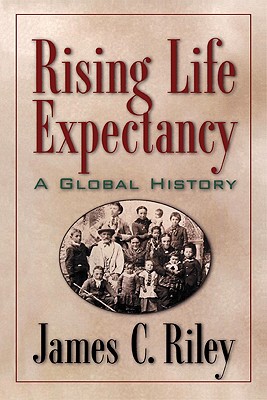
Rising Life Expectancy : A Global History
Book Details
Format
Paperback / softback
ISBN-10
0521002818
ISBN-13
9780521002813
Publisher
Cambridge University Press
Imprint
Cambridge University Press
Country of Manufacture
GB
Country of Publication
GB
Publication Date
Jun 4th, 2001
Print length
256 Pages
Weight
390 grams
Dimensions
22.70 x 15.30 x 1.60 cms
KSh 7,750.00
Currently unavailable
0 in stock
Delivery Location
Delivery fee: Select location
Secure
Quality
Fast
Between 1800 and 2000 life expectancy at birth rose from about 30 years to a global average of 67 years. Rising Life Expectancy examines the way humans reduced risks to their survival, both regionally and globally, to promote world population growth and population aging.
Between 1800 and 2000 life expectancy at birth rose from about 30 years to a global average of 67 years, and to more than 75 years in favored countries. This dramatic change, called the health transition, is characterized by a transition both in how long people expected to live, and how they expected to die. The most common age at death jumped from infancy to old age. Most people lived to know their children as adults, and most children became acquainted with their grandparents. Whereas earlier people died chiefly from infectious diseases with a short course, by later decades they died from chronic diseases, often with a protracted course. The ranks of people living in their most economically productive years filled out, and the old became commonplace figures everywhere. Rising Life Expectancy: A Global History examines the way humans reduced risks to their survival, both regionally and globally, to promote world population growth and population aging.
Get Rising Life Expectancy by James C. Riley at the best price and quality guaranteed only at Werezi Africa's largest book ecommerce store. The book was published by Cambridge University Press and it has 256 pages.
Customers Who Bought This Also Bought
A Modern History of the Somali
KSh 5,300.00
Sapiens
KSh 2,350.00

Rise Fall Great Powers
KSh 3,050.00

Legacy of Violence
KSh 3,150.00

Chip War
KSh 2,000.00
Covering Islam
KSh 2,350.00

They Came Before Columbus
KSh 3,400.00

Hiroshima
KSh 2,000.00
Guns, Germs and Steel
KSh 2,400.00

Silk Roads
KSh 3,050.00

Empire
KSh 2,700.00

Strategy
KSh 4,350.00