

Robot Ethics
Book Details
Format
Paperback / softback
Book Series
The MIT Press Essential Knowledge series
ISBN-10
0262544091
ISBN-13
9780262544092
Publisher
MIT Press Ltd
Imprint
MIT Press
Country of Manufacture
GB
Country of Publication
GB
Publication Date
Sep 6th, 2022
Print length
272 Pages
Weight
252 grams
Dimensions
12.80 x 17.80 x 2.00 cms
Product Classification:
Engineering: general
KSh 2,900.00
Werezi Extended Catalogue
Delivery in 12 days
2 copies in stock
Delivery Location
Delivery fee: Select location
Delivery in 12 days
Secure
Quality
Fast
A guide to the ethical questions that arise from our use of industrial robots, robot companions, self-driving cars, and other robotic devices.
Does a robot have moral agency? Can it be held responsible for its actions? Do humans owe robots anything? Will robots take our jobs? These are some of the ethical and moral quandaries that we should address now, as robots and other intelligent devices become more widely used and more technically sophisticated. In this volume in the MIT Press Essential Knowledge series, philosopher Mark Coeckelbergh does just that. He considers a variety of robotics technologies and applications—from robotic companions to military drones—and identifies the ethical implications of their use. Questions of robot ethics, he argues, are not just about robots but, crucially and importantly, are about humans as well.
Coeckelbergh examines industrial robots and their potential to take over tasks from humans; “social” robots and possible risks to privacy; and robots in health care and their effect on quality of care. He considers whether a machine can be moral, or have morality built in; how we ascribe moral status; and if machines should be allowed to make decisions about life and death. When we discuss robot ethics from a philosophical angle, Coeckelbergh argues, robots can function as mirrors for reflecting on the human. Robot ethics is more than applied ethics; it is a way of doing philosophy.
Does a robot have moral agency? Can it be held responsible for its actions? Do humans owe robots anything? Will robots take our jobs? These are some of the ethical and moral quandaries that we should address now, as robots and other intelligent devices become more widely used and more technically sophisticated. In this volume in the MIT Press Essential Knowledge series, philosopher Mark Coeckelbergh does just that. He considers a variety of robotics technologies and applications—from robotic companions to military drones—and identifies the ethical implications of their use. Questions of robot ethics, he argues, are not just about robots but, crucially and importantly, are about humans as well.
Coeckelbergh examines industrial robots and their potential to take over tasks from humans; “social” robots and possible risks to privacy; and robots in health care and their effect on quality of care. He considers whether a machine can be moral, or have morality built in; how we ascribe moral status; and if machines should be allowed to make decisions about life and death. When we discuss robot ethics from a philosophical angle, Coeckelbergh argues, robots can function as mirrors for reflecting on the human. Robot ethics is more than applied ethics; it is a way of doing philosophy.
Get Robot Ethics by Mark Coeckelbergh at the best price and quality guaranteed only at Werezi Africa's largest book ecommerce store. The book was published by MIT Press Ltd and it has 272 pages.
Customers Who Bought This Also Bought

Solid-Shell Finite Element Modeling of Functionally Graded Structures
KSh 26,300.00

Crusading for Chemistry
KSh 6,750.00

Buhnentechnik
KSh 16,450.00

Model Validation and Uncertainty Quantification, 2026
KSh 18,900.00
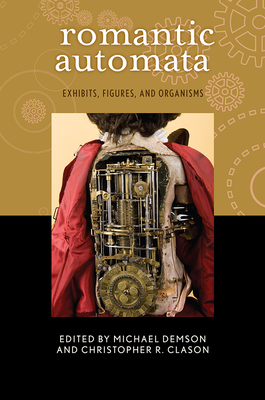
Romantic Automata – Exhibitions, Figures, Organisms
KSh 5,750.00

Special Topics & Experimental Techniques in Structural Dynamics, 2026
KSh 19,800.00
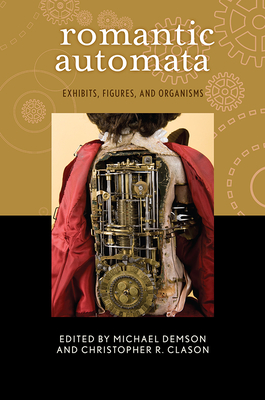
Romantic Automata – Exhibitions, Figures, Organisms
KSh 22,300.00

Mathematical Algorithms for Educational Data Classification
KSh 18,700.00

Digitalization of Mechanical Systems
KSh 33,850.00

Intelligent Manufacturing Systems and Industry 5.0
KSh 18,700.00

Beyond Algorithms
KSh 22,500.00

Dynamic Environments and Durability Testing, 2026
KSh 18,900.00
More by Mark Coeckelbergh
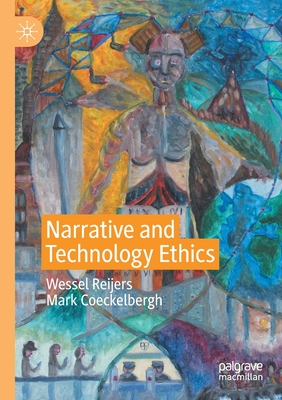
Narrative and Technology Ethics
KSh 19,800.00
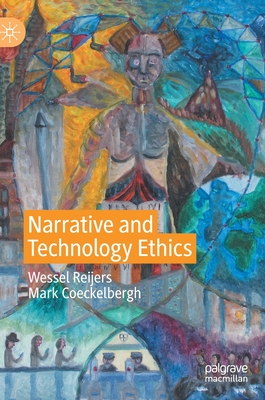
Narrative and Technology Ethics
KSh 19,800.00

Artificial Religion
KSh 5,200.00
Moved by Machines
KSh 8,650.00
Green Leviathan or the Poetics of Political Liberty
KSh 8,650.00
The Political Philosophy of AI
KSh 2,900.00

Communicative AI: A Critical Introduction to Large Language Models
KSh 2,900.00
Environmental Skill
KSh 30,950.00

Introduction to the Ethics of Emerging Technologies
KSh 9,000.00

Why AI Undermines Democracy and What To Do About It
KSh 9,000.00

Communicative AI
KSh 9,000.00

Using Words and Things
KSh 9,000.00
More in This Genre
Solid-Shell Finite Element Modeling of Functionally Graded Structures
KSh 26,300.00
Crusading for Chemistry
KSh 6,750.00
Buhnentechnik
KSh 16,450.00
Model Validation and Uncertainty Quantification, 2026
KSh 18,900.00
Romantic Automata – Exhibitions, Figures, Organisms
KSh 5,750.00
Special Topics & Experimental Techniques in Structural Dynamics, 2026
KSh 19,800.00
