
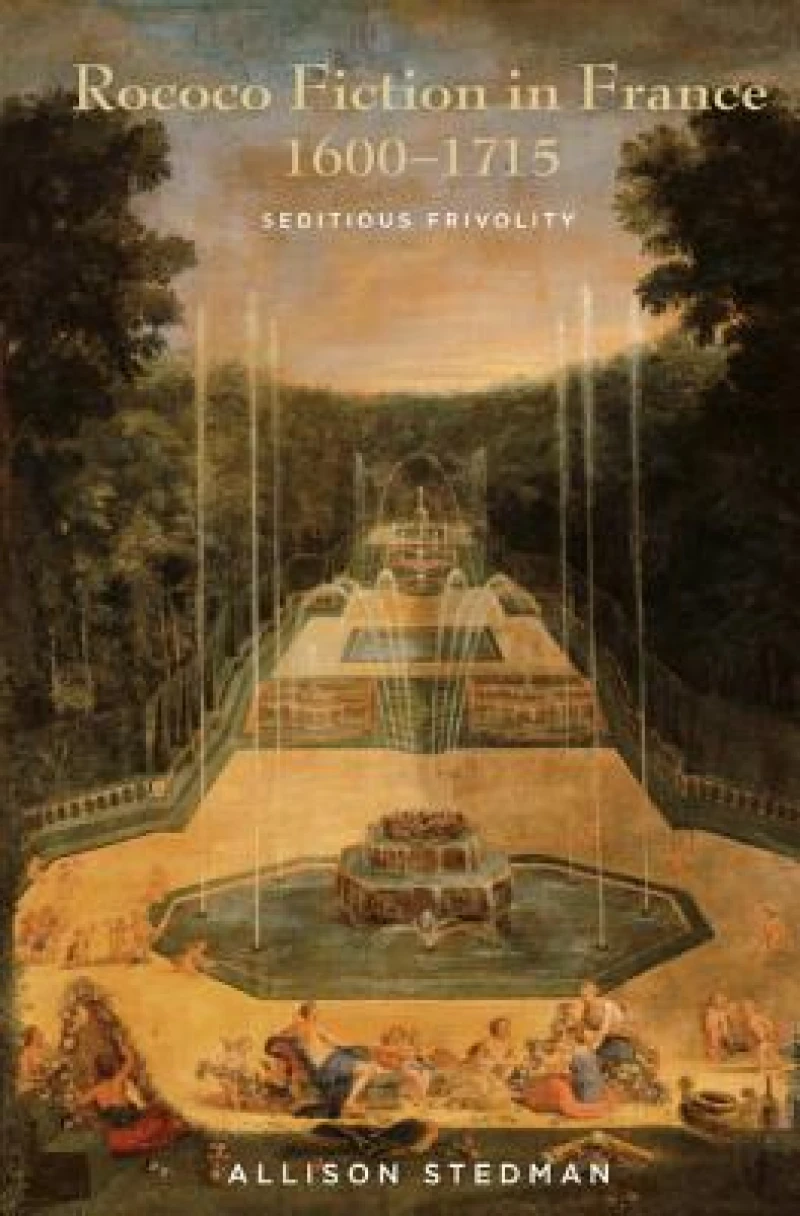
Rococo Fiction in France, 1600–1715 : Seditious Frivolity
Book Details
Format
Paperback / Softback
ISBN-10
1611485916
ISBN-13
9781611485912
Publisher
Bucknell University Press
Imprint
Bucknell University Press
Country of Manufacture
US
Country of Publication
GB
Publication Date
Jun 15th, 2014
Print length
258 Pages
Weight
402 grams
Dimensions
15.30 x 23.00 x 1.80 cms
Ksh 9,900.00
Manufactured on Demand
0 in stock
Delivery Location
Delivery fee: Select location
Secure
Quality
Fast
Author Allison Stedman makes a case for the rococo as a seventeenth-century literary phenomenon that provided an ideological counterpoint to the rise of French political absolutism. Stedman traces the rococo’s evolution and the study unearths the rococo’s counter-vision for the origins of the French Enlightenment.
Rococo Fiction in France reconfigures the history of the “long eighteenth century” by revealing the rococo as a literary phenomenon that characterized a range of experimental texts from the end of the French Renaissance to the eve of the French Revolution. Tracing the literary rococo’s evolution from the late 1500s to the early 1700s, and exploring its radicalization during the 1670s, ''80s, and ''90s, Allison Stedman unearths the seventeenth century rococo’s counter-vision for the trajectory of the French monarchy and the dawn of the French Enlightenment. The first part of the study investigates the relationship between Montaigne’s philosophy of literary production and those of early seventeenth-century “table-talk” novelists, libertine writers, and playwrights involved in the quarrel over Corneille’s play Le Cid. She thus establishes the existence of a rococo philosophy of literary production whose goal was to innovate, to bring pleasure, and to create communities. The second part of the study explores the impact that the Duchess de Montpensier’s literary portrait galleries, Jean Donneau de Visé’s periodical the Mercure Galant, and other forms of rococo literary production—by such authors as Charles Sorel, Alcide de Saint-Maurice, J.N. de Parvial and Jean de Préchac—had in the creation of a textually mediated social sphere that served as the foundation of the publicly critical culture of the French Enlightenment. The study concludes with an investigation of the influx of salon sociability into the textually mediated social sphere during the 1690s. Stedman examines the role of interpolated literary fairy tales, proverb plays and other rococo publication strategies—in such late seventeenth-century women writers as d’Aulnoy, Lhéritier, Murat, and Durand—in transfiguring the salon from an exclusive social circle mediated by physical presence to an inclusive social diaspora mediated by texts. Rococo Fiction in France challenges established views of early modern French literary history and discusses a range of little known works in a generous and engaging manner.
Get Rococo Fiction in France, 1600–1715 by at the best price and quality guaranteed only at Werezi Africa's largest book ecommerce store. The book was published by Bucknell University Press and it has pages.

