
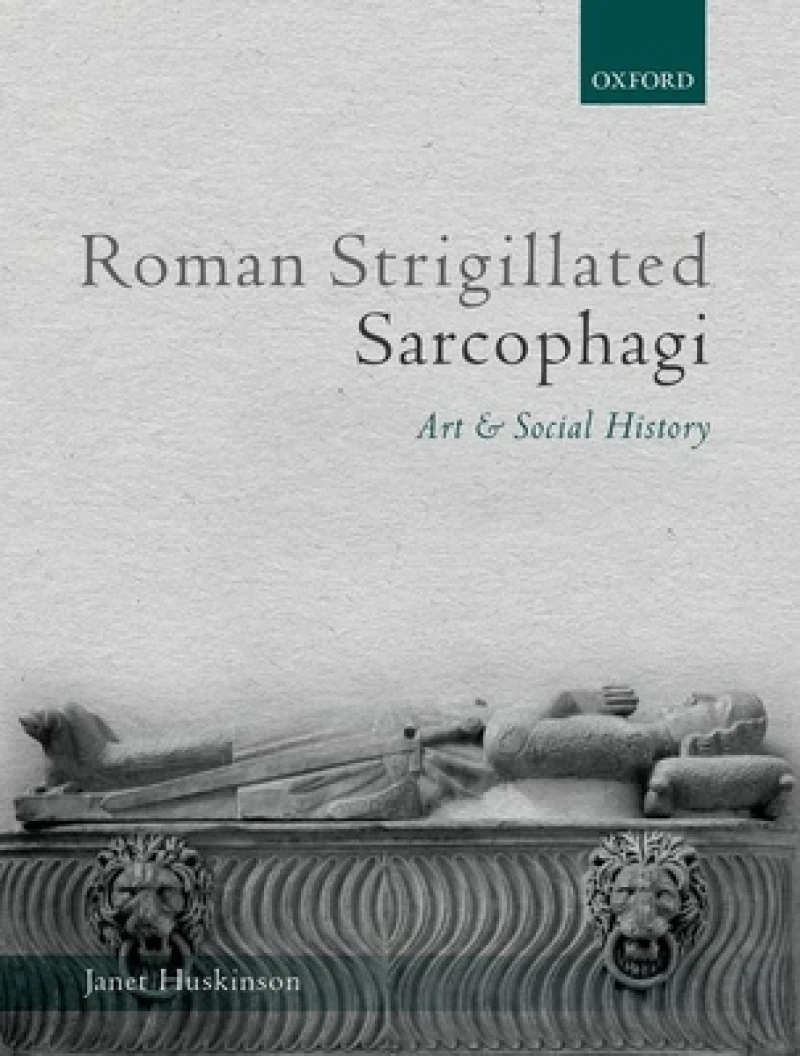
Roman Strigillated Sarcophagi : Art and Social History
Book Details
Format
Hardback or Cased Book
ISBN-10
0199203245
ISBN-13
9780199203246
Publisher
Oxford University Press
Imprint
Oxford University Press
Country of Manufacture
GB
Country of Publication
GB
Publication Date
Nov 5th, 2015
Print length
366 Pages
Weight
1,004 grams
Dimensions
19.90 x 25.50 x 2.50 cms
Product Classification:
Ancient World17th century, c 1600 to c 169918th century, c 1700 to c 1799Classical styleHistory of art: ancient & classical art,BCE to c 500 CEHistory of artEuropean historyClassical history / classical civilisationClassical Greek & Roman archaeologyAncient historyEuropean historyArchaeology by period / region
Ksh 29,850.00
Manufactured on Demand
0 in stock
Delivery Location
Delivery fee: Select location
Secure
Quality
Fast
This volume is the first full study of Roman strigillated sarcophagi, the largest group of ancient Roman sarcophagi to survive. Manufactured from the mid-second to the early fifth century AD, covering a critical period in Rome, they provide a rich historical source for exploring the social and cultural life of ancient Rome.
This is the first full study of Roman strigillated sarcophagi, which are the largest group of decorated marble sarcophagi to survive in the city of Rome. Characterized by panels of carved fluting - hence the description ''strigillated'', after the curved strigil used by Roman bathers to scrape off oil - and limited figure scenes, they were produced from the mid-second to the early fifth century AD, and thus cover a critical period in Rome, from empire to early Christianity. Roman Strigillated Sarcophagi focuses on their rich potential as an historical source for exploring the social and cultural life of the city in the later empire.The first part of the volume examines aspects of their manufacture, use, and viewing, emphasizing distinctive features. The second part looks at the figured representations carved on the sarcophagi, and at their social significance and creativity, concentrating on how their various arrangements allowed viewers to develop their own interpretations. The subjects represented by the figures and the flexibility with which they might be read, provide invaluable insights into how Romans thought about life and death during these changing times. The final part of the volume surveys how later societies responded to Roman strigillated sarcophagi. From as early as the fifth century AD their distinctive decoration and allusions to the Roman past made them especially attractive for reuse in particular contemporary contexts, notably for elite burials and the decoration of prominent buildings. The motif of curved fluting was also adopted and adapted: it decorated neo-classical memorials to Captain Cook, Napoleon''s sister-in-law Christine Boyer, and Penelope Boothby, and its use continues into this century, well over one and a half millennia since it first decorated Roman sarcophagi.
Get Roman Strigillated Sarcophagi by at the best price and quality guaranteed only at Werezi Africa's largest book ecommerce store. The book was published by Oxford University Press and it has pages.

