
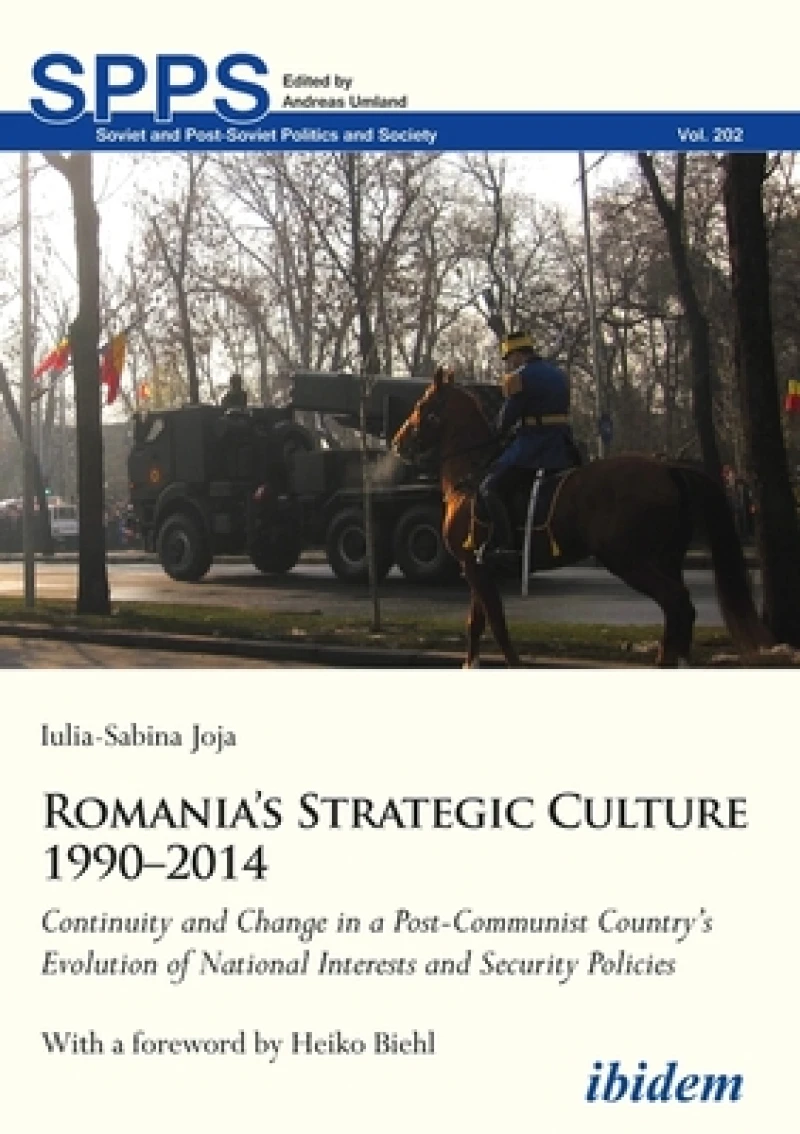
Romania’s Strategic Culture 1990–2014 : Continuity and Change in a Post-Communist Country’s Evolution of National Interests and Security Policies
New
Book Details
Format
Paperback / Softback
Book Series
Soviet and Post-Soviet Politics and Society
ISBN-10
383821286X
ISBN-13
9783838212869
Edition
New
Publisher
ibidem-Verlag, Jessica Haunschild u Christian Schon
Imprint
ibidem-Verlag, Jessica Haunschild u Christian Scho
Country of Manufacture
DE
Country of Publication
GB
Publication Date
May 30th, 2019
Print length
226 Pages
Weight
304 grams
Dimensions
15.30 x 21.10 x 0.90 cms
Product Classification:
Romaniac 2000 to c 2009International relations
Ksh 4,700.00
Werezi Extended Catalogue
0 in stock
Delivery Location
Delivery fee: Select location
Secure
Quality
Fast
This book sheds light on the reasons why specific features of a country’s strategic thinking remain rigid while others transform.
Analysis of strategic culture facilitates a comprehensive understanding of a nation’s security identity and patterns of policy conduct. Though strategic culture changes over time, why and how these mutations take place has not been researched much so far. This book sheds light on the reasons why specific features of a country’s strategic thinking remain rigid while others transform. The national strategic cultures of post-communist Eastern Europe have been exposed to a panoply of shocks and shifts. Romania’s communist regime cultivated a uniquely thorny relationship with the Soviet Union, which facilitated the development of a national security narrative legitimizing a highly isolationist foreign policy. These factors have heavily weighed on Romanian post-communist strategic thinking and complicated the transition process. At first glance, Romania went through an astonishing adaptation to novel security challenges. Ultimately, however, its traditional national strategic thinking remained in some ways constant. Core features of Romania’s strategic culture—such as the state-nation constellation—were the most resilient to change. In contrast, the intermediary features—such as the understanding of security and role conception—as well as outer layers—such as the foreign policy orientation and guidelines to using force—of strategic culture were more prone to influence by shocks, shifts, and norm entrepreneurs.
Get Romania’s Strategic Culture 1990–2014 by at the best price and quality guaranteed only at Werezi Africa's largest book ecommerce store. The book was published by ibidem-Verlag, Jessica Haunschild u Christian Schon and it has pages.

