
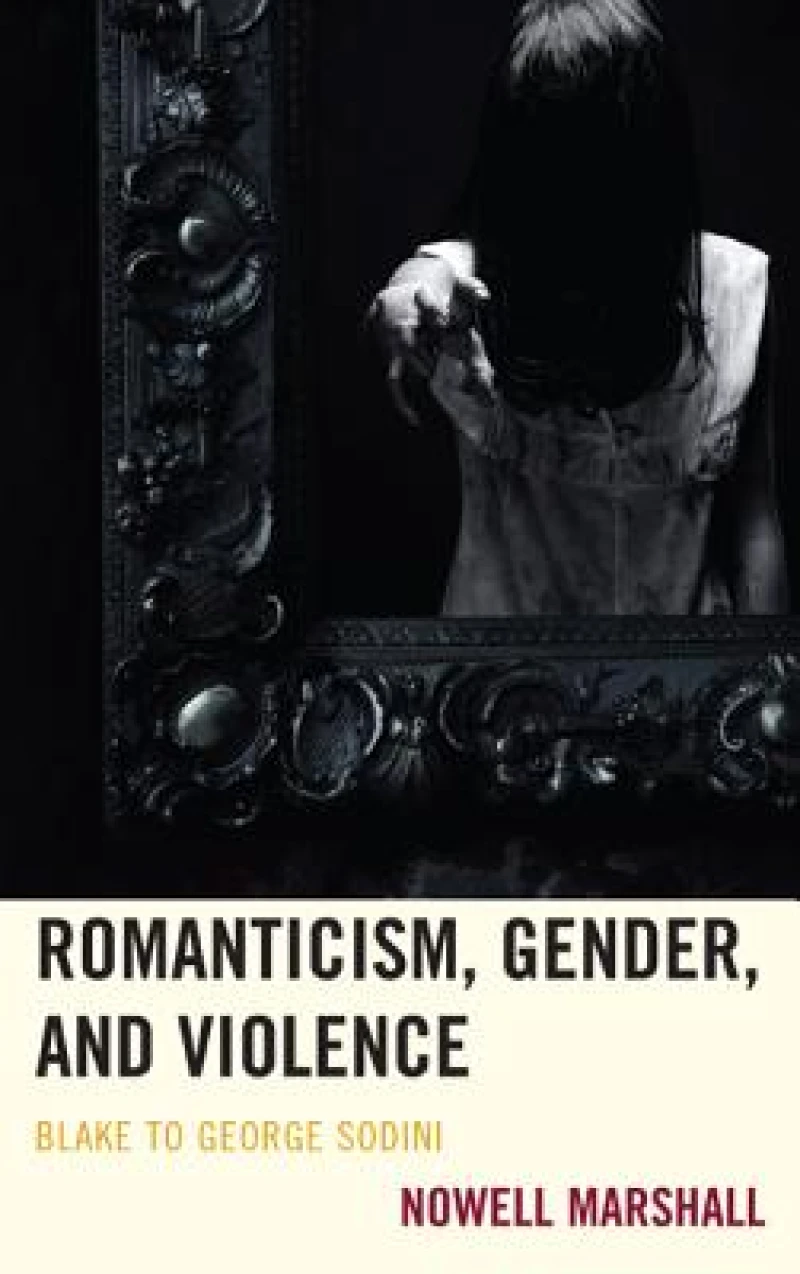
Romanticism, Gender, and Violence : Blake to George Sodini
Book Details
Format
Hardback or Cased Book
ISBN-10
1611484669
ISBN-13
9781611484663
Publisher
Bucknell University Press
Imprint
Bucknell University Press
Country of Manufacture
GB
Country of Publication
GB
Publication Date
Jul 22nd, 2013
Print length
220 Pages
Weight
513 grams
Dimensions
23.90 x 15.90 x 2.30 cms
Product Classification:
Literary studies: c 1800 to c 1900
Ksh 17,500.00
Manufactured on Demand
0 in stock
Delivery Location
Delivery fee: Select location
Secure
Quality
Fast
Responding to work by Eve Sedgwick and recent media attention to queer suicide, this project theorizes performative melancholia, a condition where, regardless of sexual orientation, overinvestment in gender norms causes subjects who are unable to embody those norms to experience socially expected (‘normal’) gender as something unattainable or lost.
Combining queer theory with theories of affect, psychoanalysis, and Foucauldian genealogy, Romanticism, Gender, and Violence: Blake to George Sodini theorizes performative melancholia, a condition where, regardless of sexual orientation, overinvestment in gender norms causes subjects who are unable to embody those norms to experience socially expected (‘normal’) gender as something unattainable or lost. This perceived loss causes an ambivalence within the subject that can lead to self-inflicted violence (masochism, suicide) or violence toward others (sadism, murder). Reading a range of Romantic poetry and novels between 1790-1820, but ultimately moving beyond the period to show its contemporary cultural relevance through readings of Eliot’s The Mill on the Floss, Virginia Woolf’s Mrs. Dalloway, Andrew Holleran’s Dancer from the Dance, and George Sodini’s 2009 murder-suicide case, this study argues that we need to move beyond focusing on bullying, teens, and LGBT students and look at our cultural investment in gender normativity itself. Doing so allows us to recognize that the relationship between non-normative gender performance and violence is not simply a gay problem; it is a human problem that can affect people of any sex, sexuality, age, race, or ethnicity and one that we can trace back to the Romantic period. Bringing late 18th-century novels into conversation with both canonical and lesser-known Romantic poetry, allows us to see that, as people whose performance of gender occasionally exceeds the normal, we too often internalize these norms and punish ourselves or others for our inability to adhere to them. Contrasting paired chapters by male and female authors and including sections on failed romantic coupling, melancholic femininities, melancholic masculinities, failed gender performance and madness, and ending with a section titled After Romanticism, this study works on multiple levels to complicate previous understandings of gender and violence in Romanticism while also offering a model for contemporary issues relating to gender and violence among people who ‘fail’ to perform gender according to social norms.
Get Romanticism, Gender, and Violence by at the best price and quality guaranteed only at Werezi Africa's largest book ecommerce store. The book was published by Bucknell University Press and it has pages.

