
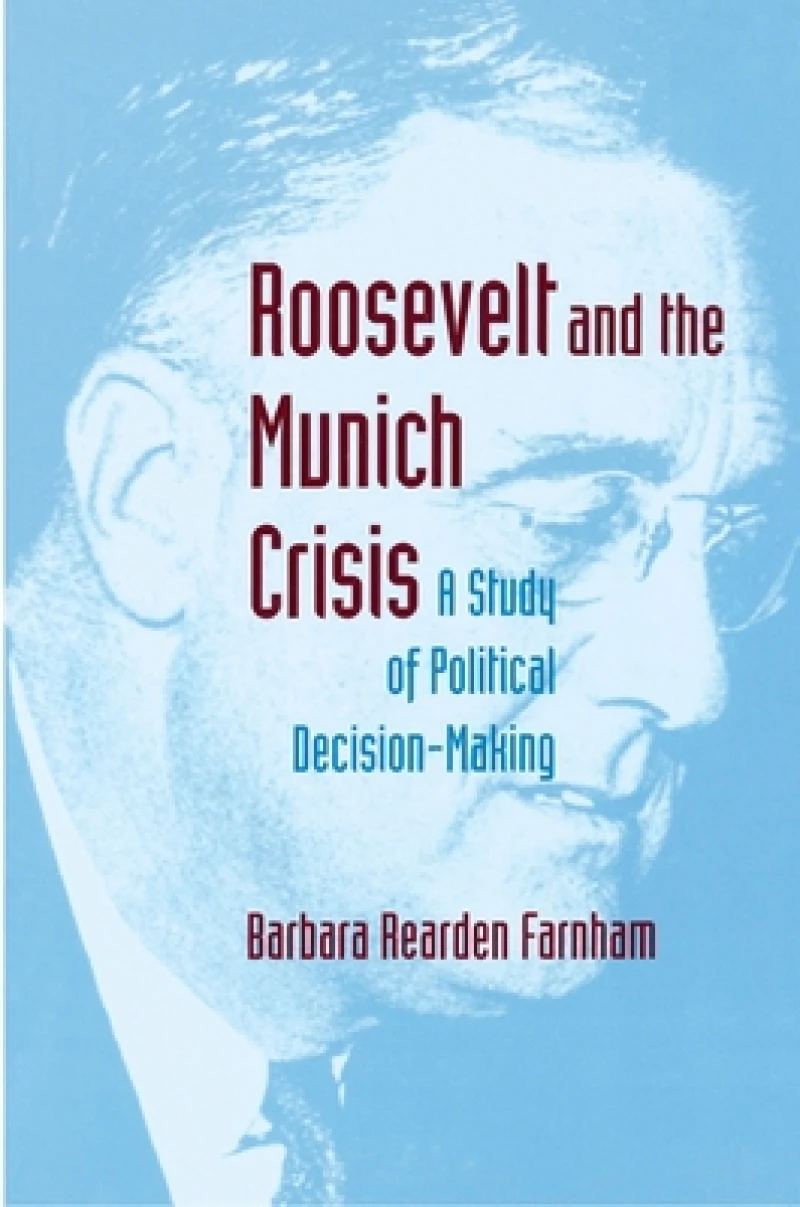
Roosevelt and the Munich Crisis – A Study of Political Decision–Making : A Study of Political Decision-Making
Book Details
Format
Paperback / Softback
ISBN-10
0691070741
ISBN-13
9780691070742
Publisher
Princeton University Press
Imprint
Princeton University Press
Country of Manufacture
GB
Country of Publication
GB
Publication Date
Oct 22nd, 2000
Print length
328 Pages
Weight
514 grams
Dimensions
23.10 x 15.10 x 2.00 cms
Product Classification:
United States of America, USA20th century, c 1900 to c 1999c 1919 to c 1939 (Inter-war period)c 1938 to c 1946 (World War Two period)European historyHistory of the Americas20th century history: c 1900 to c 2000Second World WarCentral / national / federal government policiesCentral government policiesDiplomacyHistoryEuropean historyHistory of the AmericasSecond World War
Ksh 9,900.00
Werezi Extended Catalogue
0 in stock
Delivery Location
Delivery fee: Select location
Secure
Quality
Fast
Offers both a theory of how the domestic political context affects foreign policy decisions in general and a fresh interpretation of FDR's post-Munich policies based on the insights that the theory provides. This book develops a political approach to decision-making.
Franklin Roosevelt's intentions during the three years between Munich and Pearl Harbor have been a source of controversy among historians for decades. Barbara Farnham offers both a theory of how the domestic political context affects foreign policy decisions in general and a fresh interpretation of FDR's post-Munich policies based on the insights that the theory provides. Between 1936 and 1938, Roosevelt searched for ways to influence the deteriorating international situation. When Hitler's behavior during the Munich crisis showed him to be incorrigibly aggressive, FDR settled on aiding the democracies, a course to which he adhered until America's entry into the war. This policy attracted him because it allowed him to deal with a serious problem: the conflict between the need to stop Hitler and the domestic imperative to avoid any risk of American involvement in a war. Because existing theoretical approaches to value conflict ignore the influence of political factors on decision-making, they offer little help in explaining Roosevelt's behavior. As an alternative, this book develops a political approach to decision-making which focuses on the impact that awareness of the imperatives of the political context can have on decision-making processes and, through them, policy outcomes. It suggests that in the face of a clash of central values decision-makers who are aware of the demands of the political context are likely to be reluctant to make trade-offs, seeking instead a solution that gives some measure of satisfaction to all the values implicated in the decision.
Get Roosevelt and the Munich Crisis – A Study of Political Decision–Making by at the best price and quality guaranteed only at Werezi Africa's largest book ecommerce store. The book was published by Princeton University Press and it has pages.

