
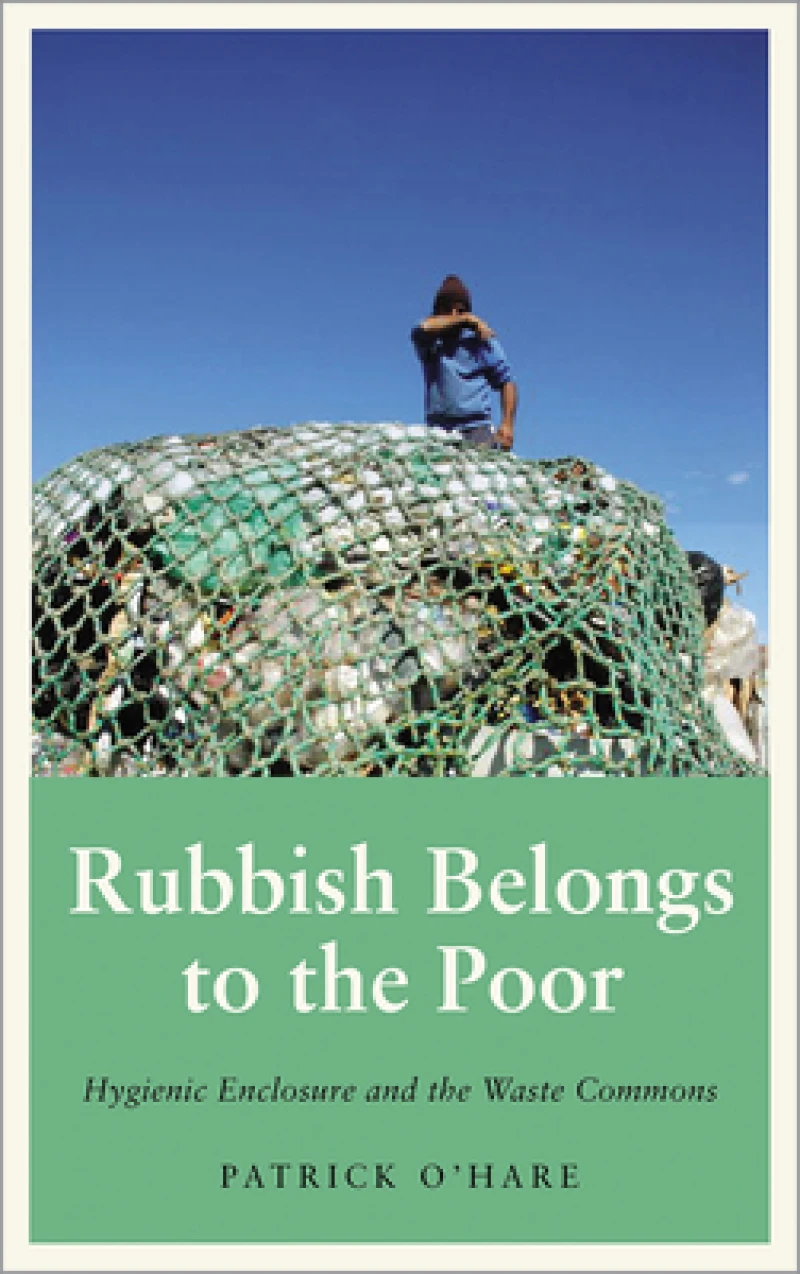
Rubbish Belongs to the Poor : Hygienic Enclosure and the Waste Commons
Book Details
Format
Hardback or Cased Book
Book Series
Anthropology, Culture and Society
ISBN-10
0745341381
ISBN-13
9780745341385
Publisher
Pluto Press
Imprint
Pluto Press
Country of Manufacture
GB
Country of Publication
GB
Publication Date
Feb 20th, 2022
Print length
240 Pages
Weight
372 grams
Dimensions
22.30 x 14.20 x 2.00 cms
Product Classification:
Social & cultural anthropology, ethnographySocial and cultural anthropologyWaste management
Ksh 15,300.00
Temporarily out of stock, due soon
0 in stock
Delivery Location
Delivery fee: Select location
Secure
Quality
Fast
An ethnography of Uruguayan waste-pickers that reconceptualizes rubbish as a form of modern-day commons
Garbage. Waste. Trash. Whatever term you choose to describe the things we throw away, the connotations are the same; of something dirty, useless and incontrovertibly ''bad''. But does such a dismissive rendering mask a more nuanced reality? In Rubbish Belongs to the Poor, Patrick O''Hare journeys to the heart of Uruguay''s waste disposal system in order to reconceptualize garbage as a 21st century commons, at risk of enclosure. On a giant landfill site outside the capital Montevideo we meet the book''s central protagonists, the ''classifiers'': waste-pickers who recover and recycle materials in and around its fenced but porous perimeter. Here the struggle of classifiers against the enclosure of the landfill, justified on the grounds of hygiene, is brought into dialogue with other historical and contemporary enclosures - from urban privatizations to rural evictions - to shed light on the nature of contemporary forms of capitalist dispossession. Supplementing this rich ethnography with the author''s own insights from dumpster diving in Britain, the book analyzes capitalism''s relations with its material surpluses and what these tell us about its expansionary logics, limits and liminal spaces. Rubbish Belongs to the Poor ultimately proposes a fundamental rethinking of the links between waste, capitalism and dignified work.Rubbish. Waste. Trash. Whatever term you choose to describe the things we throw away, the connotations are the same; of something dirty, useless and incontrovertibly ''bad''. But does such a dismissive rendering mask a more nuanced reality? In Rubbish Belongs to the Poor, Patrick O''Hare journeys to the heart of Uruguay''s waste disposal system in order to reconceptualize rubbish as a 21st century commons, at risk of enclosure. On a giant landfill site outside the capital Montevideo we meet the book''s central protagonists, the ''classifiers'': waste-pickers who recover and recycle materials in and around its fenced but porous perimeter. Here the struggle of classifiers against the enclosure of the landfill, justified on the grounds of hygiene, is brought into dialogue with other historical and contemporary enclosures - from urban privatizations to rural evictions - to shed light on the nature of contemporary forms of capitalist dispossession. Supplementing this rich ethnography with the author''s own insights from dumpster diving in the UK, the book analyses capitalism''s relations with its material surpluses and what these tell us about its expansionary logics, limits and liminal spaces. Rubbish Belongs to the Poor ultimately proposes a fundamental rethinking of the links between waste, capitalism and dignified work.
Get Rubbish Belongs to the Poor by at the best price and quality guaranteed only at Werezi Africa's largest book ecommerce store. The book was published by Pluto Press and it has pages.

