

Rules for Reasoning
Book Details
Format
Paperback / softback
ISBN-10
0805812571
ISBN-13
9780805812572
Publisher
Taylor & Francis Inc
Imprint
Psychology Press
Country of Manufacture
US
Country of Publication
GB
Publication Date
Jan 1st, 1993
Print length
432 Pages
Weight
800 grams
Product Classification:
Cognition & cognitive psychologyCognition and cognitive psychology
KSh 13,600.00
Currently unavailable
0 in stock
Delivery Location
Delivery fee: Select location
Secure
Quality
Fast
This book examines two questions: Do people make use of abstract rules such as logical and statistical rules when making inferences in everyday life? Can such abstract rules be changed by training? Contrary to the spirit of reductionist theories from behaviorism to connectionism, there is ample evidence that people do make use of abstract rules of inference -- including rules of logic, statistics, causal deduction, and cost-benefit analysis. Such rules, moreover, are easily alterable by instruction as it occurs in classrooms and in brief laboratory training sessions. The fact that purely formal training can alter them and that those taught in one content domain can "escape" to a quite different domain for which they are also highly applicable shows that the rules are highly abstract. The major implication for cognitive science is that people are capable of operating with abstract rules even for concrete, mundane tasks; therefore, any realistic model of human inferential capacity must reflect this fact. The major implication for education is that people can be far more broadly influenced by training than is generally supposed. At high levels of formality and abstraction, relatively brief training can alter the nature of problem-solving for an infinite number of content domains.
Get Rules for Reasoning by Richard E. Nisbett at the best price and quality guaranteed only at Werezi Africa's largest book ecommerce store. The book was published by Taylor & Francis Inc and it has 432 pages.
Customers Who Bought This Also Bought
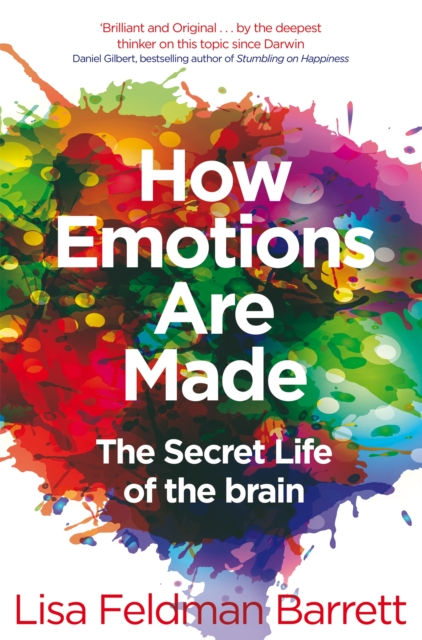
How Emotions Are Made
KSh 2,350.00

Gödel, Escher, Bach
KSh 4,200.00
Thinking, Fast and Slow
KSh 3,050.00

The Art of Seduction
KSh 5,050.00
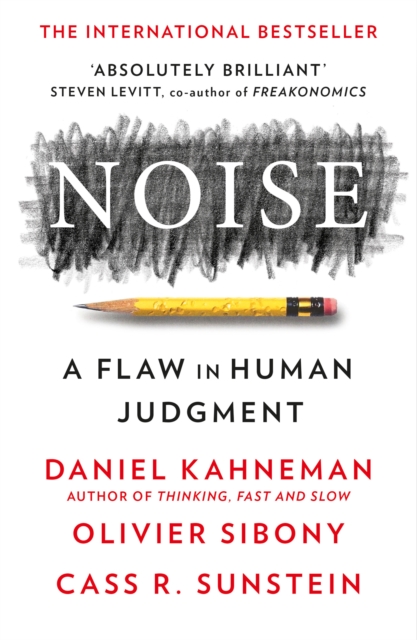
Noise
KSh 2,000.00
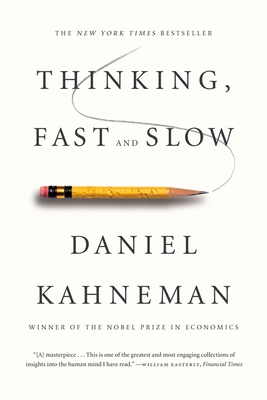
Thinking, Fast and Slow
KSh 2,700.00

Seven and a Half Lessons About the Brain
KSh 2,000.00
Influence: Science and Practice
KSh 12,850.00

Do the Work
KSh 1,450.00

Thinking in Bets
KSh 5,050.00

Art Of Listening
KSh 3,050.00

Mind''s Eye
KSh 2,000.00
