
Search

Categories

    • categories-img Jacket, Women
    • categories-img Woolend Jacket
    • categories-img Western denim
    • categories-img Mini Dresss
    • categories-img Jacket, Women
    • categories-img Woolend Jacket
    • categories-img Western denim
    • categories-img Mini Dresss
    • categories-img Jacket, Women
    • categories-img Woolend Jacket
    • categories-img Western denim
    • categories-img Mini Dresss
    • categories-img Jacket, Women
    • categories-img Woolend Jacket
    • categories-img Western denim
    • categories-img Mini Dresss
    • categories-img Jacket, Women
    • categories-img Woolend Jacket
    • categories-img Western denim
    • categories-img Mini Dresss

Filter By Price

$
-
$

Dietary Needs

Top Rated Product

product-img product-img

Modern Chair

$165.00
product-img product-img

Plastic Chair

$165.00
product-img product-img

Design Rooms

$165.00

Brands

  • Wooden
  • Chair
  • Modern
  • Fabric
  • Shoulder
  • Winter
  • Accessories
  • Dress

Welcome and thank you for visiting us. For any query call us on 0799 626 359 or Email [email protected]

Offcanvas Menu Open

Shopping Cart

Africa largest book store

Sub Total:

Search for any Title

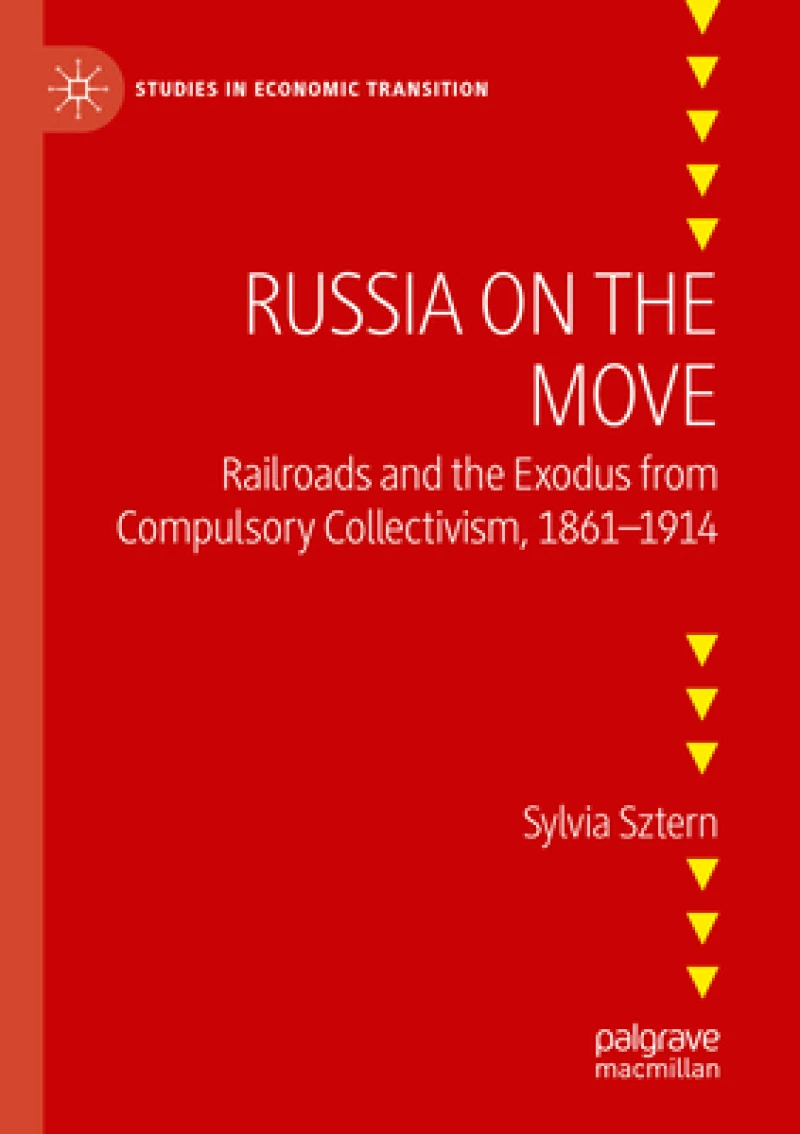
Russia on the Move : Railroads and the Exodus from Compulsory Collectivism, 1861–1914 - 2022 ed.

By: (Author) Sylvia Sztern

Werezi Extended Catalogue
Delivery in 34 days

Ksh 18,000.00

Format: Paperback / Softback

ISBN-10: 3030892875

ISBN-13: 9783030892876

Edition: 2022 ed.

Series: Studies in Economic Transition

Publisher: Springer Nature Switzerland AG

Imprint: Springer Nature Switzerland AG

Country of Manufacture: GB

Country of Publication: GB

Publication Date: Feb 20th, 2023

Print length: 513 Pages

Choose your Location

Shipping & Delivery

Door Delivery

Delivery fee

Delivery in 34 days

  • Description

  • Reviews

This book explores the impact of railroads on 19thcentury Russian peasant collectivism. The mutual-insurance mechanism in a precarious agricultural environment, provided bya structured communal-village system predicated on the reputation and authorityof community norms,is exposed to rationalist exchange—occasioning an institutional adaptation process:the individualization of property rights in land. Spatial-mobility technology animated market integration, specialization, literacy,and human-capital acquisition among peasant wage workers who commuted from their villages.Temporarily rising transaction costs forced the Tsar to concede household property rights in land in the so-called Stolypin reform of 1906.This challenge to the imperial patrimony, powered by the railroads, steered late imperial Russia toward constitutional governance.The spatial-mobility technology gave peasants access to centers of agglomeration of knowledge, changedcognitive perceptions of distance, and reduced the uncertainty and opportunity costs of travel. The empirical findings in this monograph corroborate the conclusion that the railroads occasioned a cultural revolution in late imperial Russia and made Stalin unnecessary for the modernization of the Euro-asian giant. This book highlights the profound effect that the development of the railroads had on Russian economic and political institutions and practices. It will be of indispensable valueto students and researchers interested in transitional economics and economic history.

This book explores the impact of railroads on 19thcentury Russian peasant collectivism. The mutual-insurance mechanism in a precarious agricultural environment, provided bya structured communal-village system predicated on the reputation and authorityof community norms,is exposed to rationalist exchange-occasioning an institutional adaptation process:the individualization of property rights in land. Spatial-mobility technology animated market integration, specialization, literacy,and human-capital acquisition among peasant wage workers who commuted from their villages.Temporarily rising transaction costs forced the Tsar to concede household property rights in land in the so-called Stolypin reform of 1906.This challenge to the imperial patrimony, powered by the railroads, steered late imperial Russia toward constitutional governance.The spatial-mobility technology gave peasants access to centers of agglomeration of knowledge, changedcognitive perceptions of distance, and reduced the uncertainty and opportunity costs of travel. The empirical findings in this monograph corroborate the conclusion that the railroads occasioned a cultural revolution in late imperial Russia and made Stalin unnecessary for the modernization of the Euro-asian giant.

This book highlights the profound effect that the development of the railroads had on Russian economic and political institutions and practices. It will be of indispensable valueto students and researchers interested in transitional economics and economic history.


Get Russia on the Move by at the best price and quality guranteed only at Werezi Africa largest book ecommerce store. The book was published by Springer Nature Switzerland AG and it has pages. Enjoy Shopping Best Offers & Deals on books Online from Werezi - Receive at your doorstep - Fast Delivery - Secure mode of Payment

Customer Reviews

Based on 0 reviews

Mind, Body, & Spirit
