
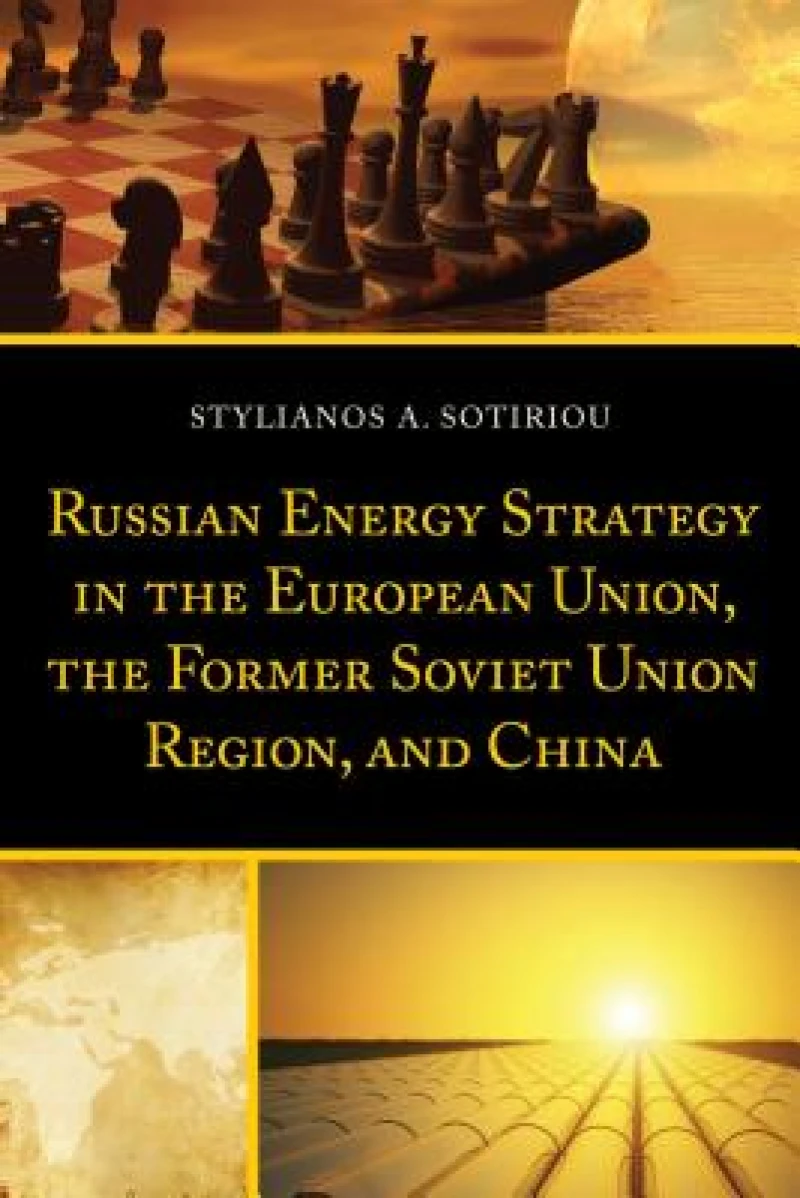
Russian Energy Strategy in the European Union, the Former Soviet Union Region, and China
Book Details
Format
Paperback / Softback
ISBN-10
1498502334
ISBN-13
9781498502337
Publisher
Bloomsbury Publishing Plc
Imprint
Lexington Books
Country of Manufacture
GB
Country of Publication
GB
Publication Date
May 24th, 2016
Print length
294 Pages
Weight
414 grams
Dimensions
15.30 x 22.80 x 2.30 cms
Product Classification:
European historyAsian historyInternational relations
Ksh 8,650.00
Manufactured on Demand
0 in stock
Delivery Location
Delivery fee: Select location
Secure
Quality
Fast
This book examines three bipolar relationships that have emerged as a result of the Eurasian energy triangle—Russia-Former Soviet Union region, Russia-EU, and Russia-China—and the ways in which they, along with Putin's foreign energy policy, relate to the debate between neorealism and neoliberal institutionalism.
This book places Eurasia in its entirety within a single explanatory framework and examines, for the first time to that extent, Russia as a Eurasian energy power in its affairs with the two main geopolitical players of the region, the EU and China. Part of this geopolitical space is the Former Soviet Union (FSU) region which shares deep historical-political ties with Russia and constitutes the necessary crossing for the latter’s natural gas supplies en route to the EU market. In this way, an energy triangle is established, with Russia at the top angle, the EU in the left angle, China in the right angle and the FSU region the median. Following the scheme, three bipolar relationships emerge, Russia-FSU region, Russia-EU and Russia-China, with each of them representing a different type of bilateral cooperation. In the first case there is an asymmetric relationship with one actor being overly powerful, in terms of energy, to impose its conditions, economic and political, on the other. In the second case there is a symmetric relationship with both actors having equal means of pressure at their disposal. Finally, in the third case there is balanced relationship with both actors trading on an equal basis. Within this framework, one of the dominant theoretical debates in the field of International Relations, that between Neorealism and Neoliberal Institutionalism (the so-called ‘Neo-Neo’ debate) seeks to shed light on the governing rationale beyond Putin’s Russia foreign energy policy vis-à-vis the FSU region, the EU and China.
Get Russian Energy Strategy in the European Union, the Former Soviet Union Region, and China by at the best price and quality guaranteed only at Werezi Africa's largest book ecommerce store. The book was published by Bloomsbury Publishing Plc and it has pages.

