
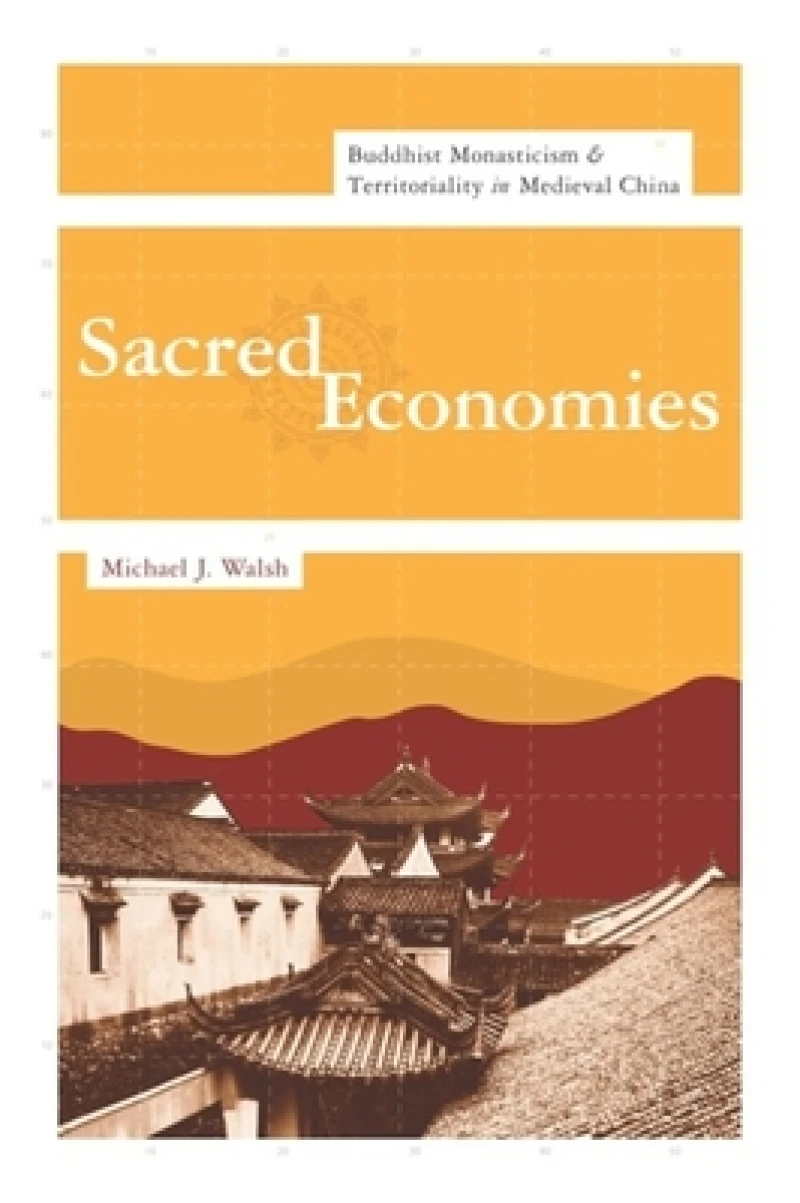
Sacred Economies : Buddhist Monasticism and Territoriality in Medieval China
Book Details
Format
Hardback or Cased Book
Book Series
The Sheng Yen Series in Chinese Buddhist Studies
ISBN-10
0231148321
ISBN-13
9780231148320
Publisher
Columbia University Press
Imprint
Columbia University Press
Country of Manufacture
US
Country of Publication
GB
Publication Date
Mar 25th, 2010
Print length
256 Pages
Weight
496 grams
Product Classification:
Religion & beliefs
Ksh 11,150.00
Werezi Extended Catalogue
0 in stock
Delivery Location
Delivery fee: Select location
Secure
Quality
Fast
Buddhist monasteries in medieval China employed a variety of practices to ensure their ascendancy and survival. Most successful was the exchange of material goods for salvation, as in the donation of land, which allowed monks to spread their teachings throughout China. By investigating a variety of socioeconomic spaces produced and perpetuated by Chinese monasteries, Michael J. Walsh reveals the "sacred economies" that shaped early Buddhism and its relationship with consumption and salvation. Centering his study on Tiantong, a Buddhist monastery that has thrived for close to seventeen centuries in southeast China, Walsh follows three main topics: the spaces monks produced, within and around which a community could pursue a meaningful existence; the social and economic avenues through which monasteries provided diverse sacred resources and secured the primacy of Buddhist teachings within an agrarian culture; and the nature of "transactive" participation within monastic spaces, which later became a fundamental component of a broader Chinese religiosity. Unpacking these sacred economies and repositioning them within the history of religion in China, Walsh encourages a different approach to the study of Chinese religion, emphasizing the critical link between religious exchange and the production of material culture.
Get Sacred Economies by at the best price and quality guaranteed only at Werezi Africa's largest book ecommerce store. The book was published by Columbia University Press and it has pages.

