

Sacred Transgressions
Book Details
Format
Hardback
ISBN-10
1890318779
ISBN-13
9781890318772
Publisher
St Augustine's Press
Imprint
St Augustine's Press
Country of Manufacture
GB
Country of Publication
GB
Publication Date
Jan 21st, 2019
Print length
168 Pages
Weight
434 grams
Dimensions
25.20 x 15.50 x 1.70 cms
KSh 4,400.00
Currently unavailable
0 in stock
Delivery Location
Delivery fee: Select location
Secure
Quality
Fast
This detailed commentary on the action and argument of Sophocles' Antigone is meant to be a reflection on and response to Hegel's interpretation in the Phenomenology (VI.A.a-b). It thus moves within the principles Hegel discovers in the play but reinserts them into the play as they show themselves across the eccentricities of its plot. Wherever plot and principles do not match, there is a glimmer of the argument: Haemon speaks up for the city and Tiresias for the divine law but neither for Antigone. The guard who reports the burial and presents Antigone to Creon is as important as Antigone or Creon for understanding Antigone. The Chorus too in their inconsistent thoughtfulness have to be taken into account, and in particular how their understanding of the canniness of man reveals Antigone in their very failure to count her as a sign of man's uncanniness: She who is below the horizon of their awareness is at the heart of their speech. Megareus, the older son of Creon, who sacrificed his life for the city, looms as large as Eurydice, whose suicide has nothing in common with Antigone's. She is 'all-mother'; Antigone is anti-generation.
Get Sacred Transgressions by Seth Benardete at the best price and quality guaranteed only at Werezi Africa's largest book ecommerce store. The book was published by St Augustine's Press and it has 168 pages.
Customers Who Bought This Also Bought
The Odyssey
KSh 1,800.00
The Odyssey
KSh 1,600.00
The Divine Comedy
KSh 2,350.00
Annals
KSh 2,350.00
Classical Literary Criticism
KSh 2,350.00
Great Dialogues of Plato
KSh 1,450.00
The Divine Comedy
KSh 2,700.00
The Iliad
KSh 1,800.00

The Masnavi, Book Six
KSh 2,000.00

The Masnavi, Book Five
KSh 1,800.00
Chaucer's Pardoner and Gender Theory
KSh 8,100.00
Classical Literary Criticism
KSh 1,800.00
More by Seth Benardete
Plato`s Symposium – A Translation by Seth Benardete with Commentaries by Allan Bloom and Seth Benardete
KSh 2,700.00
The Archaeology of the Soul – Platonic Readings in Ancient Poetry and Philosophy
KSh 8,750.00
Achilles and Hector – Homeric Hero
KSh 2,800.00
Bow and the Lyre
KSh 6,850.00

Aristotle On Poetics
KSh 1,800.00

Achilles and Hector – Homeric Hero
KSh 1,650.00
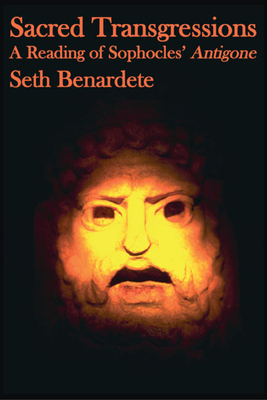
Sacred Transgressions – A Reading of Sophocles` Antigone
KSh 2,850.00
The Rhetoric of Morality and Philosophy
KSh 6,150.00
The Argument of the Action – Essays on Greek Poetry and Philosophy
KSh 4,950.00
Herodotean Inquiries
KSh 3,050.00
Plato`s "Laws" – The Discovery of Being
KSh 4,850.00
Aristotle On Poetics
KSh 3,400.00
