
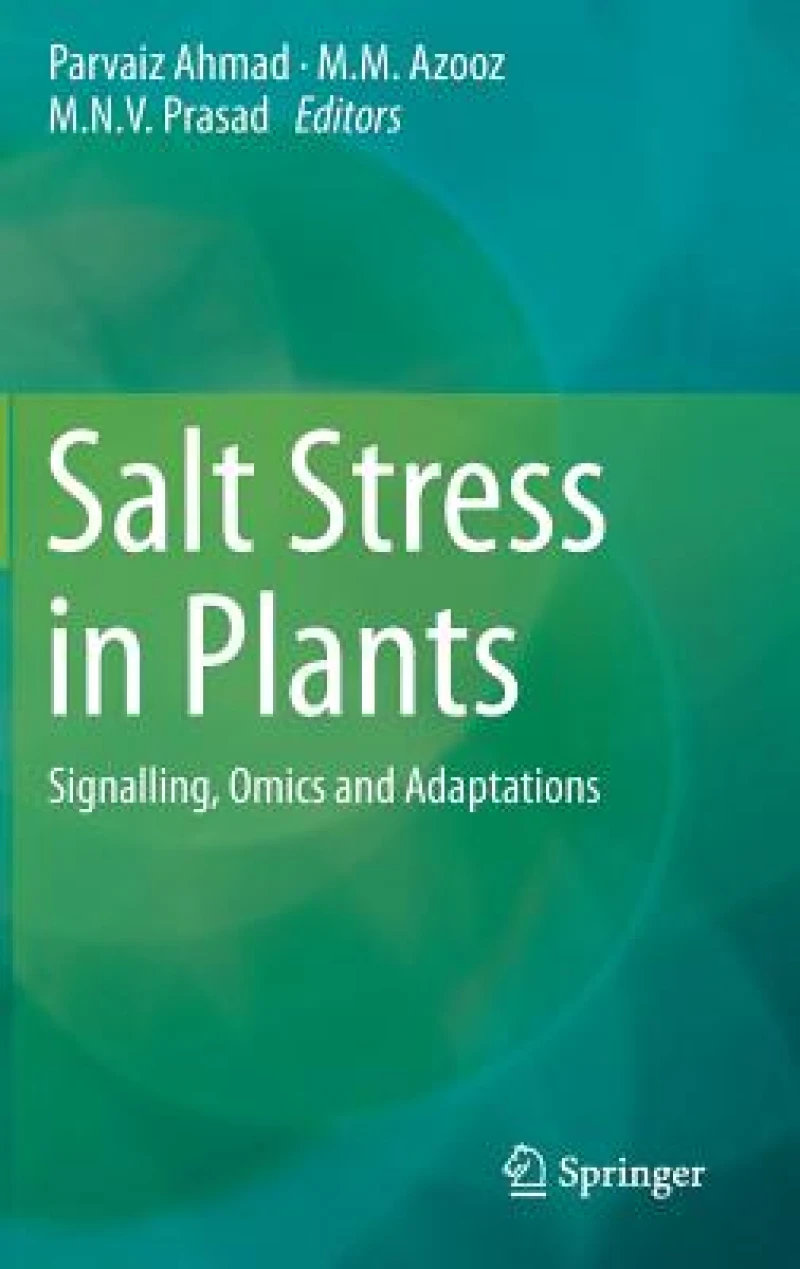
Salt Stress in Plants : Signalling, Omics and Adaptations
1st ed. 2013. Corr. 2nd printing 2013
Book Details
Format
Hardback or Cased Book
ISBN-10
1461461073
ISBN-13
9781461461074
Edition
1st ed. 2013. Corr. 2nd printing 2013
Publisher
Springer-Verlag New York Inc.
Imprint
Springer-Verlag New York Inc.
Country of Manufacture
GB
Country of Publication
GB
Publication Date
Feb 21st, 2013
Print length
509 Pages
Weight
864 grams
Dimensions
24.20 x 16.20 x 2.50 cms
Ksh 32,400.00
Werezi Extended Catalogue
0 in stock
Delivery Location
Delivery fee: Select location
Secure
Quality
Fast
Excess amount of salt in the soil adversely affects plant growth and development, and impairs production. This book will shed light on the effect of salt stress on plants development, proteomics, genomics, genetic engineering, and plant adaptations, among other topics.
Environmental conditions and changes, irrespective of source, cause a variety of stresses, one of the most prevalent of which is salt stress. Excess amount of salt in the soil adversely affects plant growth and development, and impairs production. Nearly 20% of the world’s cultivated area and nearly half of the world’s irrigated lands are affected by salinity. Processes such as seed germination, seedling growth and vigour, vegetative growth, flowering and fruit set are adversely affected by high salt concentration, ultimately causing diminished economic yield and also quality of produce. Most plants cannot tolerate salt-stress. High salt concentrations decrease the osmotic potential of soil solution, creating a water stress in plants and severe ion toxicity. The interactions of salts with mineral nutrition may result in nutrient imbalances and deficiencies. The consequence of all these can ultimately lead to plant death as a result of growth arrest and molecular damage. To achieve salt-tolerance, the foremost task is either to prevent or alleviate the damage, or to re-establish homeostatic conditions in the new stressful environment. Barring a few exceptions, the conventional breeding techniques have been unsuccessful in transferring the salt-tolerance trait to the target species. A host of genes encoding different structural and regulatory proteins have been used over the past 5–6 years for the development of a range of abiotic stress-tolerant plants. It has been shown that using regulatory genes is a more effective approach for developing stress-tolerant plants. Thus, understanding the molecular basis will be helpful in developing selection strategies for improving salinity tolerance. This book will shed light on the effect of salt stress on plants development, proteomics, genomics, genetic engineering, and plant adaptations, among other topics. The book will cover around 25 chapters with contributors from all over the world. ??
Get Salt Stress in Plants by at the best price and quality guaranteed only at Werezi Africa's largest book ecommerce store. The book was published by Springer-Verlag New York Inc. and it has pages.

