

Scanning Electron Microscopy and X-Ray Microanalysis
Fourth Edition 2018
Book Details
Format
Hardback
ISBN-10
149396674X
ISBN-13
9781493966745
Edition
Fourth Edition 2018
Publisher
Springer-Verlag New York Inc.
Imprint
Springer-Verlag New York Inc.
Country of Manufacture
US
Country of Publication
GB
Publication Date
Nov 18th, 2017
Print length
550 Pages
Weight
1,932 grams
Dimensions
21.70 x 28.40 x 3.40 cms
KSh 18,000.00
Currently unavailable
0 in stock
Delivery Location
Delivery fee: Select location
Secure
Quality
Fast
This thoroughly revised and updated Fourth Edition of a time-honored text provides the reader with a comprehensive introduction to the field of scanning electron microscopy (SEM), energy dispersive X-ray spectrometry (EDS) for elemental microanalysis, electron backscatter diffraction analysis (EBSD) for micro-crystallography and focused ion beams. Students and academic researchers will find the text to be an authoritative and scholarly resource, while SEM operators and a diversity of practitioners — engineers, technicians, physical and biological scientists, clinicians, and technical managers — will find that every chapter has been overhauled to meet the more practical needs of the technologist and working professional. In a break with the past, this Fourth Edition de-emphasizes the design and physical operating basis of the instrumentation, including the electron sources, lenses, detectors, etc. In the modern SEM, many of the low level instrument parameters are now controlled and optimized by the microscope’s software, and user access is restricted. Although the software control system provides efficient and reproducible microscopy and microanalysis, the user must understand the parameter space wherein choices are made to achieve effective and meaningful microscopy, microanalysis, and micro-crystallography. Therefore, special emphasis is placed on beam energy, beam current, electron detector characteristics and controls, and ancillary techniques such as energy dispersive x-ray spectrometry (EDS) and electron backscatter diffraction (EBSD).
With 13 years between the publication of the third and fourth editions, new coverage reflects the many improvements in the instrument and analysis techniques. The SEM has evolved into a powerful and versatile characterization platform in which morphology, elemental composition, and crystal structure can be evaluated simultaneously. Extension of the SEM into a "dual beam" platform incorporating both electron and ion columns allows precision modification of the specimen by focused ion beam milling. New coverage in the Fourth Edition includes the increasing use of field emission guns and SEM instruments with high resolution capabilities, variable pressure SEM operation, theory, and measurement of x-rays with high throughput silicon drift detector (SDD-EDS) x-ray spectrometers. In addition to powerful vendor- supplied software to support data collection and processing, the microscopist can access advanced capabilities available in free, open source software platforms, including the National Institutes of Health (NIH) ImageJ-Fiji for image processing and the National Institute of Standards and Technology (NIST) DTSA II for quantitative EDS x-ray microanalysis and spectral simulation, both of which are extensively used in this work. However, the user has a responsibility to bring intellect, curiosity, and a proper skepticism to information on a computer screen and to the entire measurement process. This book helps you to achieve this goal.
- Realigns the text with the needs of a diverse audience from researchers and graduate students to SEM operators and technical managers
- Emphasizes practical, hands-on operation of the microscope, particularly user selection of the critical operating parameters to achieve meaningful results
- Provides step-by-step overviews of SEM, EDS, and EBSD and checklists of critical issues for SEM imaging, EDS x-ray microanalysis, and EBSD crystallographic measurements
- Makes extensive use of open source software: NIH ImageJ-FIJI for image processing and NIST DTSA II for quantitative EDS x-ray microanalysis and EDS spectral simulation.
- Includes case studies to illustrate practical problem solving
- Covers Helium ion scanning microscopy
- Organized into relatively self-contained modules – no need to "read it all" to understand a topic
Get Scanning Electron Microscopy and X-Ray Microanalysis by Dale E. Newbury, David C. Joy at the best price and quality guaranteed only at Werezi Africa's largest book ecommerce store. The book was published by Springer-Verlag New York Inc. and it has 550 pages.
Customers Who Bought This Also Bought

Disappearing Spoon...and other true tales from the Periodic Table
KSh 2,150.00

The Three Pillars of Confidence in Chemical Measurement
KSh 8,100.00
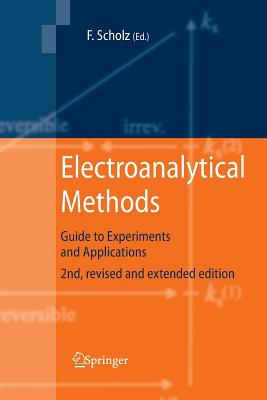
Electroanalytical Methods
KSh 18,000.00
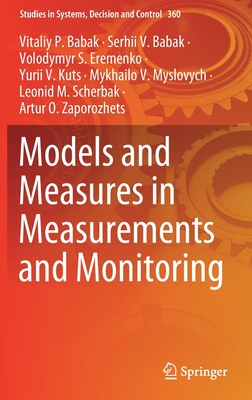
Models and Measures in Measurements and Monitoring
KSh 27,000.00

Magnetic Monopole Noise
KSh 16,200.00
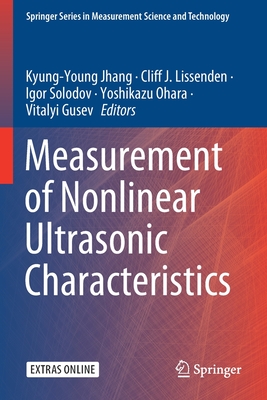
Measurement of Nonlinear Ultrasonic Characteristics
KSh 28,800.00

Nuclear Power Plants
KSh 23,400.00

Industrial Measurements in Machining
KSh 16,200.00

Modern Requirements for Noise Immunity Aircraft Navigation Equipment
KSh 21,600.00

Sensors, Algorithms and Applications for Structural Health Monitoring
KSh 18,000.00

Ion Tracks in Apatite and Quartz
KSh 16,200.00

Error Compensation for Industrial Robots
KSh 14,400.00
More by Dale E. Newbury, David C. Joy

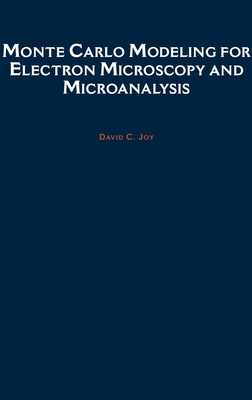
More in This Genre
Disappearing Spoon...and other true tales from the Periodic Table
KSh 2,150.00
The Three Pillars of Confidence in Chemical Measurement
KSh 8,100.00
Electroanalytical Methods
KSh 18,000.00
Models and Measures in Measurements and Monitoring
KSh 27,000.00
Magnetic Monopole Noise
KSh 16,200.00
Measurement of Nonlinear Ultrasonic Characteristics
KSh 28,800.00
