
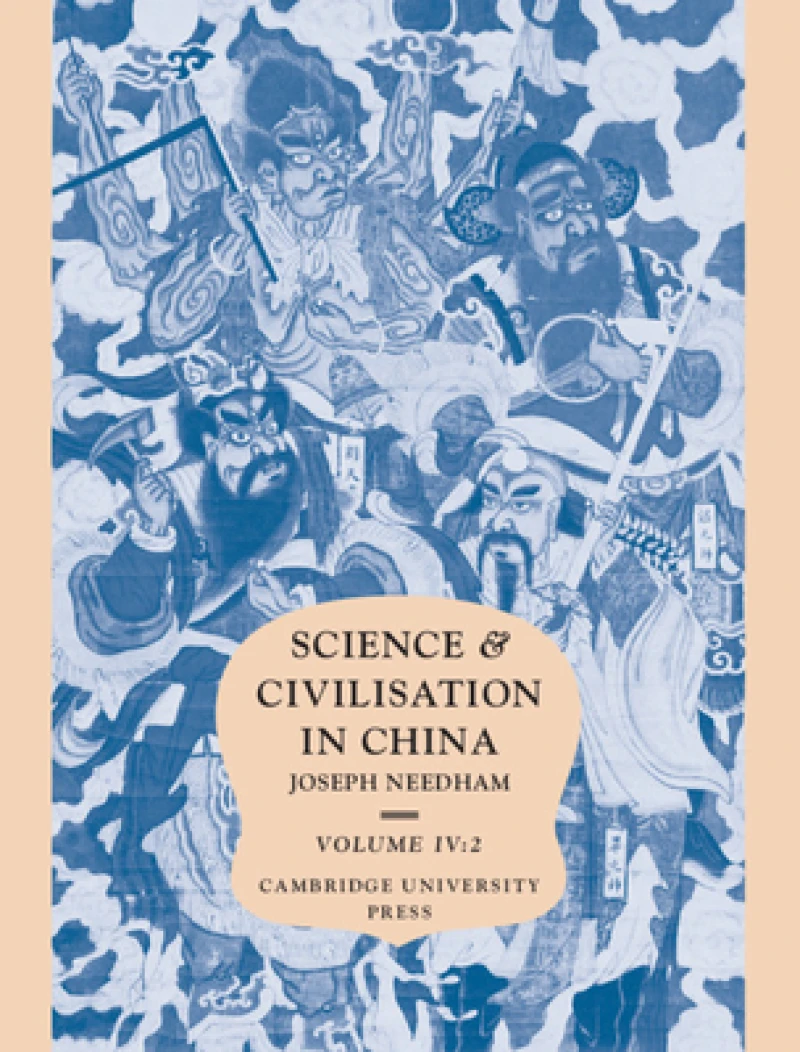
Science and Civilisation in China, Part 2, Mechanical Engineering
Book Details
Format
Hardback or Cased Book
Book Series
Science and Civilisation in China
ISBN-10
0521058031
ISBN-13
9780521058032
Publisher
Cambridge University Press
Imprint
Cambridge University Press
Country of Manufacture
GB
Country of Publication
GB
Publication Date
Jan 2nd, 1965
Print length
816 Pages
Weight
2,048 grams
Dimensions
25.50 x 20.20 x 5.90 cms
Product Classification:
History of science
Ksh 56,600.00
Werezi Extended Catalogue
0 in stock
Delivery Location
Delivery fee: Select location
Secure
Quality
Fast
As Dr Needham's immense undertaking gathers momentum it has been found necessary to subdivide volumes into parts, each to be bound and published separately. The first part of Volume 4, already published, deals with the physical sciences; the second with the diverse applications of physics in the many branches of mechanical engineering; and the third will deal with civil and hydraulic engineering and nautical technology. With this part of Volume 4, then, we come to the application by the Chinese of physical principles in the control of forces and in the use of power; we cross the frontier separating tools from the machine. We have already noticed that the ancient Chinese concept of chhi (somewhat similar to the pneuma of the Greeks) asserted itself prominently in acoustics; but we discover here that the Chinese tendency to think pneumatically was also responsible for a whole range of brilliant technological achievements, for example, the double-acting piston-bellows, the rotary winnowing-fan, and the water-powered metallurgical blowing-machine (ancestor of the steam-engine); as well as for some extraordinary insights and predictions in aeronautics.
As Dr Needham''s immense undertaking gathers momentum it has been found necessary to subdivide volumes into parts, each to be bound and published separately. The first part of Volume 4, already published, deals with the physical sciences; the second with the diverse applications of physics in the many branches of mechanical engineering; and the third will deal with civil and hydraulic engineering and nautical technology. With this part of Volume 4, then, we come to the application by the Chinese of physical principles in the control of forces and in the use of power; we cross the frontier separating tools from the machine. We have already noticed that the ancient Chinese concept of chhi (somewhat similar to the pneuma of the Greeks) asserted itself prominently in acoustics; but we discover here that the Chinese tendency to think pneumatically was also responsible for a whole range of brilliant technological achievements, for example, the double-acting piston-bellows, the rotary winnowing-fan, and the water-powered metallurgical blowing-machine (ancestor of the steam-engine); as well as for some extraordinary insights and predictions in aeronautics.
Get Science and Civilisation in China, Part 2, Mechanical Engineering by at the best price and quality guaranteed only at Werezi Africa's largest book ecommerce store. The book was published by Cambridge University Press and it has pages.

