
Search

Categories

    • categories-img Jacket, Women
    • categories-img Woolend Jacket
    • categories-img Western denim
    • categories-img Mini Dresss
    • categories-img Jacket, Women
    • categories-img Woolend Jacket
    • categories-img Western denim
    • categories-img Mini Dresss
    • categories-img Jacket, Women
    • categories-img Woolend Jacket
    • categories-img Western denim
    • categories-img Mini Dresss
    • categories-img Jacket, Women
    • categories-img Woolend Jacket
    • categories-img Western denim
    • categories-img Mini Dresss
    • categories-img Jacket, Women
    • categories-img Woolend Jacket
    • categories-img Western denim
    • categories-img Mini Dresss

Filter By Price

$
-
$

Dietary Needs

Top Rated Product

product-img product-img

Modern Chair

$165.00
product-img product-img

Plastic Chair

$165.00
product-img product-img

Design Rooms

$165.00

Brands

  • Wooden
  • Chair
  • Modern
  • Fabric
  • Shoulder
  • Winter
  • Accessories
  • Dress

Welcome and thank you for visiting us. For any query call us on 0799 626 359 or Email [email protected]

Offcanvas Menu Open

Shopping Cart

Africa largest book store

Sub Total:

Search for any Title

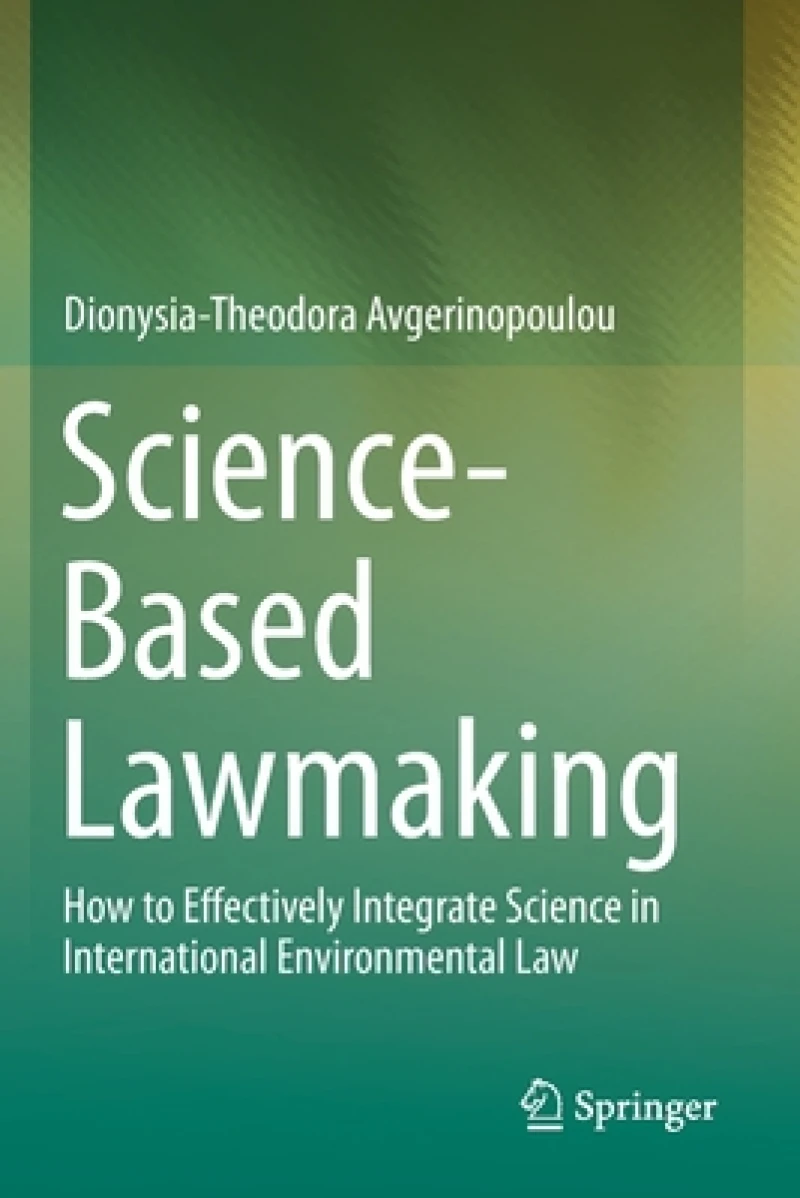
Science-Based Lawmaking : How to Effectively Integrate Science in International Environmental Law - 2019 ed.

By: (Author) Dionysia-Theodora Avgerinopoulou

Werezi Extended Catalogue
Delivery in 24 days

Ksh 21,600.00

Format: Paperback / Softback

ISBN-10: 3030214192

ISBN-13: 9783030214197

Edition: 2019 ed.

Publisher: Springer Nature Switzerland AG

Imprint: Springer Nature Switzerland AG

Country of Manufacture: GB

Country of Publication: GB

Publication Date: Sep 11th, 2020

Print length: 419 Pages

Choose your Location

Shipping & Delivery

Door Delivery

Delivery fee

Delivery in 24 days

  • Description

  • Reviews

The Book takes the approach of a critique of the prevailing international environmental law-making processes and their systemic shortcomings. It aims to partly redesign the current international environmental law-making system in order to promote further legislation and more effectively protect the natural environment and public health. Through case studies and doctrinal analyses, an array of initial questions guides the reader through a variety of factors influencing the development of International Environmental Law. After a historical analysis, commencing from the Platonic philosophy up to present, the Book holds that some of the most decisive factors that could create an optimized law-making framework include, among others: progressive voting processes, science-based secondary international environmental legislation, new procedural rules, that enhance the participation in the law-making process by both experts and the public and also review the implementation, compliance and validity of the science-base of the laws. The international community should develop new law-making procedures that include expert opinion. Current scientific uncertainties can be resolved either by policy choices or by referring to the so-called „sound science.“ In formulating a new framework for environmental lawmaking processes, it is essential to re-shape the rules of procedure, so that experts have greater participation in those, in order to improve the quality of International Environmental Law faster than the traditional processes that mainly embrace political priorities generated by the States. Science serves as one of the main tools that will create the next generation of International Environmental Law and help the world transition to a smart, inclusive, sustainable future. 

The Book takes the approach of a critique of the prevailing international environmental law-making processes and their systemic shortcomings. It aims to partly redesign the current international environmental law-making system in order to promote further legislation and more effectively protect the natural environment and public health.

Through case studies and doctrinal analyses, an array of initial questions guides the reader through a variety of factors influencing the development of International Environmental Law. After a historical analysis, commencing from the Platonic philosophy up to present, the Book holds that some of the most decisive factors that could create an optimized law-making framework include, among others: progressive voting processes, science-based secondary international environmental legislation, new procedural rules, that enhance the participation in the law-making process by both experts and the public and also review the implementation, compliance and validity of the science-base of the laws.

The international community should develop new law-making procedures that include expert opinion. Current scientific uncertainties can be resolved either by policy choices or by referring to the so-called „sound science." In formulating a new framework for environmental lawmaking processes, it is essential to re-shape the rules of procedure, so that experts have greater participation in those, in order to improve the quality of International Environmental Law faster than the traditional processes that mainly embrace political priorities generated by the States. Science serves as one of the main tools that will create the next generation of International Environmental Law and help the world transition to a smart, inclusive, sustainable future. 


Get Science-Based Lawmaking by at the best price and quality guranteed only at Werezi Africa largest book ecommerce store. The book was published by Springer Nature Switzerland AG and it has pages. Enjoy Shopping Best Offers & Deals on books Online from Werezi - Receive at your doorstep - Fast Delivery - Secure mode of Payment

Customer Reviews

Based on 0 reviews

Mind, Body, & Spirit
