
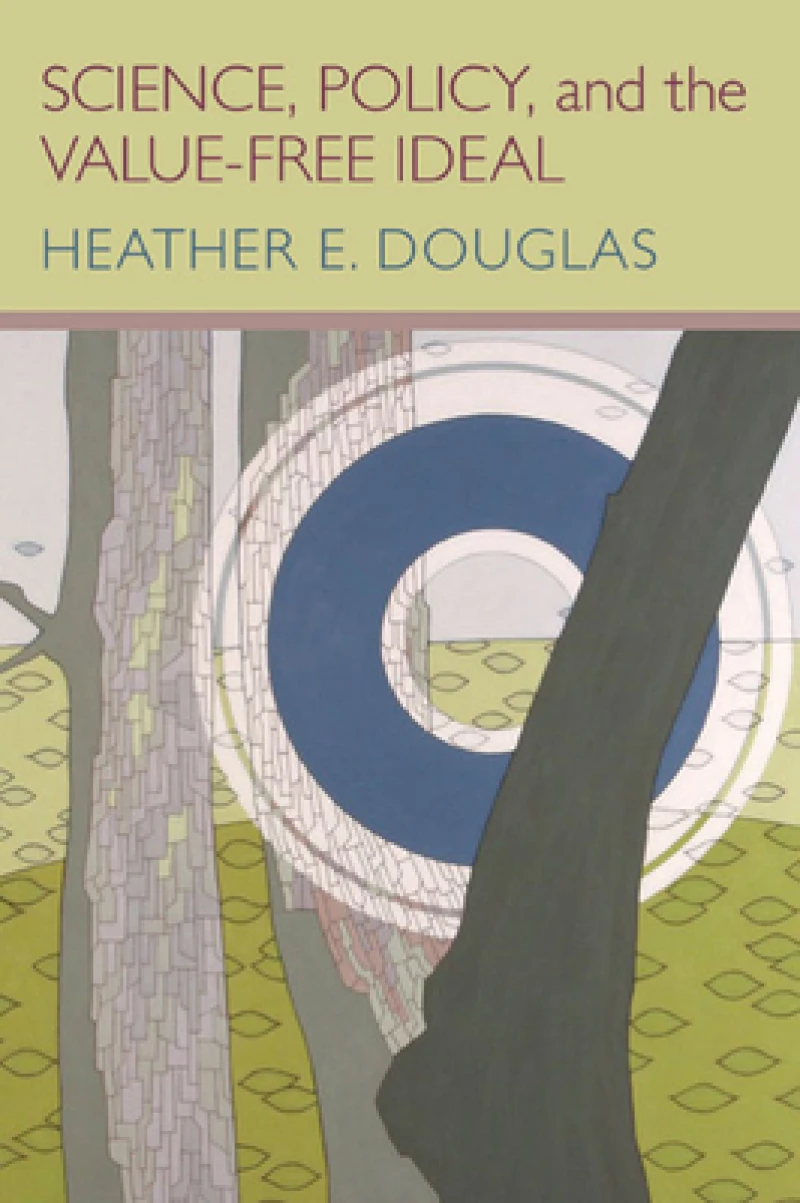
Science, Policy, and the Value-Free Ideal
Book Details
Format
Paperback / Softback
ISBN-10
0822960265
ISBN-13
9780822960263
Publisher
University of Pittsburgh Press
Imprint
University of Pittsburgh Press
Country of Manufacture
US
Country of Publication
GB
Publication Date
Jul 15th, 2009
Print length
256 Pages
Weight
308 grams
Dimensions
22.90 x 15.20 x 1.40 cms
Product Classification:
Impact of science & technology on societyImpact of science and technology on society
Ksh 8,350.00
Temporarily out of stock, due soon
0 in stock
Delivery Location
Delivery fee: Select location
Secure
Quality
Fast
Douglas challenges the traditional value-free ideal, and proposes a new ideal for values in science. She argues that the distinction between junk science and sound science lies in the roles values play at key points throughout science, and that constraining those roles is central to protecting the integrity and objectivity of science.
The role of science in policymaking has gained unprecedented stature in the United States, raising questions about the place of science and scientific expertise in the democratic process. Some scientists have been given considerable epistemic authority in shaping policy on issues of great moral and cultural significance, and the politicizing of these issues has become highly contentious. Since World War II, most philosophers of science have purported the concept that science should be \u201cvalue-free.\u201d In Science, Policy and the Value-Free Ideal, Heather E. Douglas argues that such an ideal is neither adequate nor desirable for science. She contends that the moral responsibilities of scientists require the consideration of values even at the heart of science. She lobbies for a new ideal in which values serve an essential function throughout scientific inquiry, but where the role values play is constrained at key points, thus protecting the integrity and objectivity of science. In this vein, Douglas outlines a system for the application of values to guide scientists through points of uncertainty fraught with moral valence. Following a philosophical analysis of the historical background of science advising and the value-free ideal, Douglas defines how values should-and should not-function in science. She discusses the distinctive direct and indirect roles for values in reasoning, and outlines seven senses of objectivity, showing how each can be employed to determine the reliability of scientific claims. Douglas then uses these philosophical insights to clarify the distinction between junk science and sound science to be used in policymaking. In conclusion, she calls for greater openness on the values utilized in policymaking, and more public participation in the policymaking process, by suggesting various models for effective use of both the public and experts in key risk assessments.
Get Science, Policy, and the Value-Free Ideal by at the best price and quality guaranteed only at Werezi Africa's largest book ecommerce store. The book was published by University of Pittsburgh Press and it has pages.

