
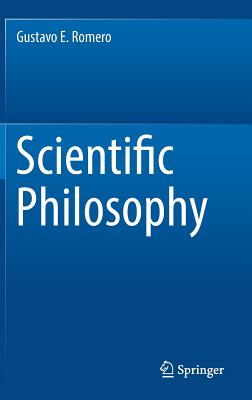
Book Details
Format
Hardback
ISBN-10
3319976303
ISBN-13
9783319976303
Edition
2018 ed.
Publisher
Springer International Publishing AG
Imprint
Springer International Publishing AG
Country of Manufacture
CH
Country of Publication
GB
Publication Date
Nov 15th, 2018
Print length
188 Pages
Weight
460 grams
Dimensions
24.20 x 16.30 x 1.30 cms
Product Classification:
Philosophy: epistemology & theory of knowledgeEthics & moral philosophyMathematical foundationsMathematical logicPhilosophy of scienceAstronomy, space & timeAstronomy, space and timePhysicsQuantum physics (quantum mechanics & quantum field theory)Quantum physics (quantum mechanics and quantum field theory)Philosophy: epistemology and theory of knowledgeEthics and moral philosophy
KSh 12,600.00
Currently unavailable
0 in stock
Delivery Location
Delivery fee: Select location
Secure
Quality
Fast
This textbook presents the basics of philosophy that are necessary for the student and researcher in science in order to better understand scientific work.
This textbook presents the basics of philosophy that are necessary for the student and researcher in science in order to better understand scientific work. The approach is not historical but formative: tools for semantical analysis, ontology of science, epistemology, and scientific ethics are presented in a formal and direct way.
The book has two parts: one with the general theory and a second part with application to some problems such as the interpretation of quantum mechanics, the nature of mathematics, and the ontology of spacetime. The book addresses questions such as "What is meaning?", "What is truth?", "What are truth criteria in science?", "What is a theory?", "What is a model?" "What is a datum?", "What is information?", "What does it mean to understand something?", "What is space?", "What is time?", "How are these concepts articulated in science?" "What are values?" "What are the limits of science?", and many more. The philosophical views presented are "scientific" in the sense that they are informed by current science, they are relevant for scientific research, and the method adopted uses the hypothetical-deductive approach that is characteristic of science. The results and conclusions, as any scientific conclusion, are open to revision in the light of future advances. Hence, this philosophical approach opposes to dogmatic philosophy.
Supported by end-of-chapter summaries and a list of special symbols used, the material will be of interest for students and researchers in both science and philosophy. The second part will appeal to physicists and mathematicians.
Get Scientific Philosophy by Gustavo E. Romero at the best price and quality guaranteed only at Werezi Africa's largest book ecommerce store. The book was published by Springer International Publishing AG and it has 188 pages.
Customers Who Bought This Also Bought

A Treatise of Human Nature
KSh 2,700.00

Critique of Pure Reason
KSh 3,400.00

Sensuous Knowledge
KSh 4,500.00

Critique of Pure Reason, Abridged
KSh 3,600.00
Sharing Thoughts
KSh 17,000.00

The Critique of Pure Reason
KSh 6,450.00

Critique of Pure Reason
KSh 7,250.00

An Inquiry Into Meaning and Truth
KSh 3,750.00

Intelligence and Spirit
KSh 5,750.00
The Social Construction of What?
KSh 5,200.00

Discourse on Method and Related Writings
KSh 2,000.00

Beyond Good and Evil
KSh 2,000.00
