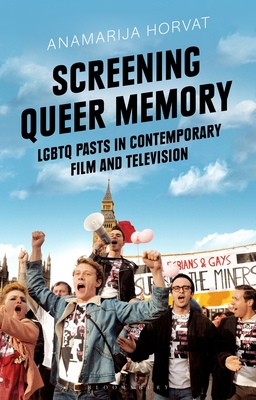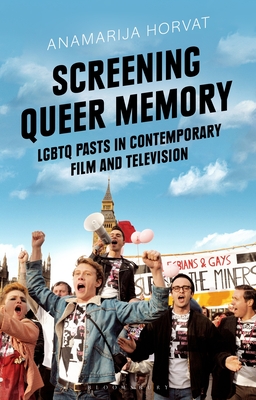
Screening Queer Memory : LGBTQ Pasts in Contemporary Film and Television
Book Details
Format
Paperback / softback
Book Series
Library of Gender and Popular Culture
ISBN-10
1350188409
ISBN-13
9781350188402
Publisher
Bloomsbury Publishing PLC
Imprint
Bloomsbury Academic
Country of Manufacture
GB
Country of Publication
GB
Publication Date
Nov 17th, 2022
Print length
200 Pages
Weight
326 grams
Dimensions
15.50 x 23.40 x 1.30 cms
KSh 6,450.00
Currently unavailable
0 in stock
Delivery Location
Delivery fee: Select location
Secure
Quality
Fast
In Screening Queer Memory, Anamarija Horvat examines how LGBTQ history has been represented on-screen, and interrogates the specificity of queer memory. She poses several questions: How are the pasts of LGBTQ people and communities visualised and commemorated on screen? How do these representations comment on the influence of film and television on the construction of queer memory? How do they present the passage of memory from one generation of LGBTQ people to another? Finally, which narratives of the queer past, particularly of the activist past, are being commemorated, and which obscured?
Horvat exemplifies how contemporary British and American cinema and television have commented on the specificity of queer memory - how they have reflected aspects of its construction, as well as participated in its creation. In doing so, she adds to an under-examined area of queer film and television research which has privileged concepts of nostalgia, history, temporality and the archive over memory. Films and television shows explored include Cheryl Dunye''s The Watermelon Woman (1996), Todd Haynes'' Velvet Goldmine (1998), Joey Soloway''s Transparent(2014-2019), Matthew Warchus'' Pride(2014) and Tom Rob Smith''s London Spy (2015).
Horvat exemplifies how contemporary British and American cinema and television have commented on the specificity of queer memory - how they have reflected aspects of its construction, as well as participated in its creation. In doing so, she adds to an under-examined area of queer film and television research which has privileged concepts of nostalgia, history, temporality and the archive over memory. Films and television shows explored include Cheryl Dunye''s The Watermelon Woman (1996), Todd Haynes'' Velvet Goldmine (1998), Joey Soloway''s Transparent(2014-2019), Matthew Warchus'' Pride(2014) and Tom Rob Smith''s London Spy (2015).
Get Screening Queer Memory by Dr Anamarija Horvat at the best price and quality guaranteed only at Werezi Africa's largest book ecommerce store. The book was published by Bloomsbury Publishing PLC and it has 200 pages.
Customers Who Bought This Also Bought
Film Theory Goes to the Movies
KSh 8,350.00

Fassbinder Thousands of Mirrors
KSh 2,350.00

Mark Kermode''s Surround Sound
KSh 3,400.00
Strangers Within
KSh 2,700.00

Marvel Studios'' The Infinity Saga - Black Panther: The Art of the Movie
KSh 6,650.00
History of Film
KSh 2,550.00

Greta Gerwig’s Barbie
KSh 4,700.00

The Fatal Alliance
KSh 4,500.00
Seventh Seal
KSh 2,350.00
Disaster Mon Amour
KSh 3,400.00

Spider-Man
KSh 9,550.00

Revolutionary Melodrama
KSh 9,250.00