
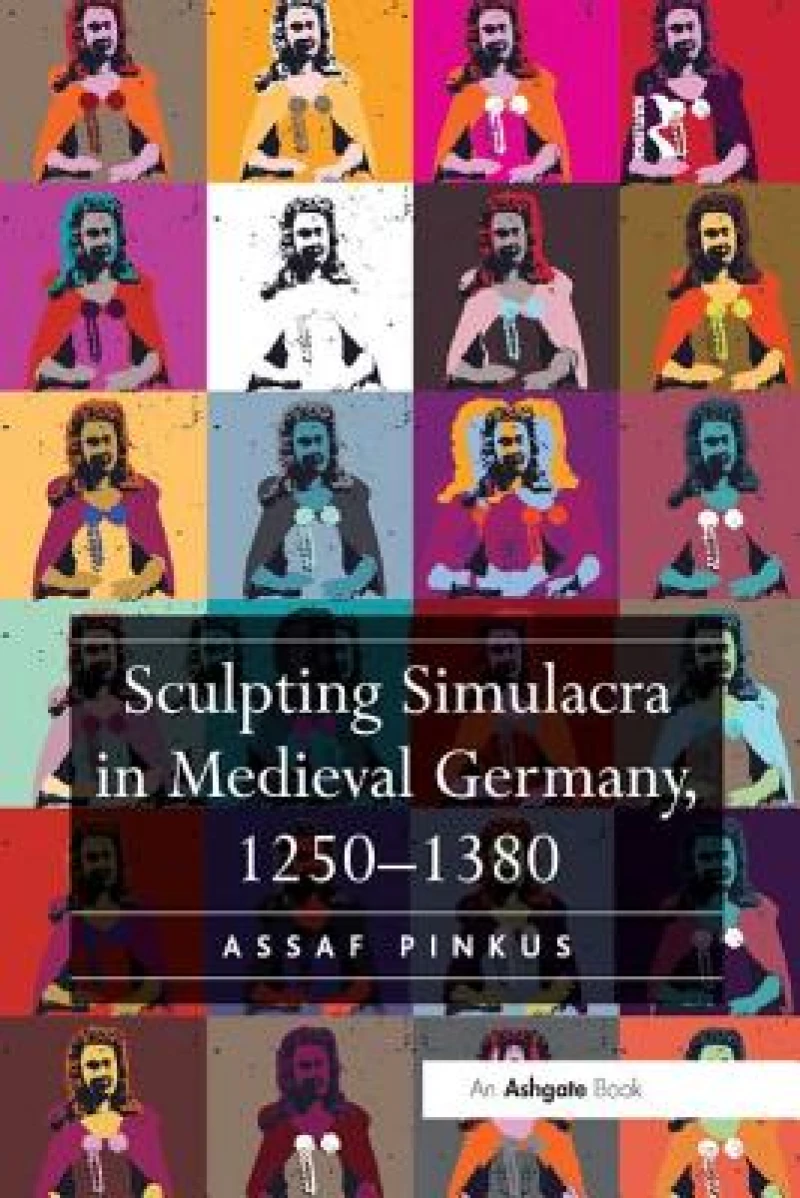
Sculpting Simulacra in Medieval Germany, 1250-1380
by
Assaf Pinkus
Book Details
Format
Paperback / Softback
ISBN-10
1138548065
ISBN-13
9781138548060
Publisher
Taylor & Francis Ltd
Imprint
Routledge
Country of Manufacture
GB
Country of Publication
GB
Publication Date
Apr 25th, 2018
Print length
264 Pages
Weight
454 grams
Dimensions
15.60 x 23.40 x 1.90 cms
Product Classification:
The arts: general issuesHistory of art: Byzantine & Medieval art c 500 CE to c 1400
Ksh 9,000.00
Werezi Extended Catalogue
0 in stock
Delivery Location
Delivery fee: Select location
Secure
Quality
Fast
This book constitutes the first art-historical attempt to theorize the idiosyncratic character of German Gothic sculpture and trace the high and late medieval notions of the living statue and the simulacrum in religious, lay and travel literature. In addressing a range of works, from the oeuvre of the Naumburg Master through Freiburg-im-Breisgau to the imperial art of Vienna and Prague, Pinkus offers a new understanding of the function, production, and use of three-dimensional images in late-medieval Germany.
Engaging with the imaginative, nonreligious response to Gothic sculpture in German-speaking lands and tracing high and late medieval notions of the living statue and the simulacrum in religious, lay, and travel literature, this study explores the subjective and intuitive potential inherent in thirteenth- and fourteenth-century sculpture. It addresses a range of works, from the oeuvre of the so-called Naumburg Master through Freiburg-im-Breisgau to the imperial art of Vienna and Prague. As living simulacra, the sculptures offer themselves to the imaginative horizons of their viewers as factual presences that substitute for the real. In perceiving Gothic sculpture as a conscious alternative to the sacred imago, the book offers a new understanding of the function, production, and use of three-dimensional images in late medieval Germany. By blurring the boundaries between viewers and works of art, between the imaginary and the real, the sculptures invite the speculations of their viewers and in this way produce an unstable meaning, perpetually mutable and alive. The book constitutes the first art-historical attempt to theorize the idiosyncratic character of German Gothic sculpture - much of which has never been fully documented - and provides the first English-language survey of the historiography of these works.
Get Sculpting Simulacra in Medieval Germany, 1250-1380 by at the best price and quality guaranteed only at Werezi Africa's largest book ecommerce store. The book was published by Taylor & Francis Ltd and it has pages.

